We may earn money or products from the companies mentioned in this post. As an Amazon Associate, I earn from qualifying purchases.
Last Updated on October 12, 2026 by Sarah
I knew I liked Comté cheese before I went to France to learn how it was made. I tried it in an Air France lounge, bought some during a recent French Riviera trip with my sister, and even found some in a nearby wine shop in Destin, Florida. But I honestly couldn’t have told you much about where Comté cheese came from, let alone how many people were involved in making it.
Then I spent a few days traveling through eastern France, visiting a dairy farm, observing the actual Comté cheesemaking process, touring an old fort filled with 100,000 Comté cheese wheels, and tasting different versions of Comté at nearly every stop.
So, I have a lot to tell you about the cheese! That said, the magic for me was in all the people who come together to make each wheel of Comté cheese.
Each person we met knew their part of the process inside and out. They also understood how much their work affected everyone else involved, from the farmer and the cheesemaker to the affineur who cares for the cheese as it ages, and the cheesemonger helping customers find their perfect wedge.

Comté USA hosted this trip. All opinions and personal experiences shared here are my own.
Of course, the setting didn’t hurt! We drove through green pastures, forests, small French villages, and beautiful lake country near the Swiss border. In some ways, it reminded me of Washington state, where I grew up.
Today, I want to take you along on that trip, explain what makes Comté cheese special, and introduce you to a part of France you may not have heard of. And if a trip to eastern France isn’t in your plans, I hope this gives you a reason to look for Comté cheese the next time you’re shopping.
What Is Comté Cheese?
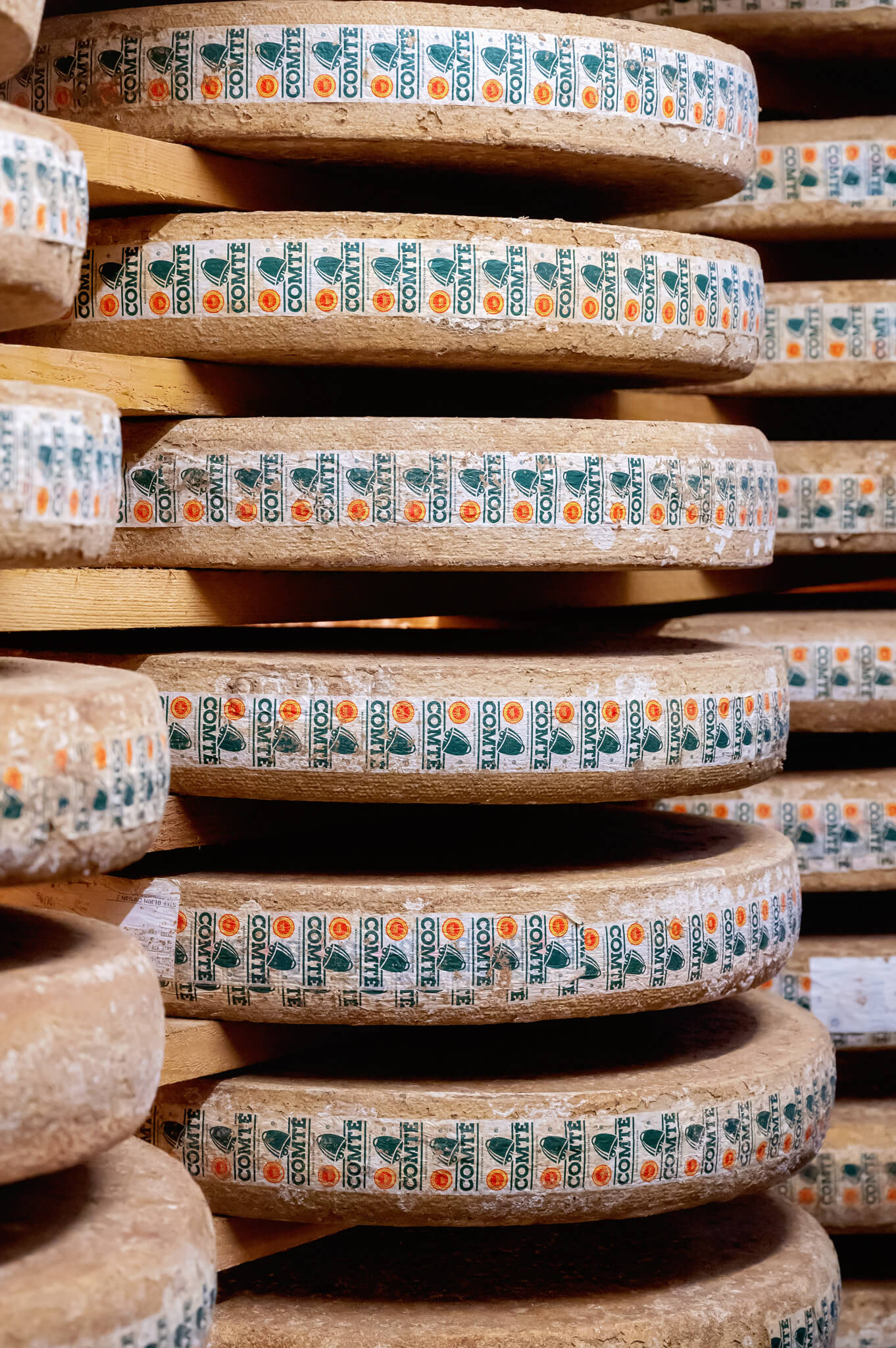
Comté is a French cheese made from raw cow’s milk in a defined area of eastern France. It’s made in large wheels and aged for at least four months, although you’ll often find Comté aged much longer.
You might recognize its firm texture and buttery, nutty flavors. But one of my biggest surprises was how different one Comté could taste from another. Throughout our trip, we tried younger and older cheeses, and each tasting gave me something new to notice.
Before we get into the people and the process, two things are worth understanding:
- what the Comté name really means
- where Comté cheese comes from
Comté: a Protected Name & a Shared Commitment
Comté is a protected designation, rather than the name of one cheese company.
You’ll see the letters AOP, short for Appellation d’Origine Protégée, associated with it. In English, that’s PDO, or Protected Designation of Origin. The designation ties Comté cheese to a specific place and a detailed set of production requirements.
Those requirements shape the process from the start, including the milk used, farming practices, cheesemaking, and the aging of every wheel. And much of the process is rooted in Comté’s early cooperative origins.
The Comté Cheese Association, known as the CIGC, represents the dairy farmers, cheesemakers, and aging specialists who produce Comté cheese. Learning about that organization firsthand helped me understand the larger story here.
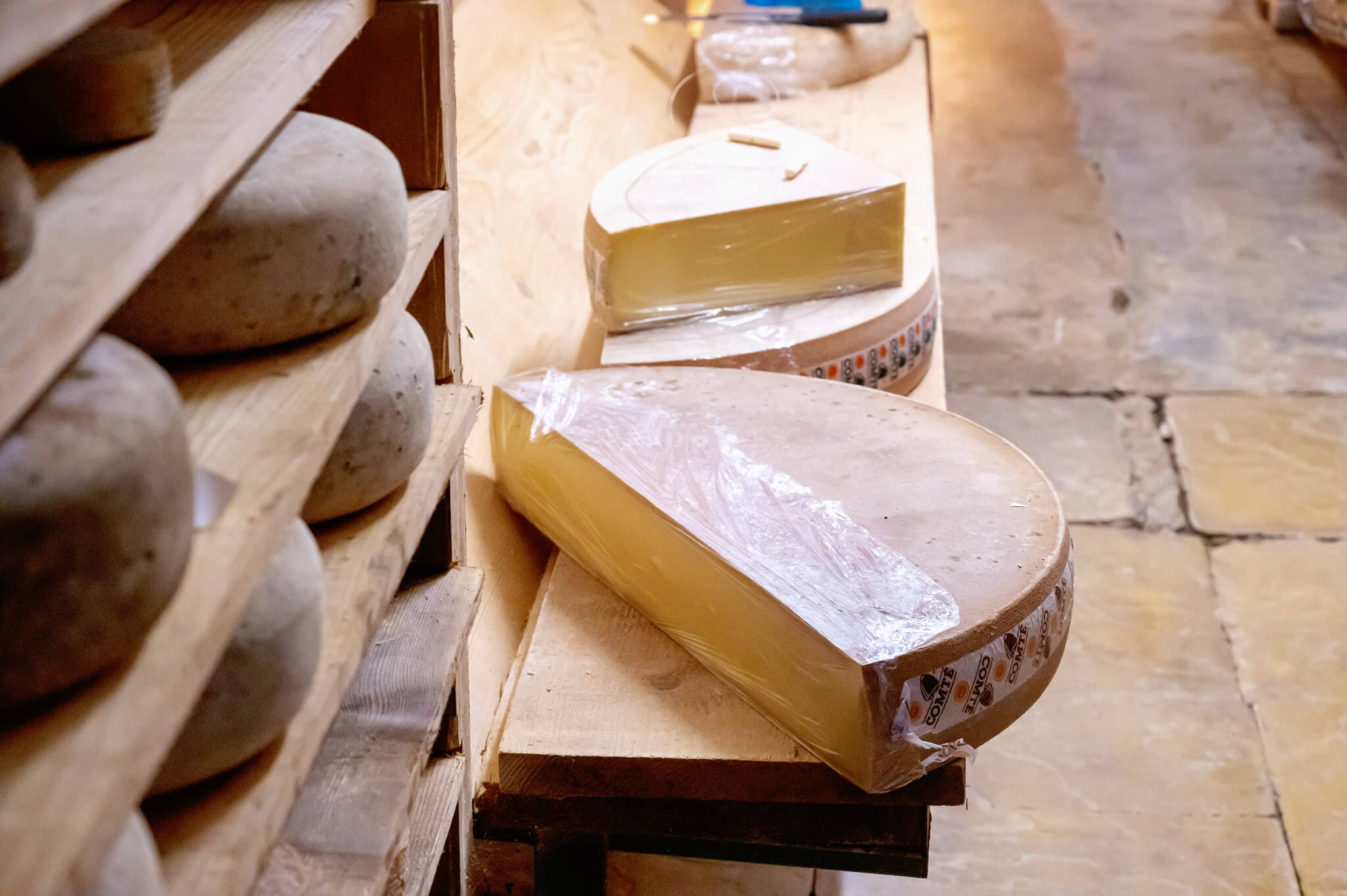
The people doing the work at every step have a shared interest in protecting the name and the standards behind it. When you buy Comté cheese at a grocery store or cheese shop, you’re buying something many different businesses and families helped create.
That became much more meaningful once I started meeting everyone! Later in this post, I will take you through each step.
But first, where in France did I even go to experience this?
Where Is Comté Cheese Made in France?
Comté cheese comes from the French Jura Mountains near the Swiss border. Its protected production area lies primarily within the Jura, Doubs, and Ain departments of eastern France.
Our Comté cheese road trip focused on the Jura and Doubs. We flew into Geneva, Switzerland, picked up a van, and drove into France to explore the farms, villages, and cheese cellars that make this area so special.
Understanding the Jura Mountains and the Comté Cheese Region
If the geography of this area feels a little confusing, I understand! I had to sort it out myself, even after being there.
The Jura Mountains, also called the Jura Massif, are the main mountain range. They stretch across parts of France and Switzerland. The Jura department is one French administrative area within this broader landscape.
Much of the French territory we visited belongs to Bourgogne-Franche-Comté, the larger administrative region. The Comté production area also extends into neighboring Auvergne-Rhône-Alpes through Ain.
For this post, when I say “Comté region,” I’m referring to the French cheese region we explored, especially the Jura and Doubs. You don’t have to memorize all those names, but they’ll help when you’re looking at a map or planning where to stay during your trip to eastern France.
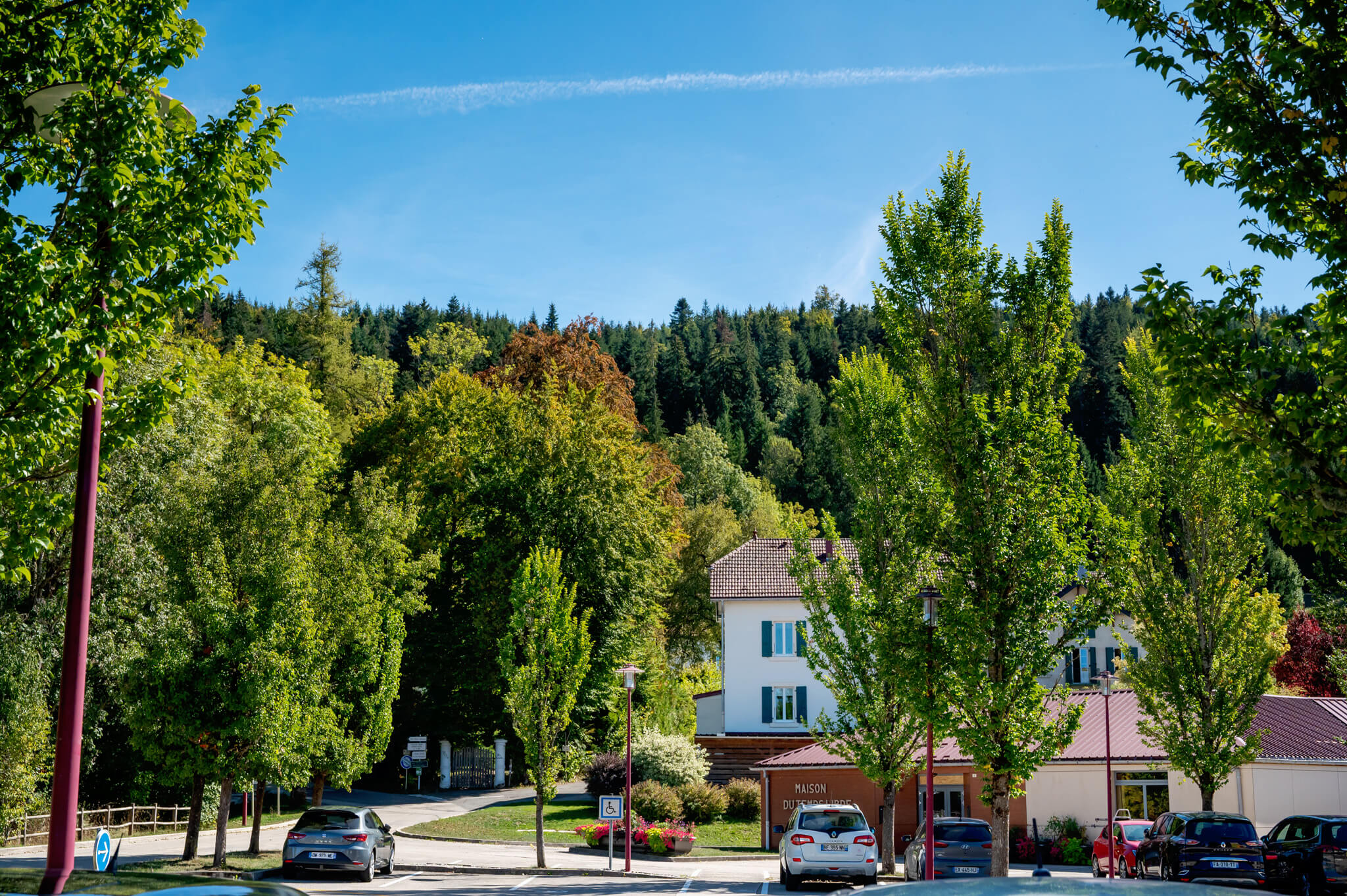
Learning About Comté Cheese at Maison du Comté in Poligny
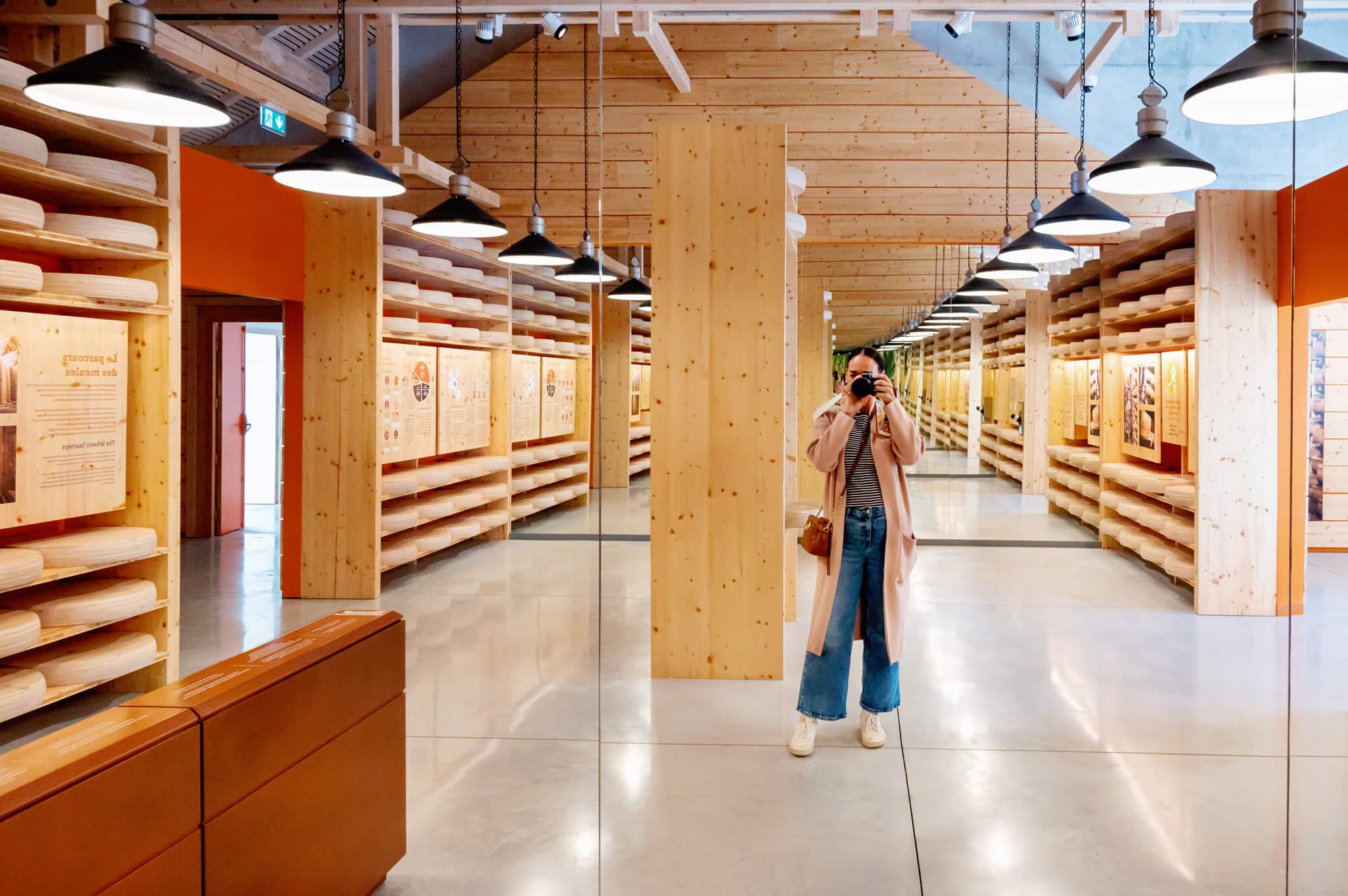
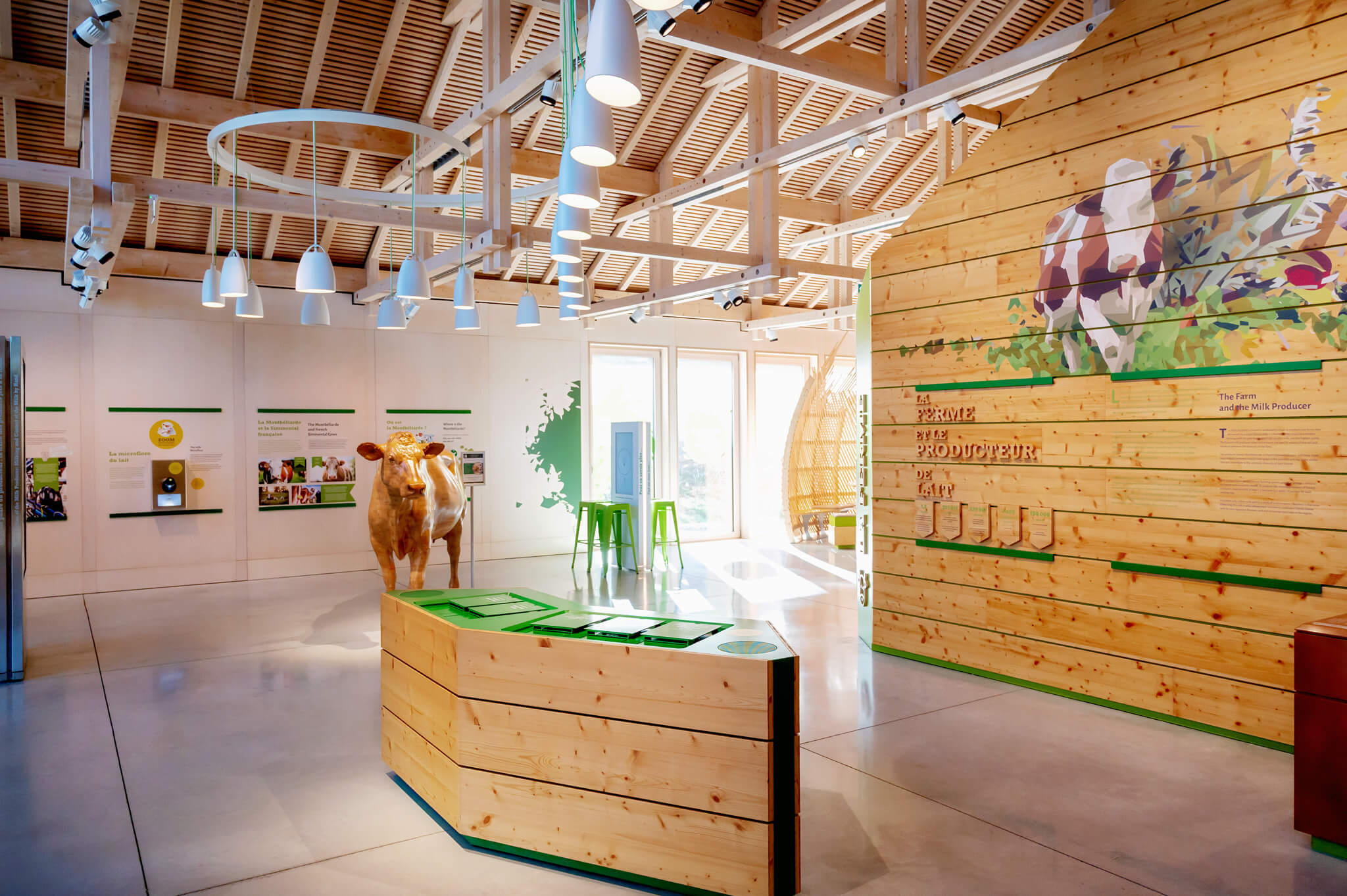
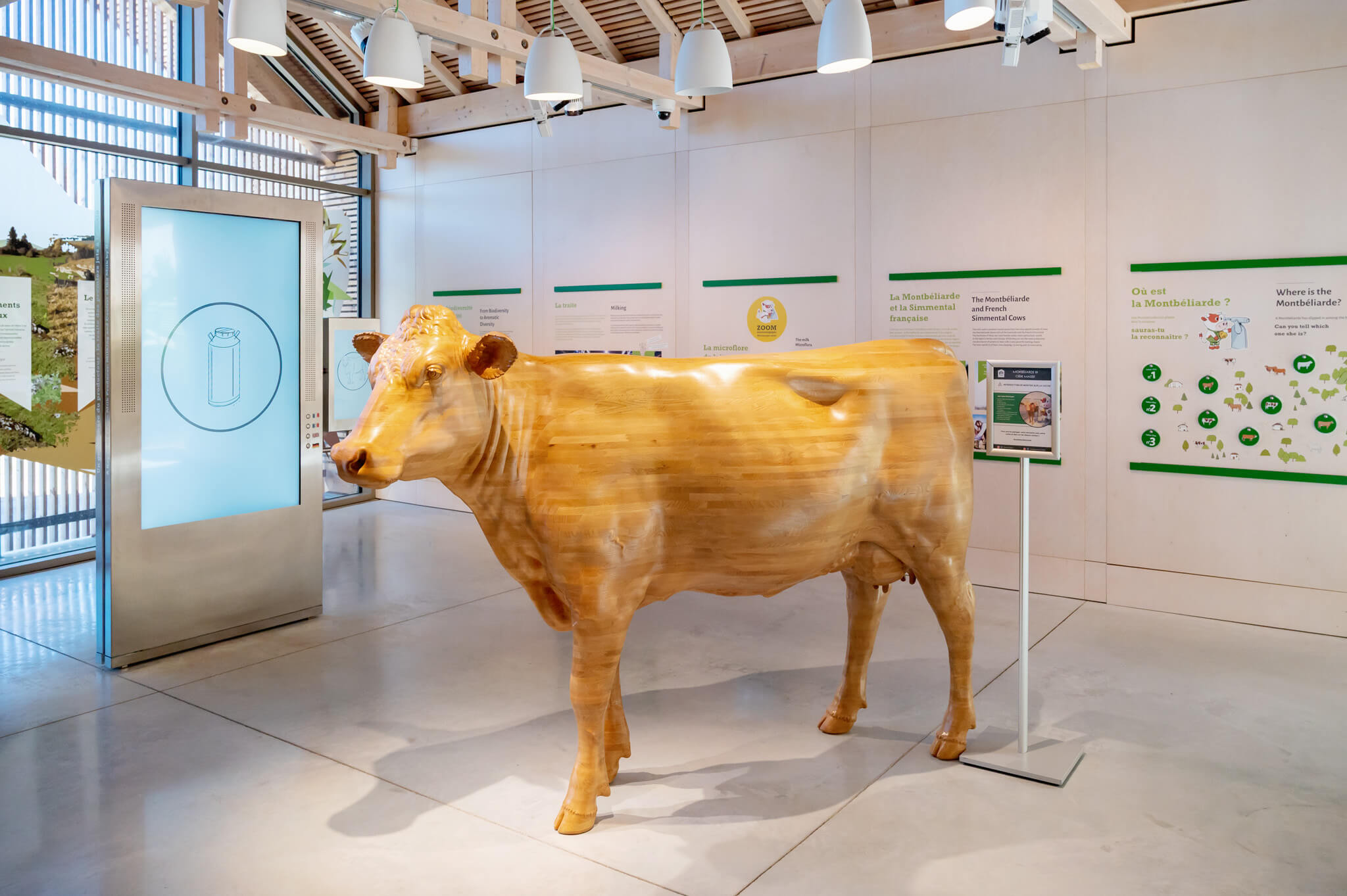
One of the best places to put it all together is Maison du Comté in Poligny, France!
We visited this interactive museum and even met with CIGC director Valéry Elisseeff. A short welcome video did a wonderful job introducing Comté cheese’s history, the local landscape, and the people involved in its production.
The robust, interactive exhibits at Maison du Comté are very well done and available in both French and English. If you are visiting this area with kids, this is a must-see!
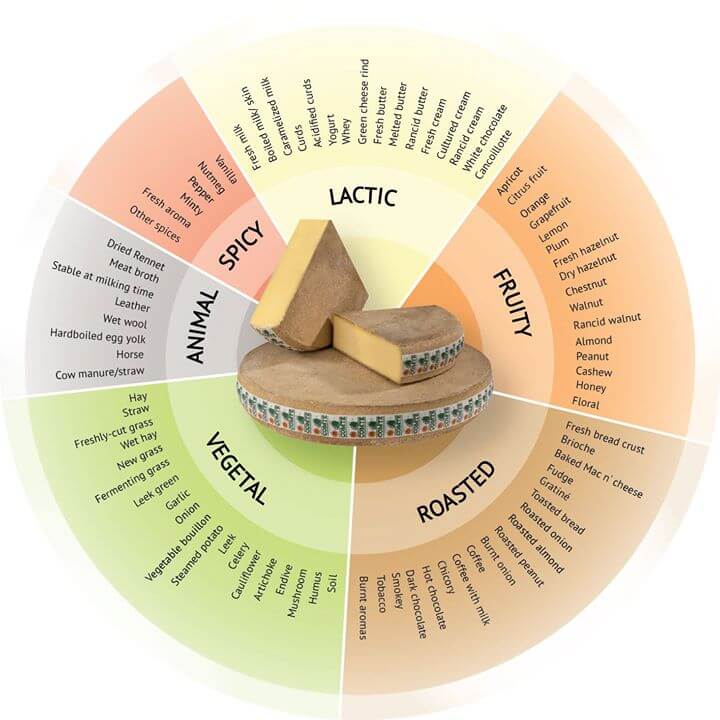
There were even little scent stations where we could lift a cover and smell different aromas. That proved useful preparation for our tastings. I was beginning to realize there was a lot more to describe than whether a cheese tasted strong or mild.
In fact, Comté’s aroma wheel identifies 83 flavor and aroma descriptors grouped into six families!
We also tasted younger and older Comté during our visit. If you’re traveling through the area and want an easy introduction to the whole story, start here at Maison du Comté in Poligny.
Poligny, France, calls itself the capital of Comté, and its cheese shops make it easy to keep learning and tasting this popular French cheese after you leave the museum. We only had a few minutes to stop, but the town felt vibrant, yet charming and would be a great home base. More on that later!
First, I want to share the fascinating history of Comté cheese, because it’s at the core of what makes the production special today.
The History of Comté Cheese and Its Cooperative Roots
Long before Comté appeared in specialty cheese shops worldwide, it served a practical purpose: helping mountain communities get through winter.
During the Middle Ages, farmers in the Jura Massif pooled their milk to make large cheeses they could store through the cold months. A big wheel required more milk than an individual small farm could provide, so working together made sense.
They sent that shared milk to a local cheesemaking facility called a fruitière. The cooperative tradition grew around those village dairies.
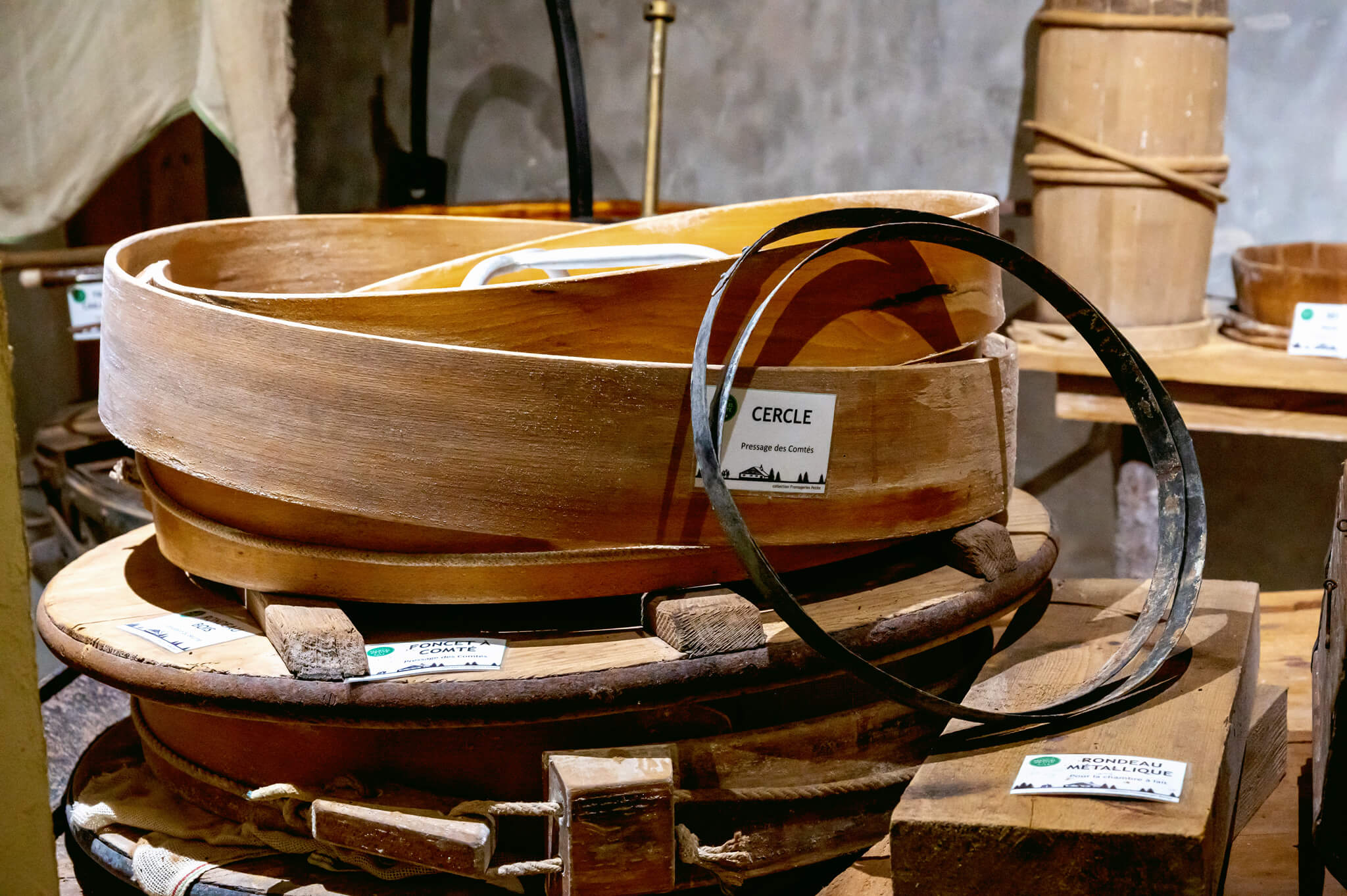
Today, a wheel of Comté still takes roughly 400 liters of milk to produce and weighs about 40 kilograms, or close to 90 pounds. It’s a substantial cheese with a substantial amount of work behind it.
The history of Comté helped me understand why cooperation remains so central to its production. The equipment has evolved, and modern tools make the work easier, but the idea of neighboring farms contributing to something together is still vital to the production.
That was one of my favorite things about this trip to France! Today, we talk so much about doing things faster, finding the next shortcut, and maximizing production. In the Comté region, I met real people who took real pride in mastering their part of a process built on time and patience.
The People Behind Every Wheel of Comté Cheese
Once I understood the different stages of Comté cheese making, everything we were seeing started to connect. So pay close attention, because for me, this process and these people are where the magic is!
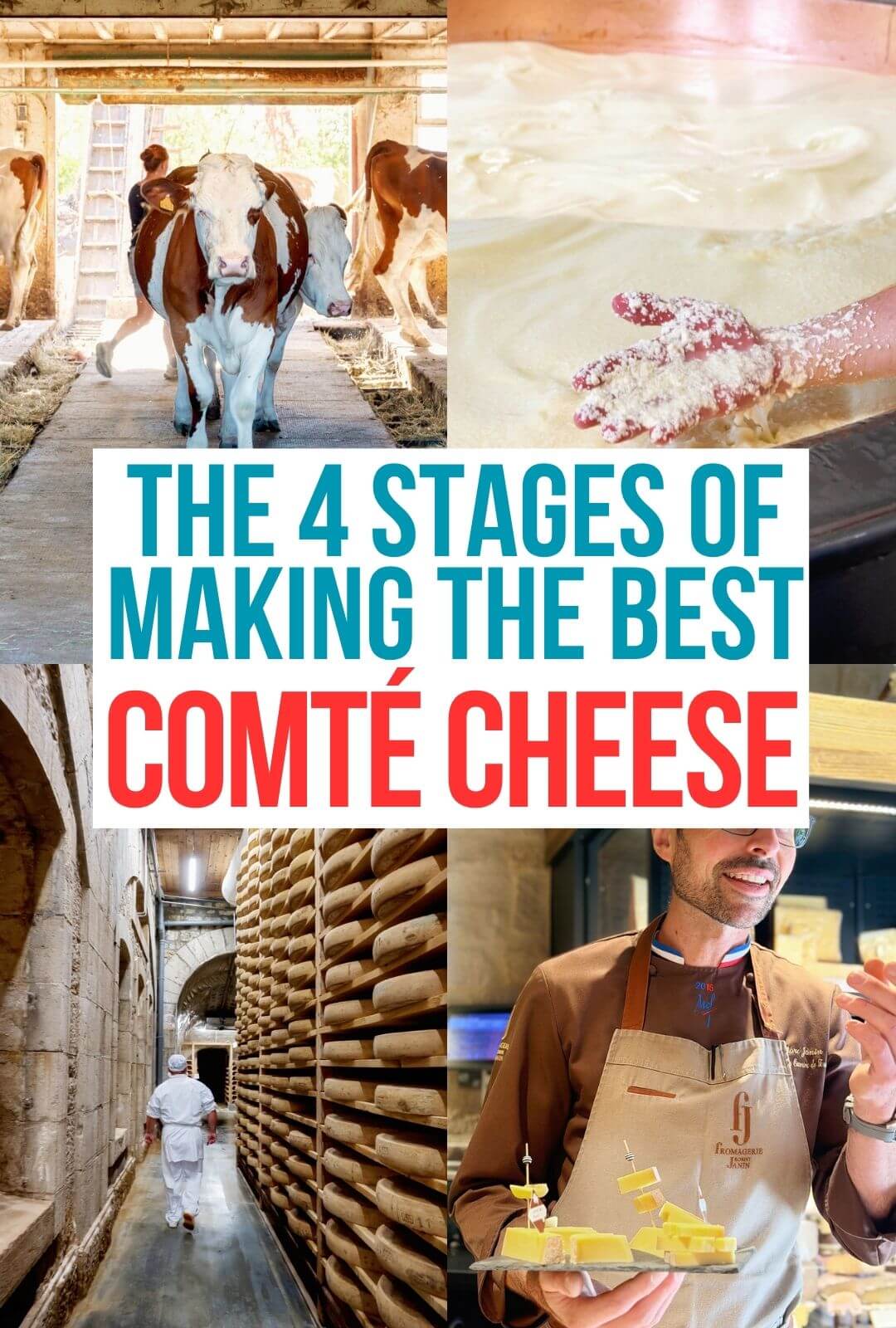
Here is the basic process for making a wheel of Comté cheese:
- Dairy farmers: care for the cows & produce the milk
- Cheesemakers (Fruitière): transform pooled milk into young cheese wheels
- Affineurs (aging specialists): care for the wheels as they mature and determine when they’re ready
- Cheesemongers: select cheeses and help customers find the ones they’ll enjoy
Today, the Comté cheese community includes approximately 2,400 dairy farms, 140 fruitières, and 14 specialized aging houses.
We visited examples of each during our recent trip to France. These were just a few people in the much larger Comté community, but meeting them helped me appreciate the work behind every smaller wedge of Comté cheese.
Here’s what happens at each stage, along with the people we met along the way.
1. The Dairy Farmers Who Produce Milk for Comté Cheese
A cheese trip might bring to mind fancy tasting rooms and pretty cheese boards. One moment that helped me understand Comté best, though, happened on a sunny day at a rural dairy farm.
Visiting Nicolas and Juliette’s Dairy Farm in Vernierfontaine
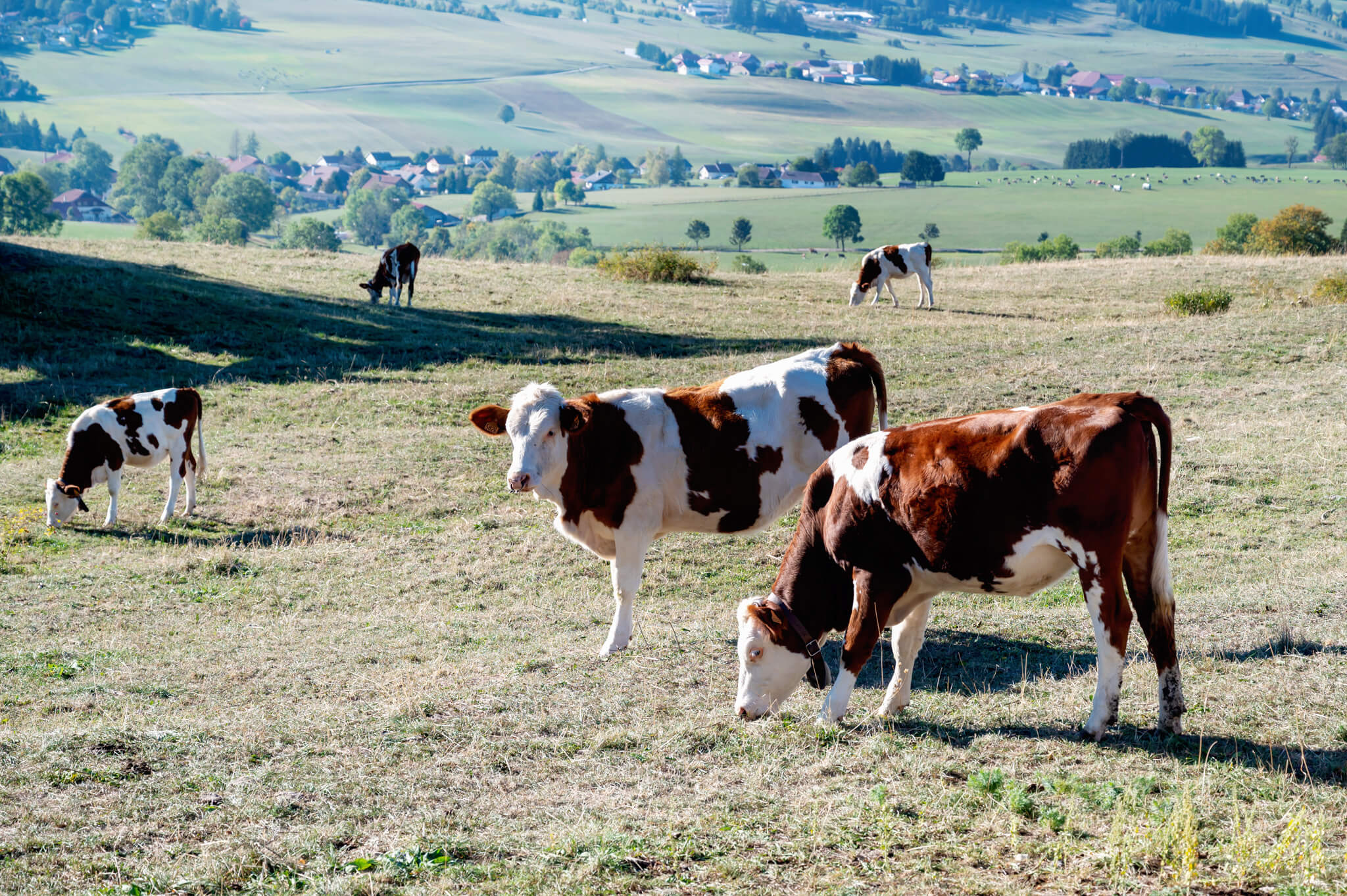
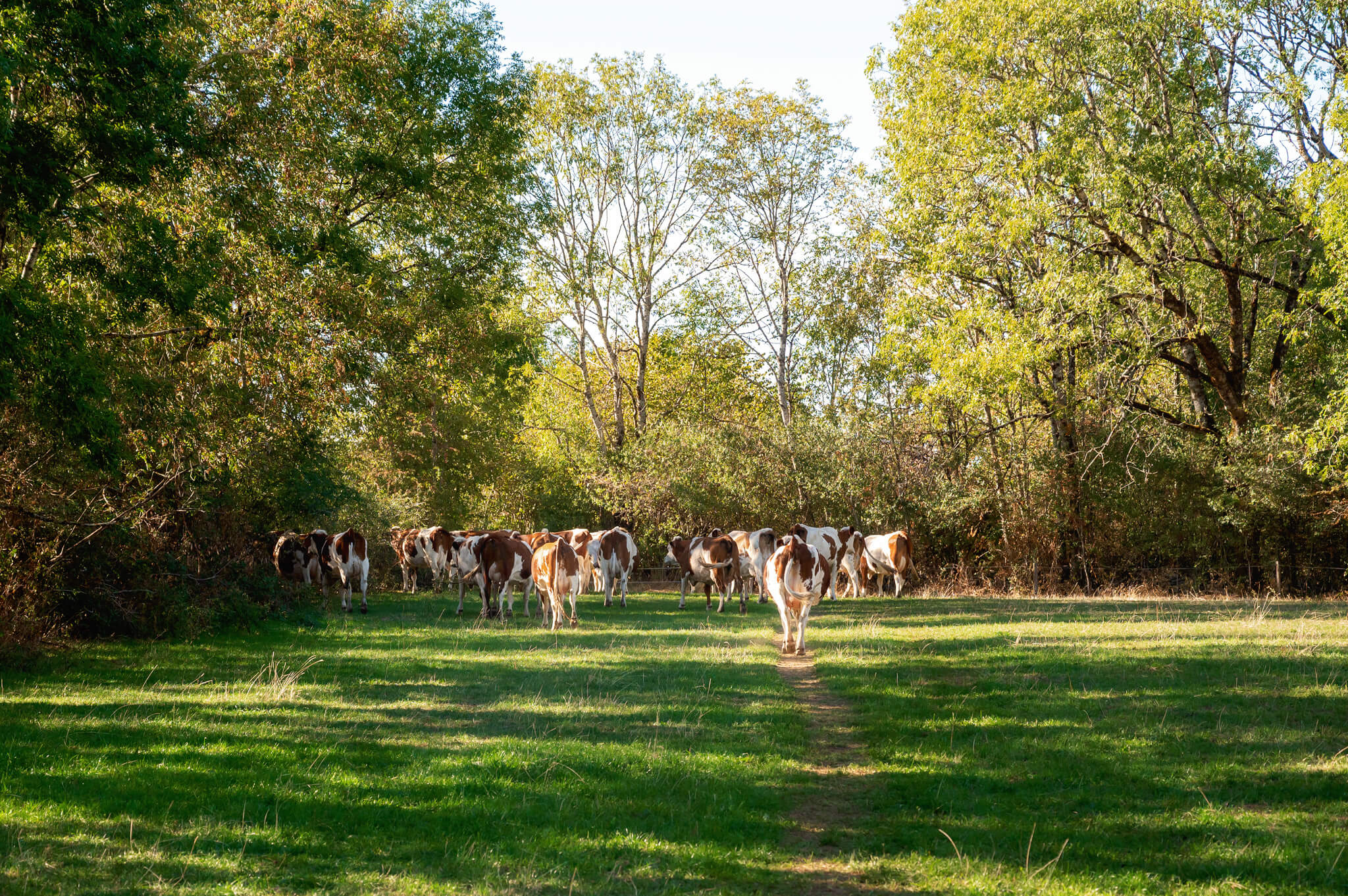
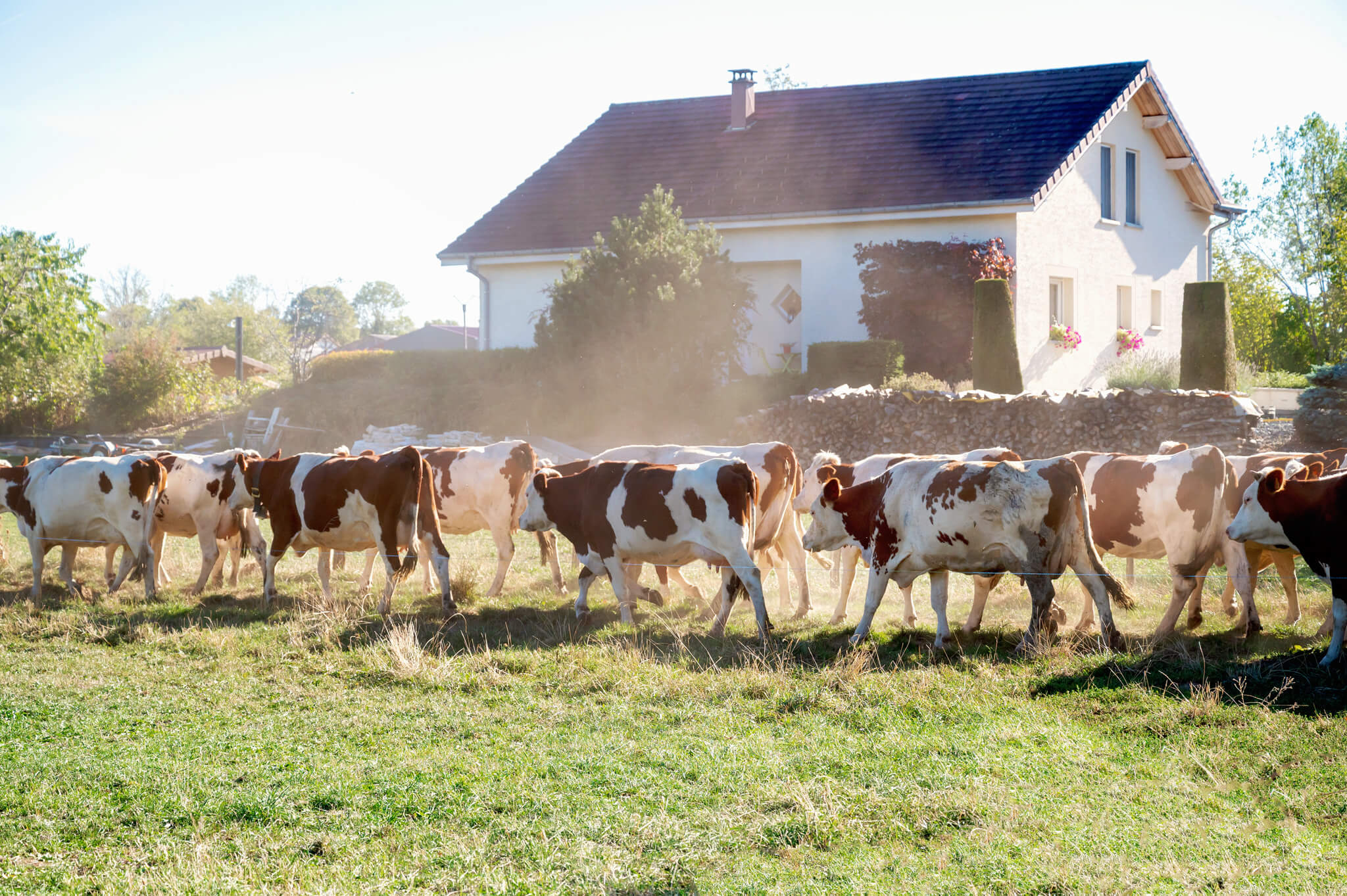
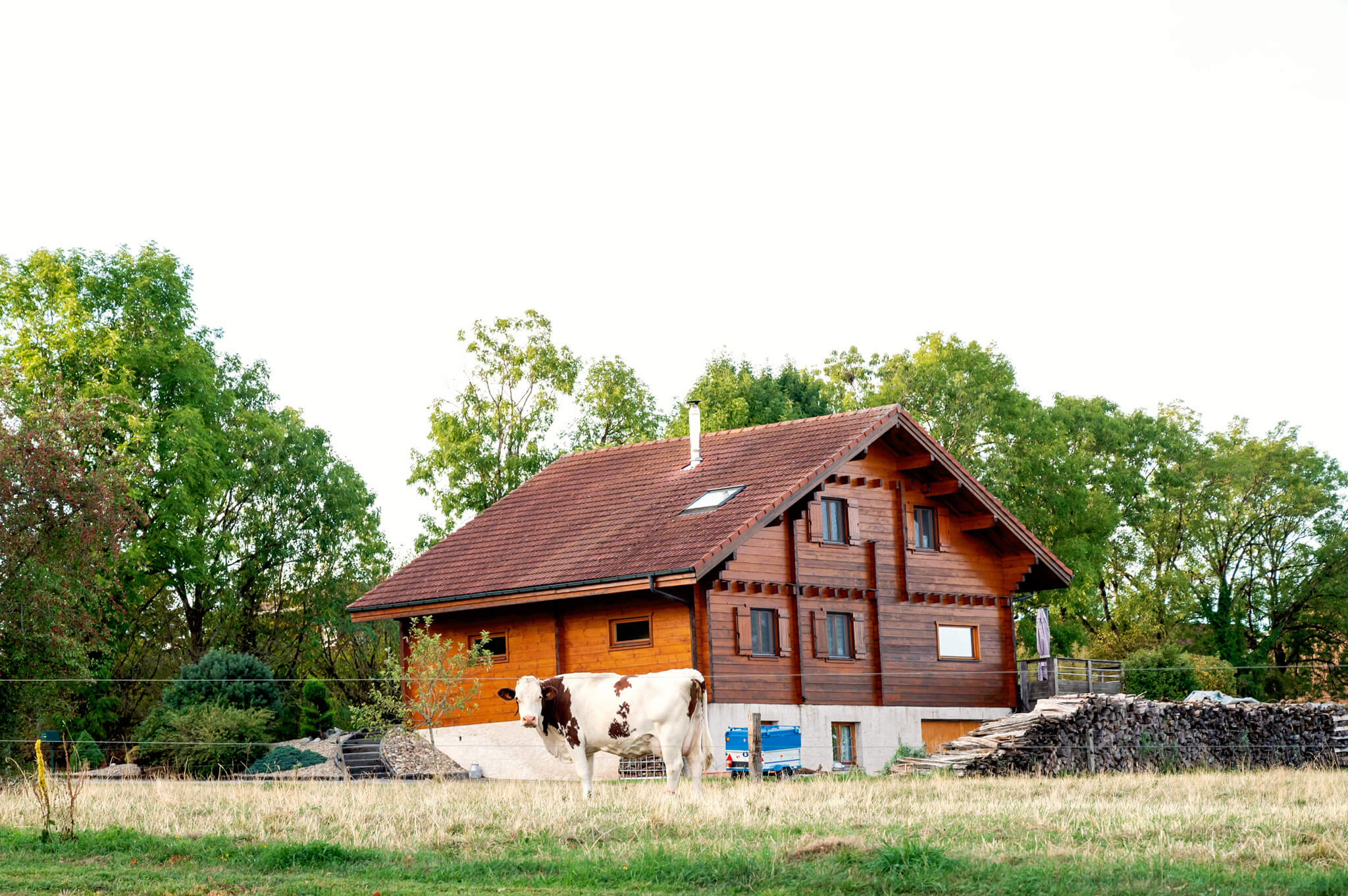
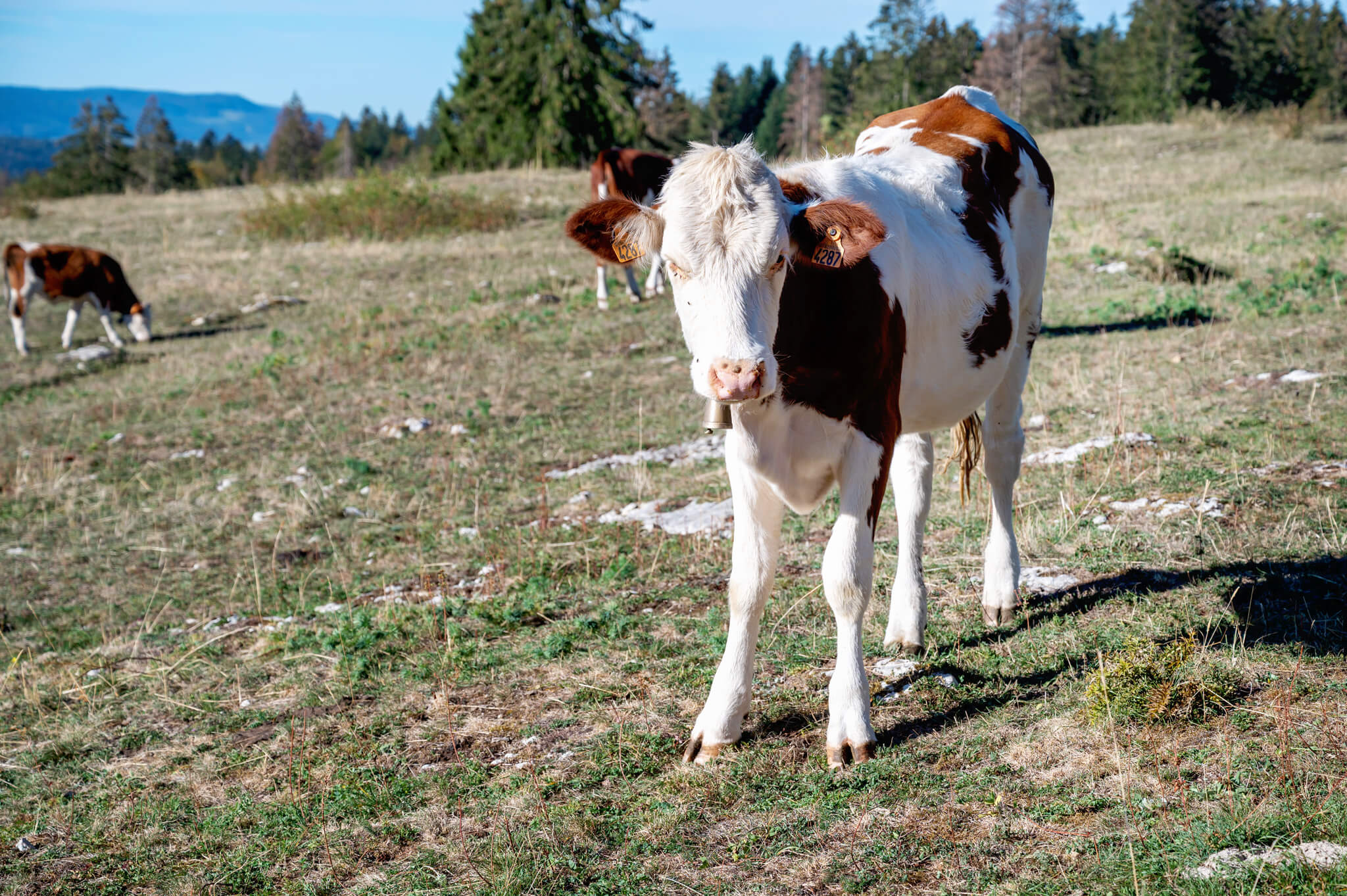
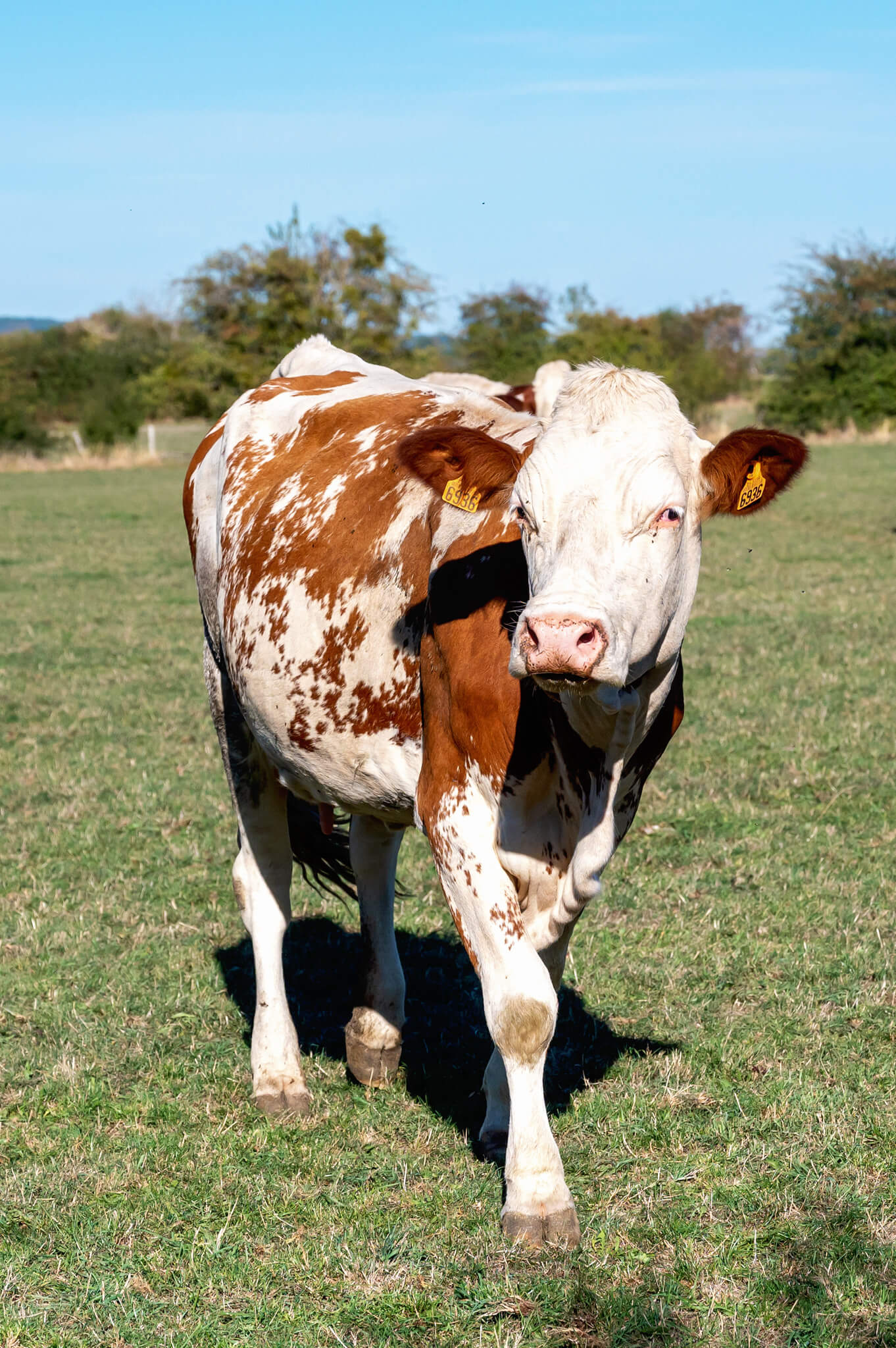
In Vernierfontaine, we met Nicolas and Juliette, learned about their farm, and watched their cows being brought in to be milked. We even got to walk along for the afternoon herding, listening for cowbells, and following a worn path back to the farm.
Their story was especially memorable. A visit to ask about hay for their goats had turned into a conversation about whether they wanted to buy the farm. And they did! After a few years of training, overlapping with the retiring farmer, they took over. They now live on the farm with their daughter, and Nicolas now represents many farmers in the area. That is quite a change of plans!
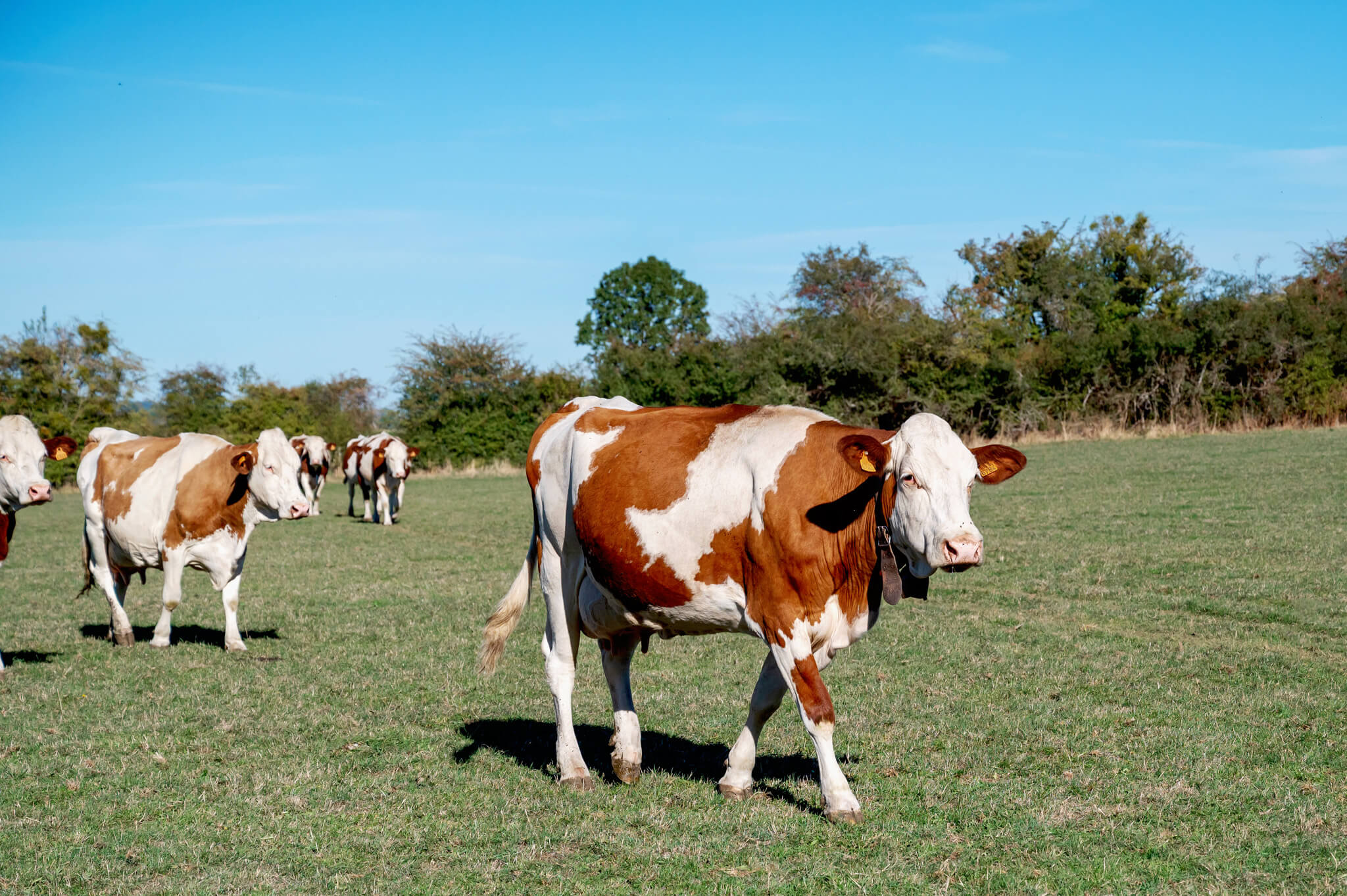
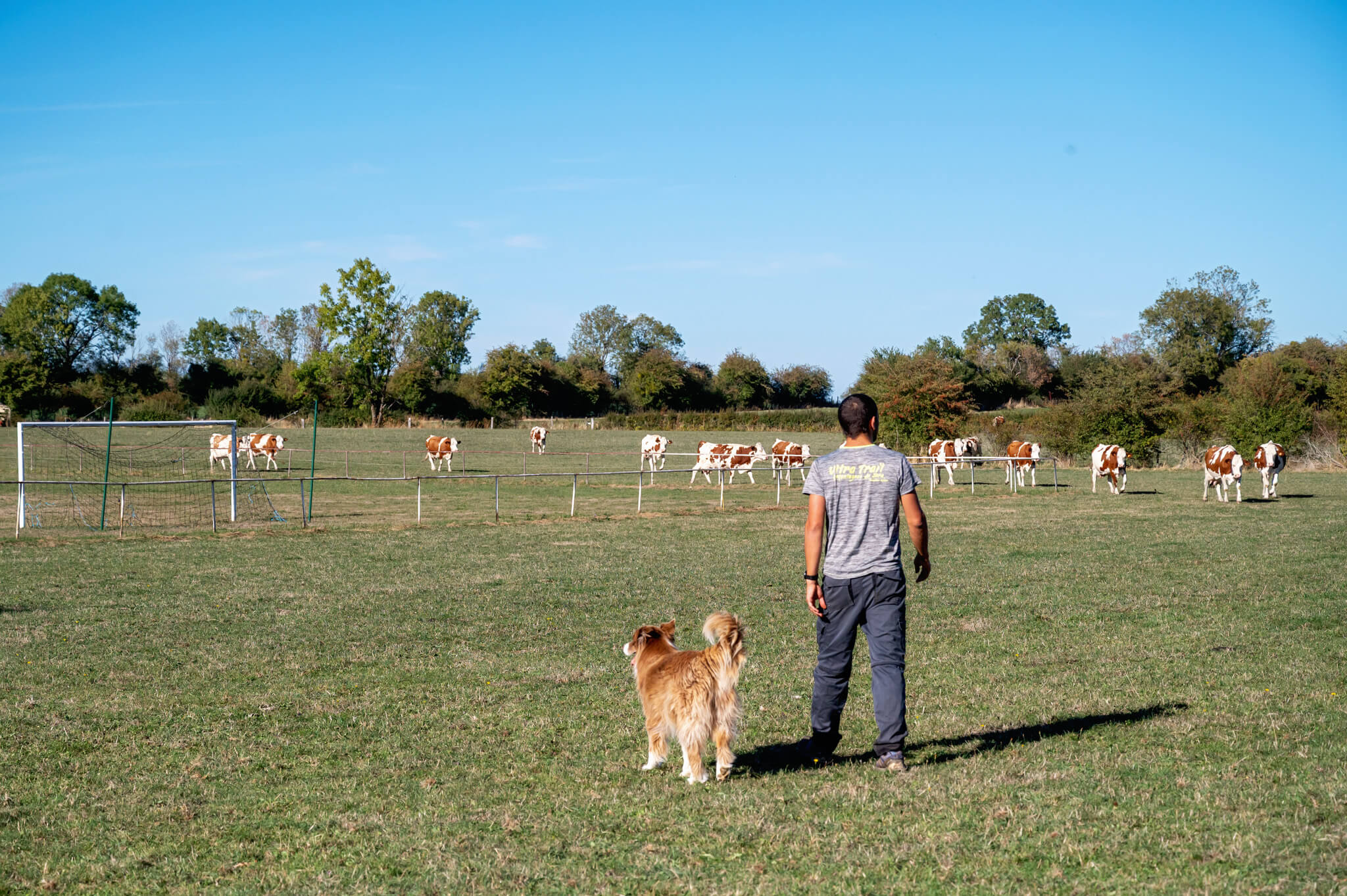
Being there made the first stage of cheesemaking feel much more personal. These were the people caring for the animals and producing the milk that someone else would turn into cheese.
They know their cows by name, and instead of maxing out at 50 (Comté-producing) cows per farmer, or 90 cows for two farmers at one farm, they are content with around 35.
I was surprised to see that the cows even know which milking stall is theirs. They walked down the center like a catwalk, turning into the stall that bore their name on a plaque above it.
We watched as the cows were milked, sharing our attention with a few herding dogs and farm cats. What a great place to be a cat, right?
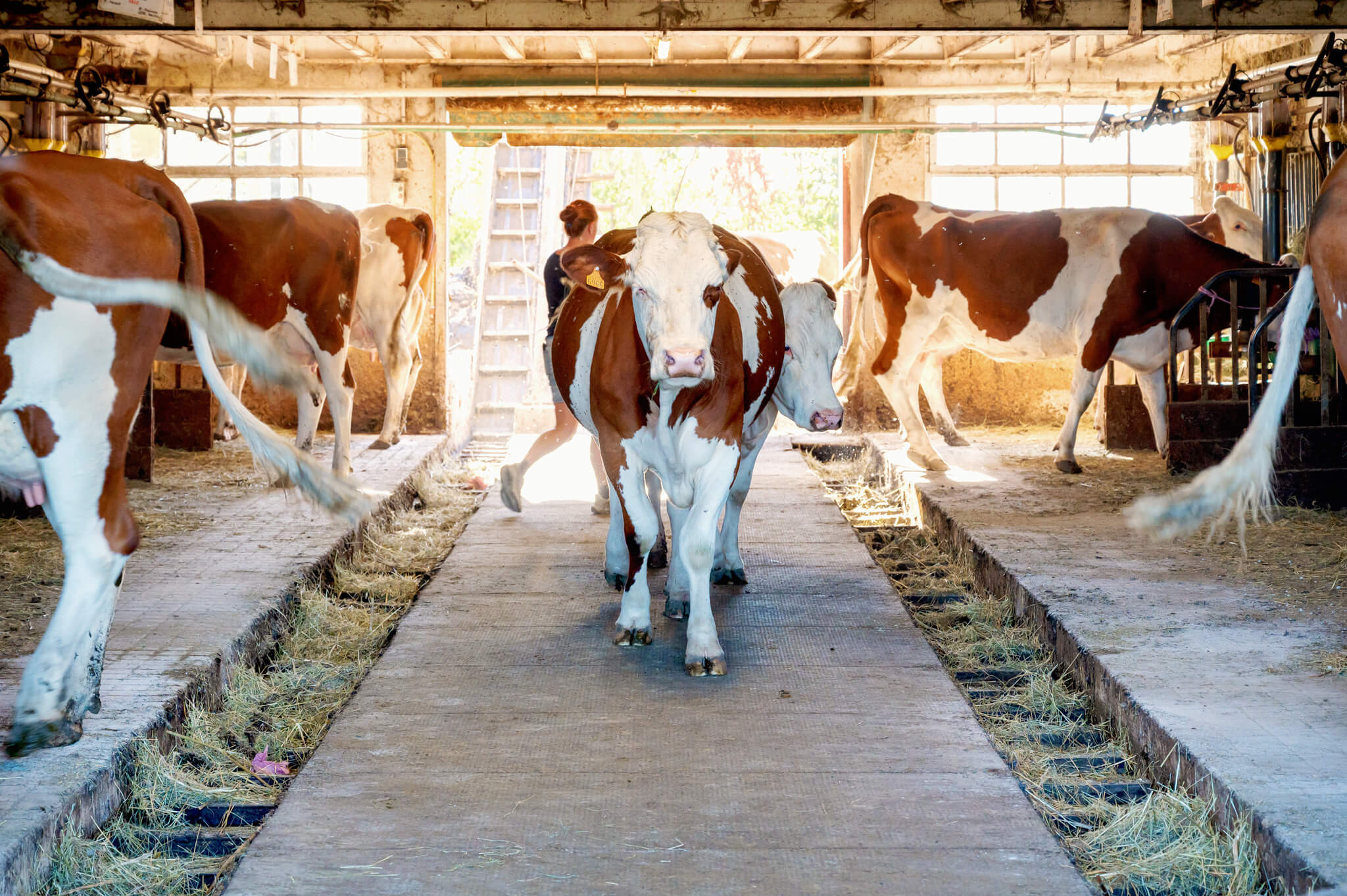
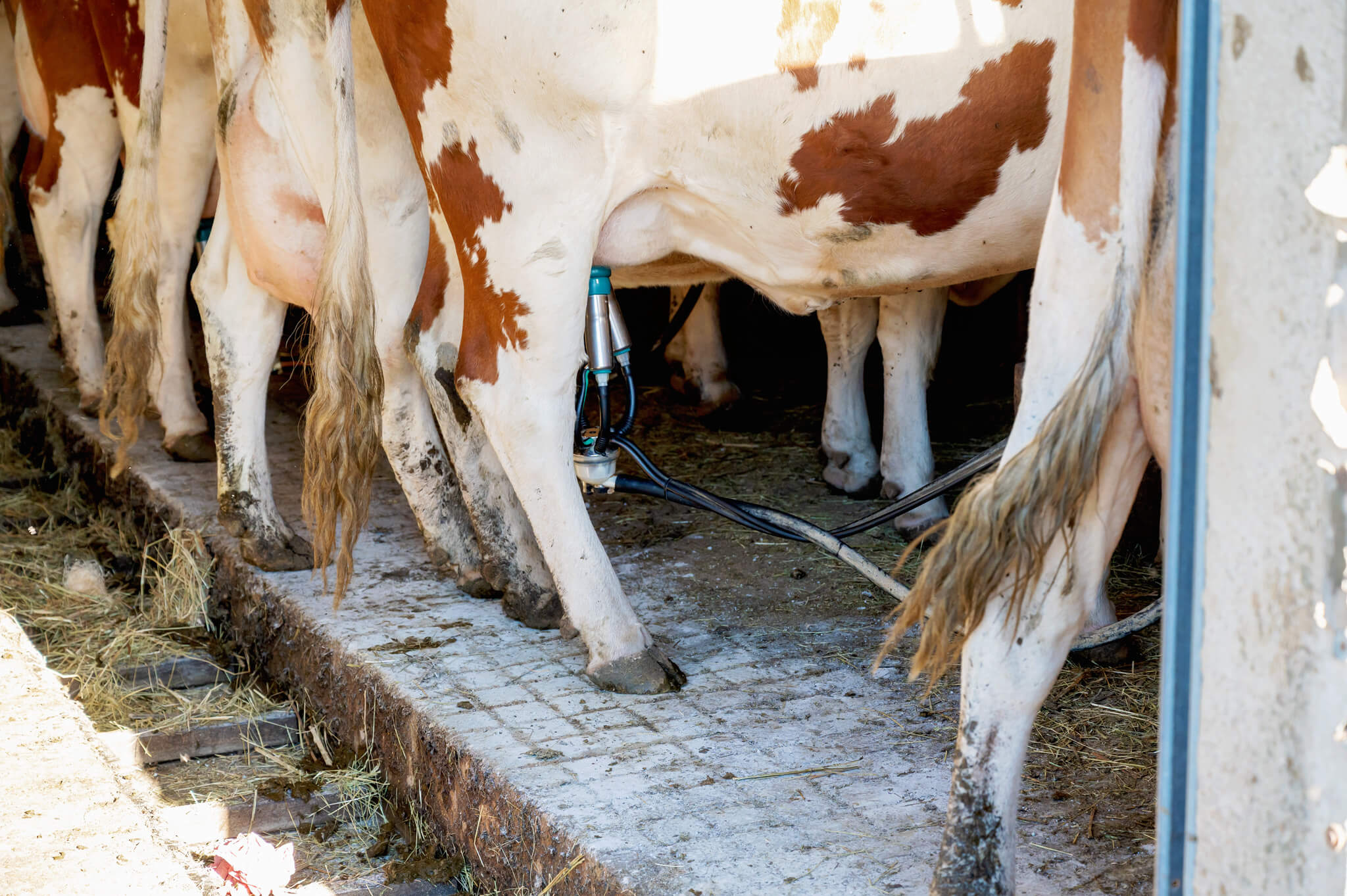
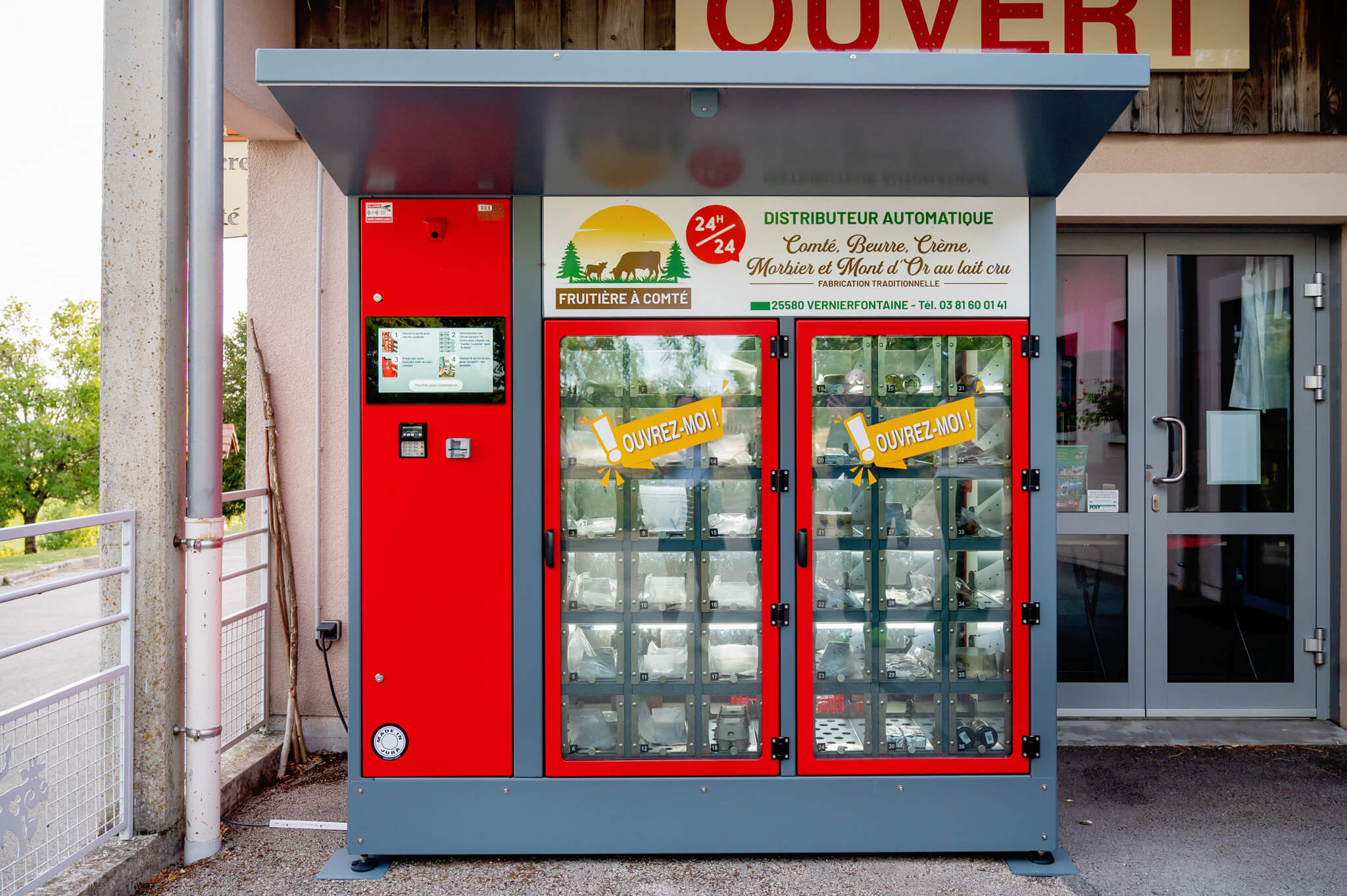
The milk doesn’t stay in one place for long. Each night, dairy trucks visit the farms to collect fresh milk and deliver it to the local fruitière.
And the next morning, we saw firsthand how this farm’s milk became part of the day’s cheesemaking at the local fruitière.
The Cows and Pastures Behind Comté Cheese
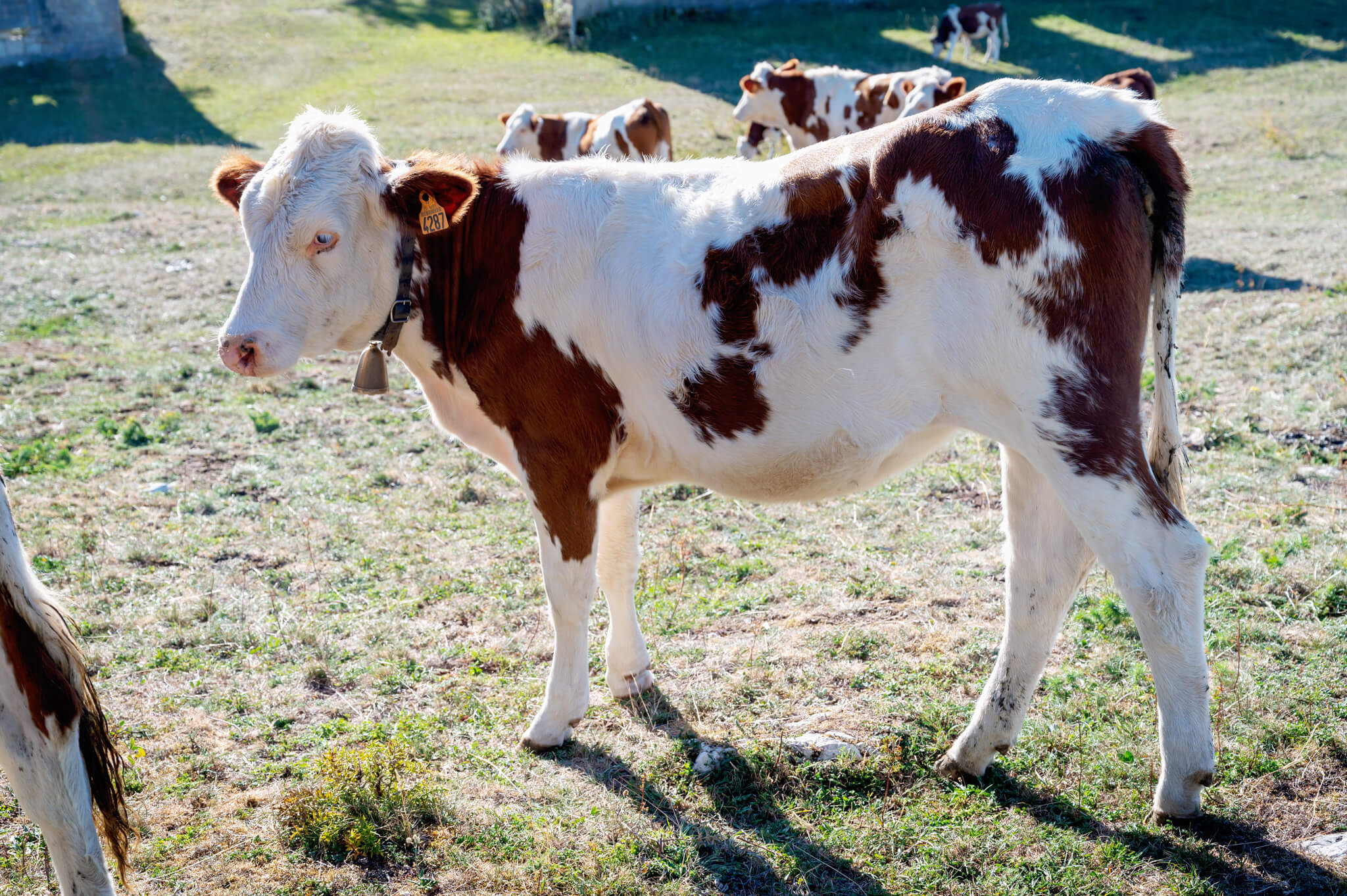
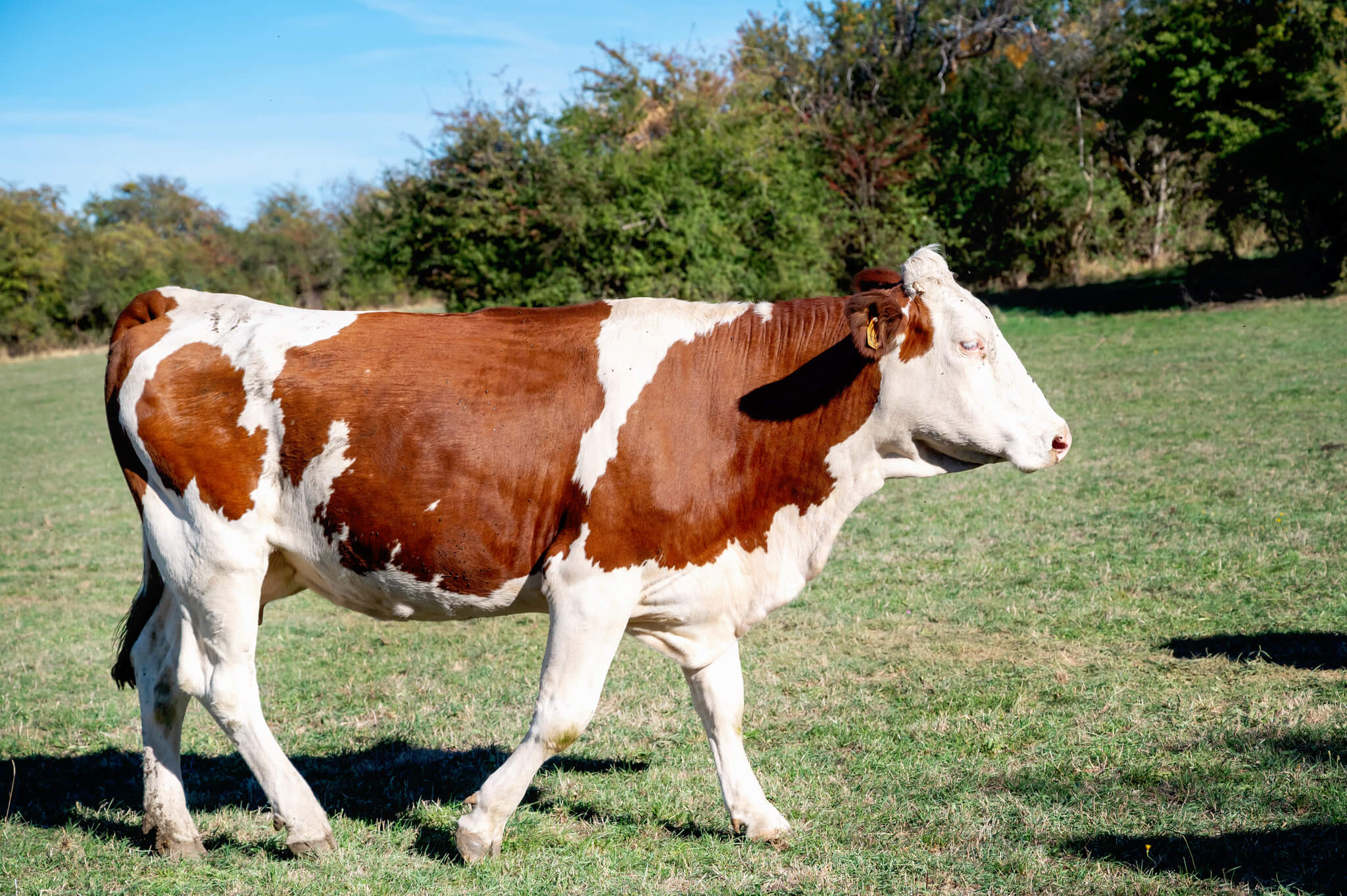
The milk used for Comté cheese comes from two permitted cattle breeds: Montbéliarde and French Simmental.
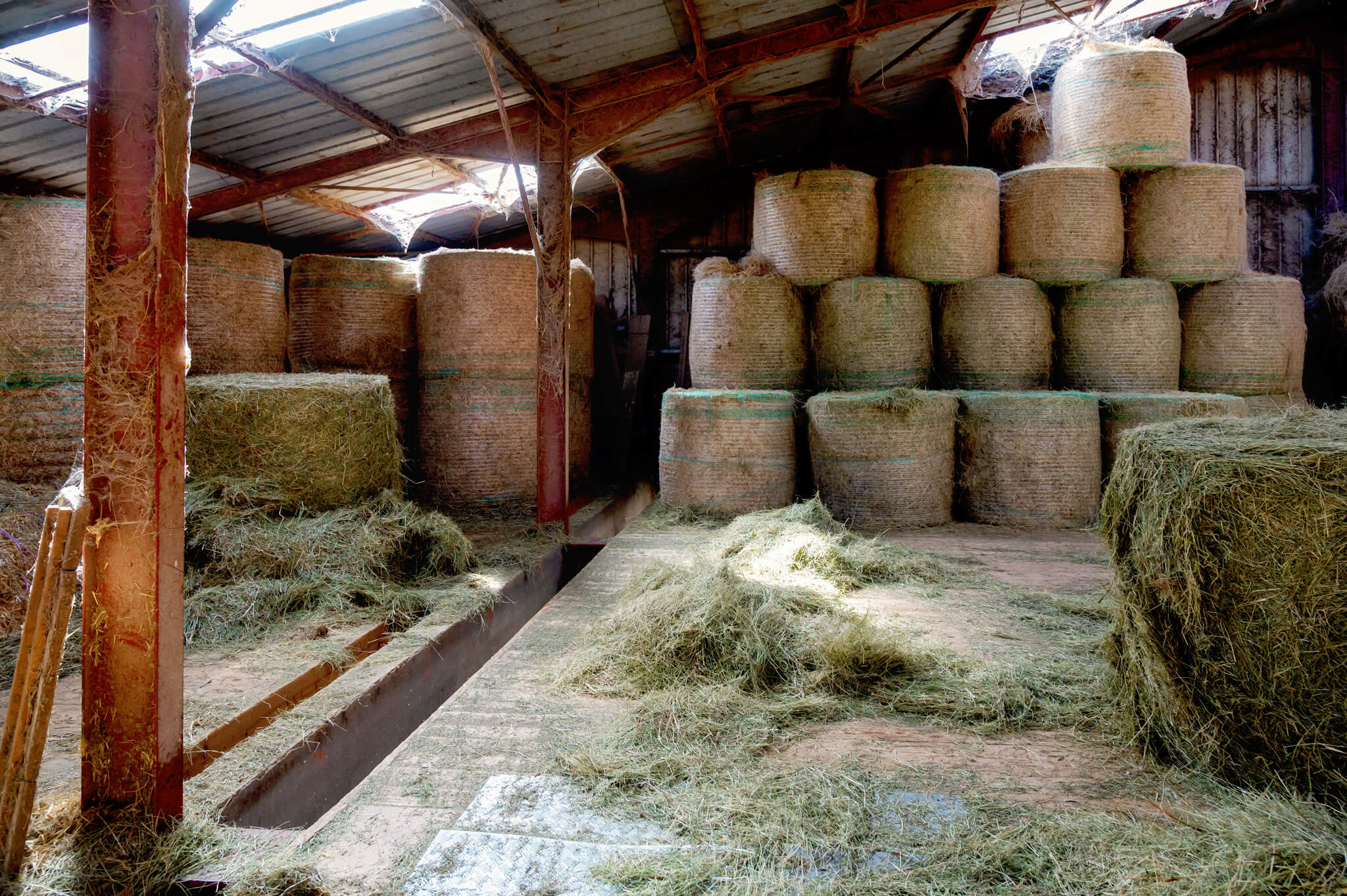
The landscape matters, too! The cows’ diet is based on fresh grass during the growing season and hay in winter, with rules governing their feed and the land available to support them.
You may have heard the word terroir when talking about wine. It describes how a food or drink reflects its place of origin, including the soil, climate, and local growing conditions. For Comté cheese, that connection begins in the pastures, where what the cows eat helps shape the character of their milk.
The cheesemaker and affineur contribute their own skills along the way. So even though Comté producers follow shared standards, no two wheels taste exactly the same. Those differences are part of what makes it so interesting to taste!
Why Comté Dairy Farmers Pool Their Milk
The farms supplying a fruitière or cheese-making facility contribute to a shared batch of milk. That means the quality of each farm’s contribution matters beyond its own fences.
This was a turning point in how I understood cooperative cheese-making! When your work becomes part of the same product as your neighbors’ work, everyone has a reason to care about the whole process. These local farmers help each other instead of competing with one another.
The milk also stays local. A fruitière’s collection area must fit within a circle measuring 25 kilometers in diameter, helping keep production connected to a particular area. This, again, helps create those unique flavor profiles.
Often the cheesemongers at the end will know what flavor profiles a wheel of Comté cheese will have just by knowing which fruitière it came from and if it was summer or winter cheese!
For me, the lasting impression was the shared responsibility and pride shown. A good wheel of Comté begins with farmers who know that both their neighbors and the next person in the process are counting on them.
2. The Fruitières Where Comté Cheese Is Made
The next morning, we visited the fruitière in Vernierfontaine to watch the milk from Nicolas and Juliette’s farm, along with others, become cheese. It can’t be called Comté cheese for at least four months.
And if the word fruitière makes you think of fruit, you’re probably wondering what it has to do with cheese! Here, the name reflects the idea of farmers pooling their milk and sharing in the “fruit” of their work. A fruitière is the local cheesemaking dairy, usually organized as a cooperative, where those contributions come together to become Comté cheese.
I love how even the name connects back to the community behind every wheel of Comté cheese!
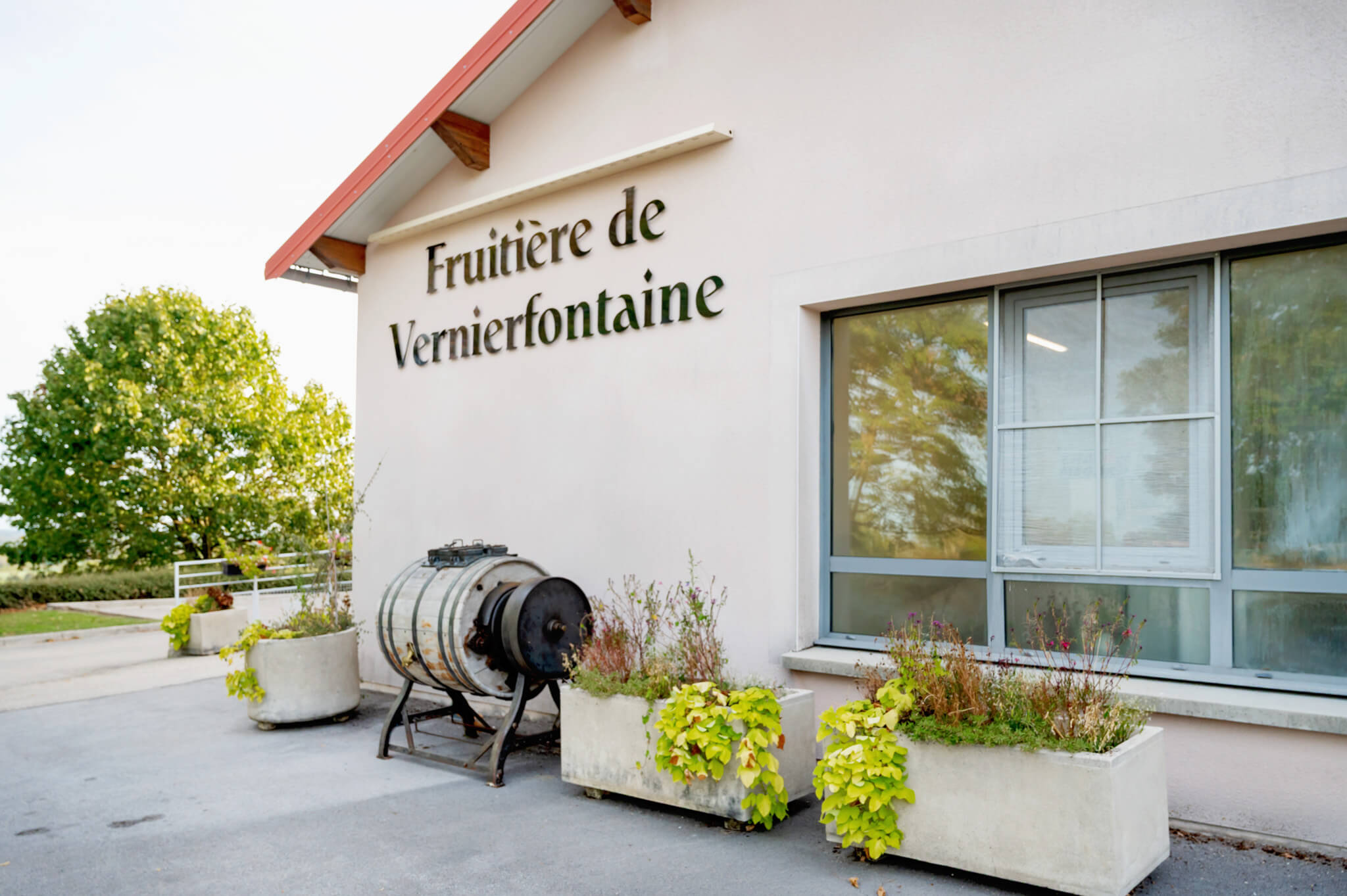
Watching Comté Cheese Production in Vernierfontaine
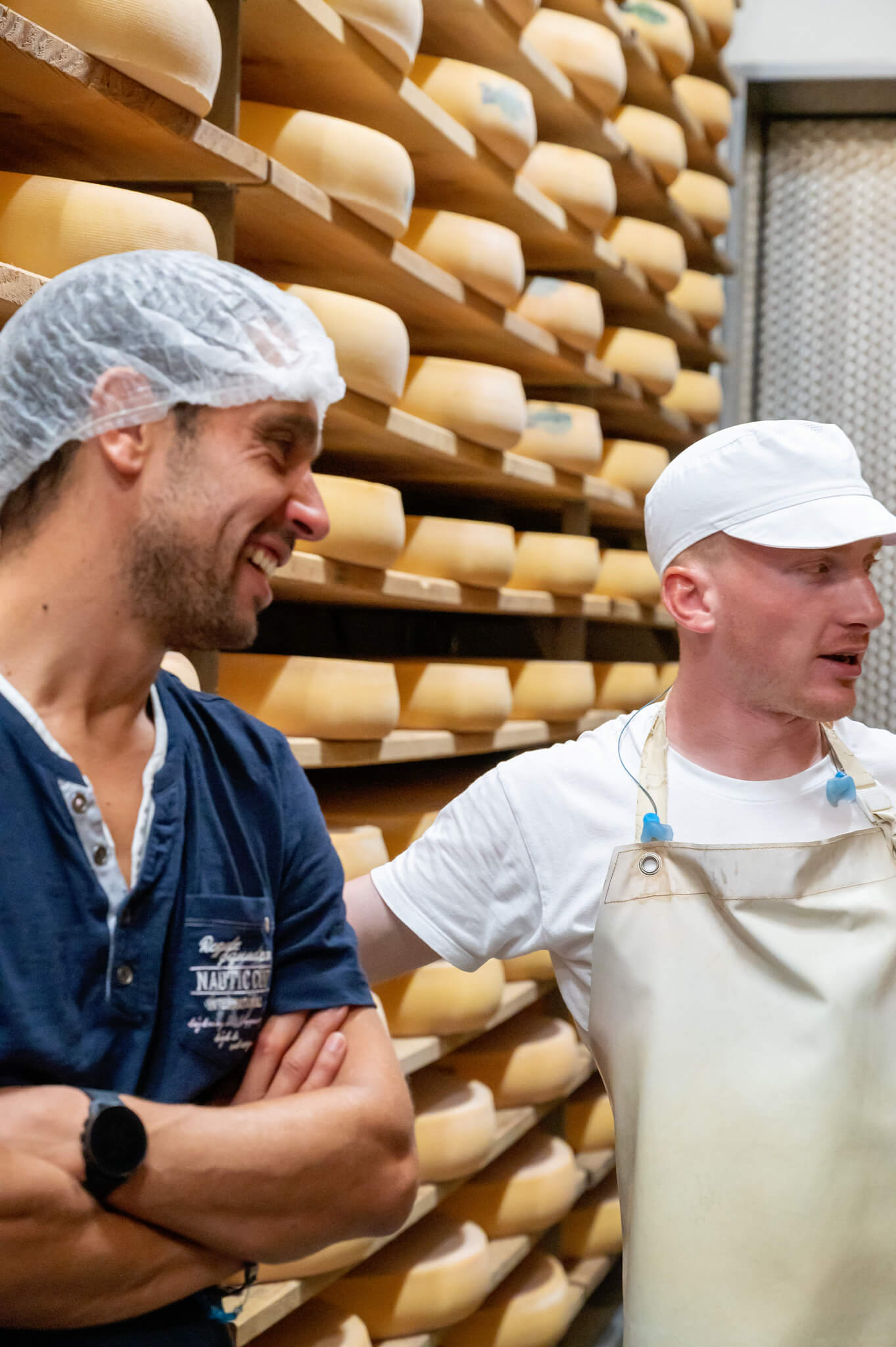
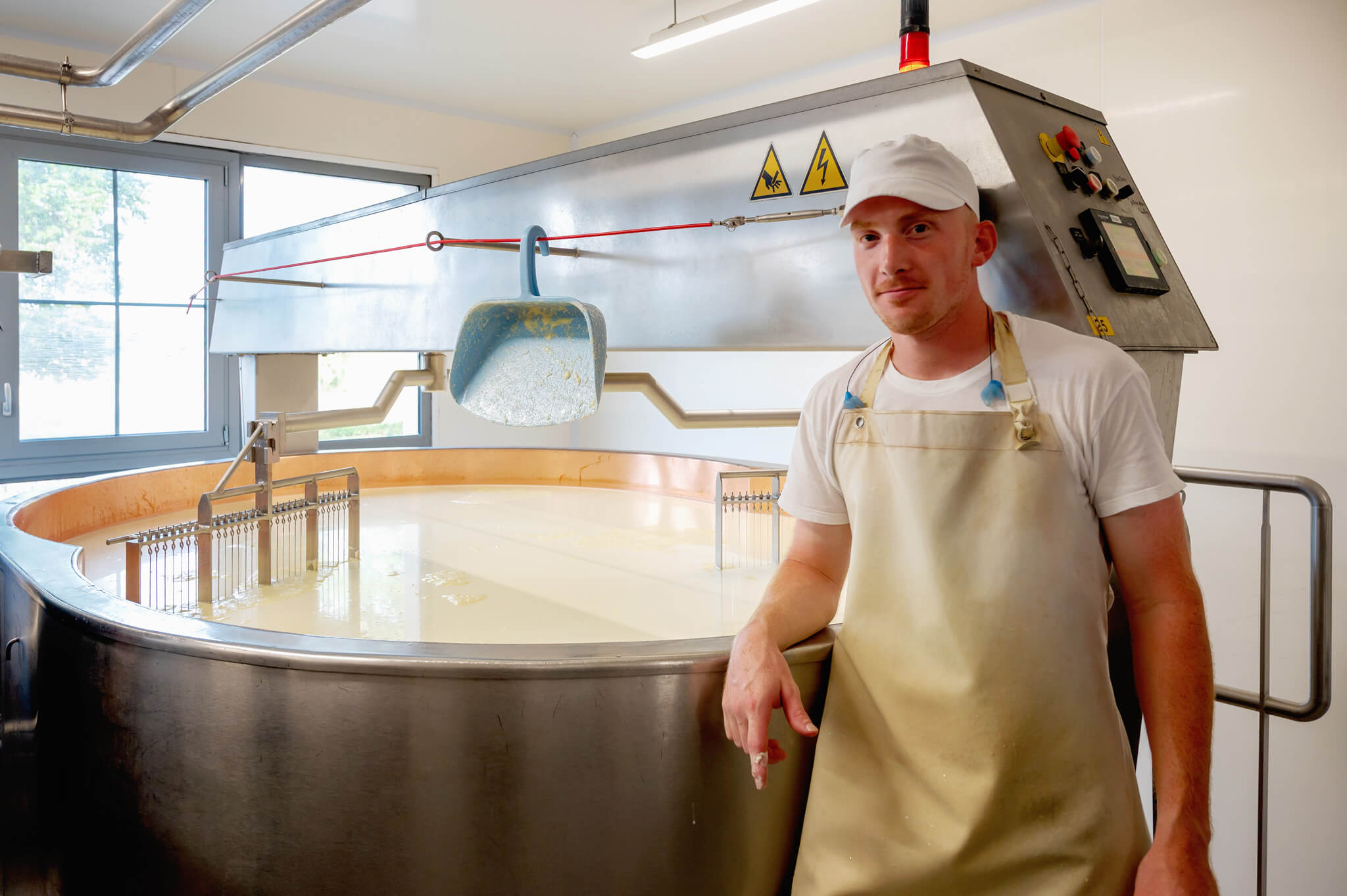
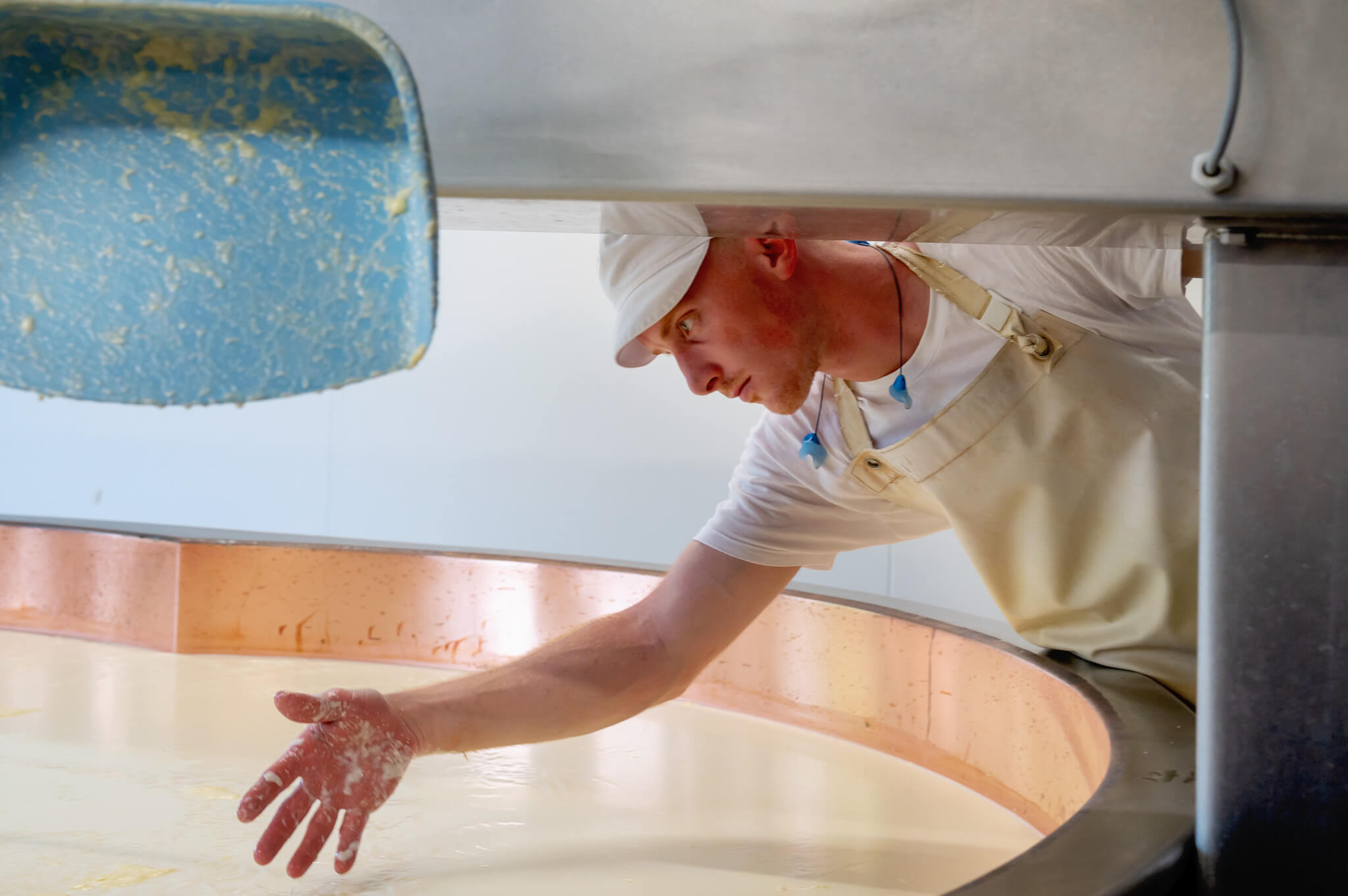
Assistant cheesemaker Antoine Cattin talked us through the stages, explaining what he watched for and how he assessed the developing curd. Nicolas, whose farm we had visited the day before, also stopped by to watch with us.
Having him there made the connection between the farm and the fruitière even more meaningful. The pooled milk being made into cheese included milk from his cows!
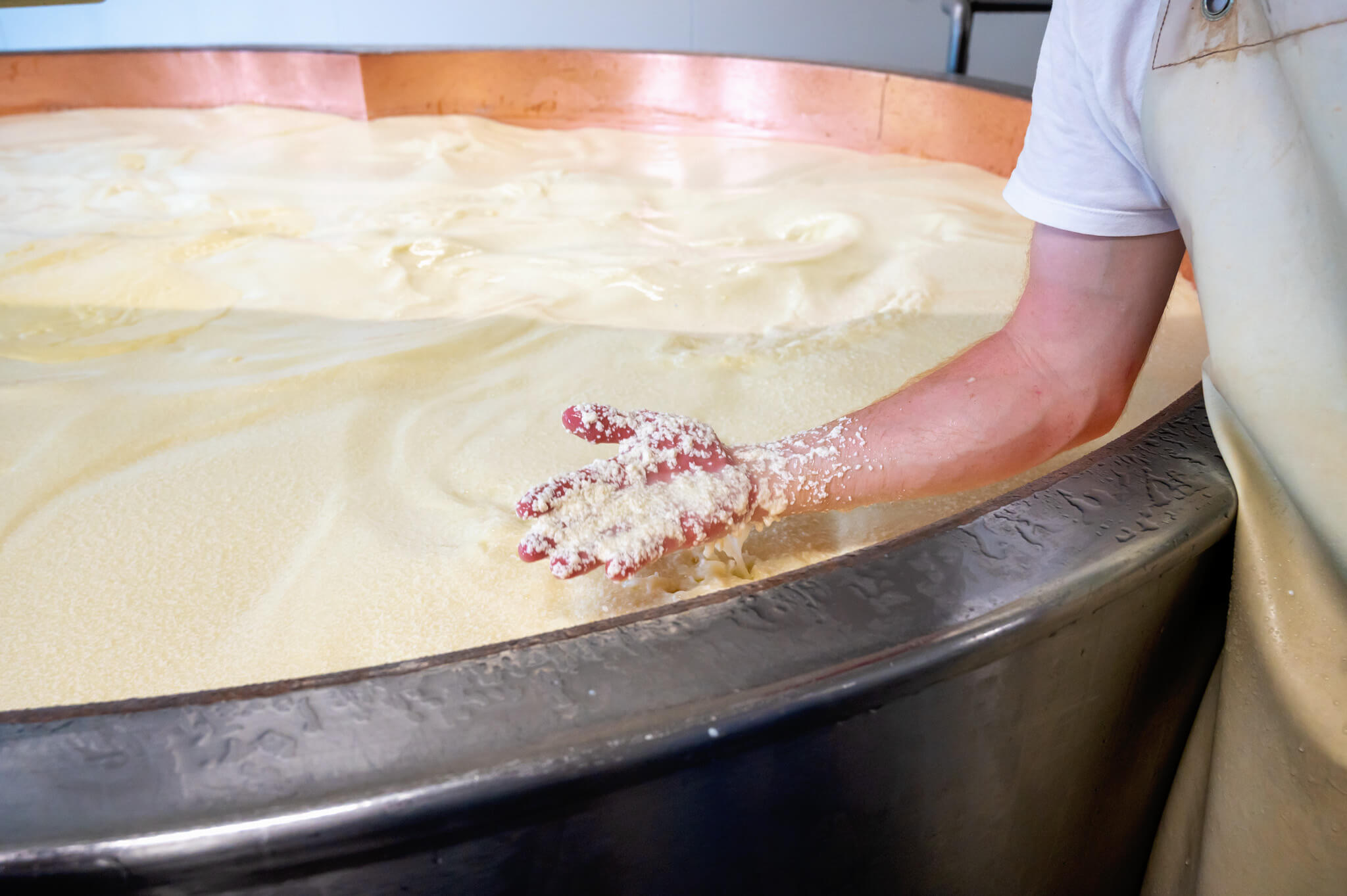
I could see the equipment doing its work, but I was just as interested in Antoine’s decisions. He knew what the curd should feel like and when it was ready for the next step.
As someone who had mostly experienced cheese by eating it, I appreciated seeing that judgment firsthand, literally and figuratively.
From Copper Vats to Comté Cheese Wheels
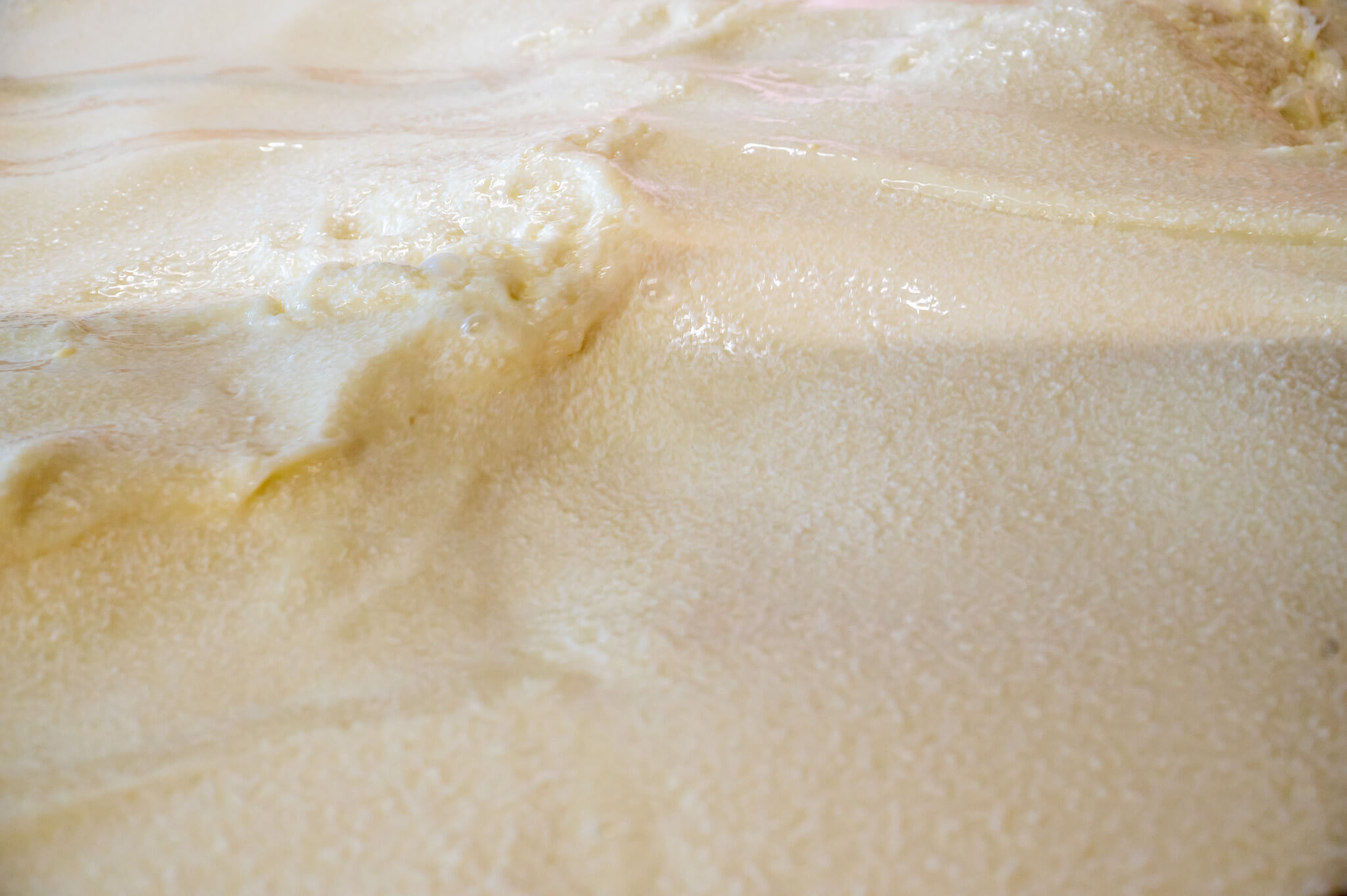
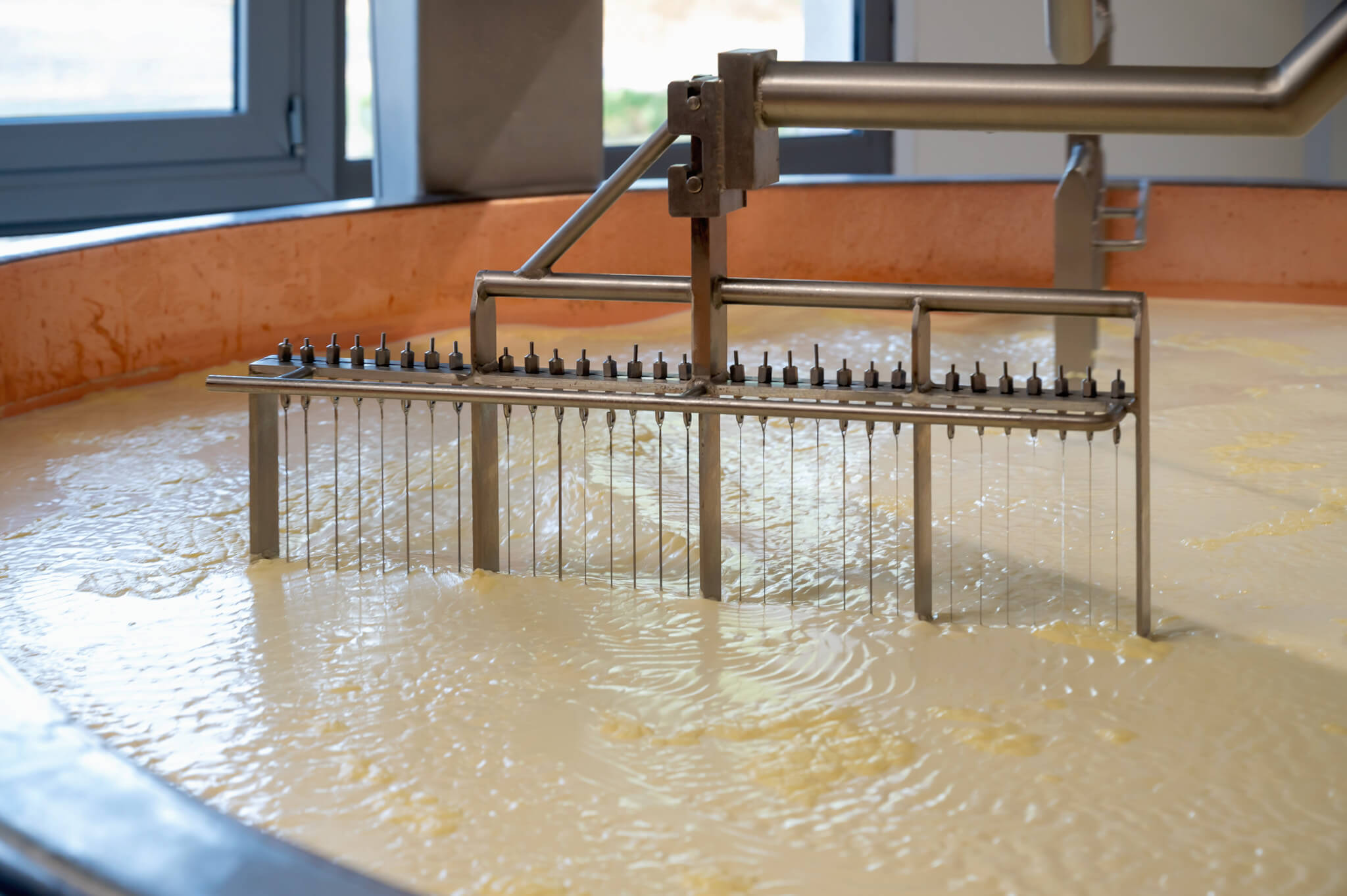
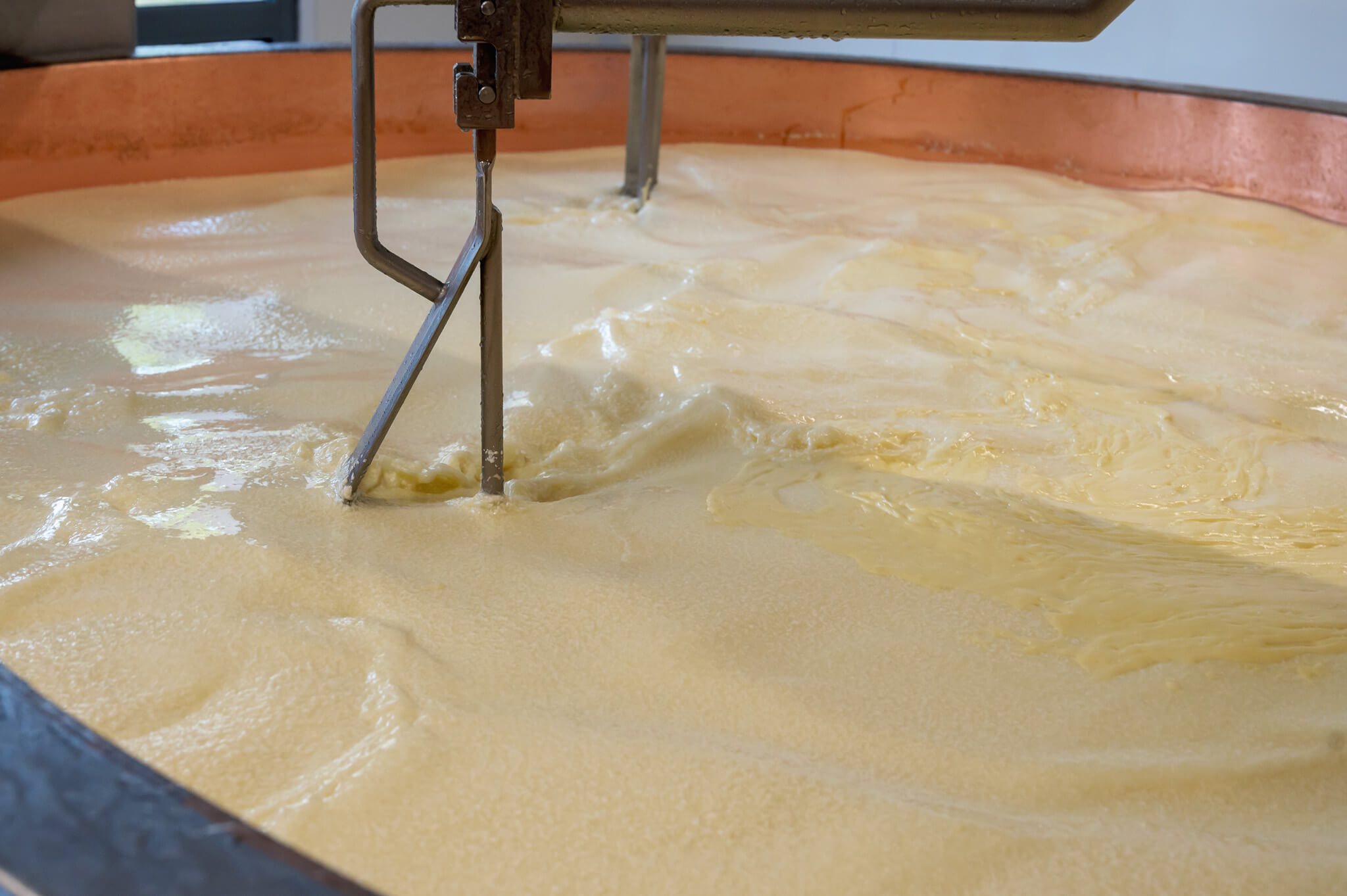
At the fruitière, milk goes into large copper vats. The cheesemaker adds starter cultures and rennet, which helps the milk set into a curd. The cheesemaker then cuts the curd into small grains, stirs it, and heats it.
The curds are transferred into molds and pressed to expel more whey, the liquid that separates from the curds during cheesemaking. After pressing, they remove the round cheese molds, revealing the young wheels.
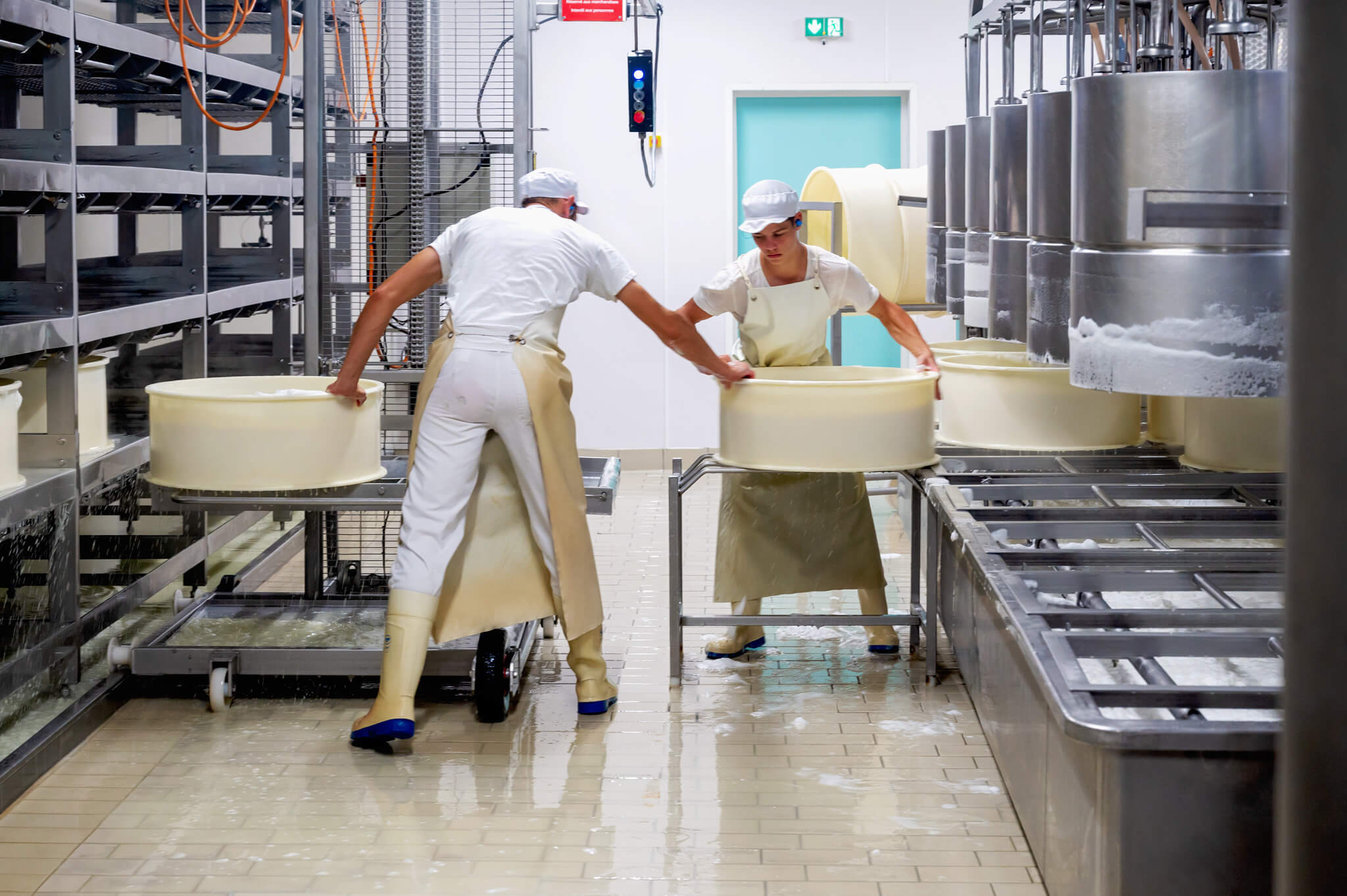
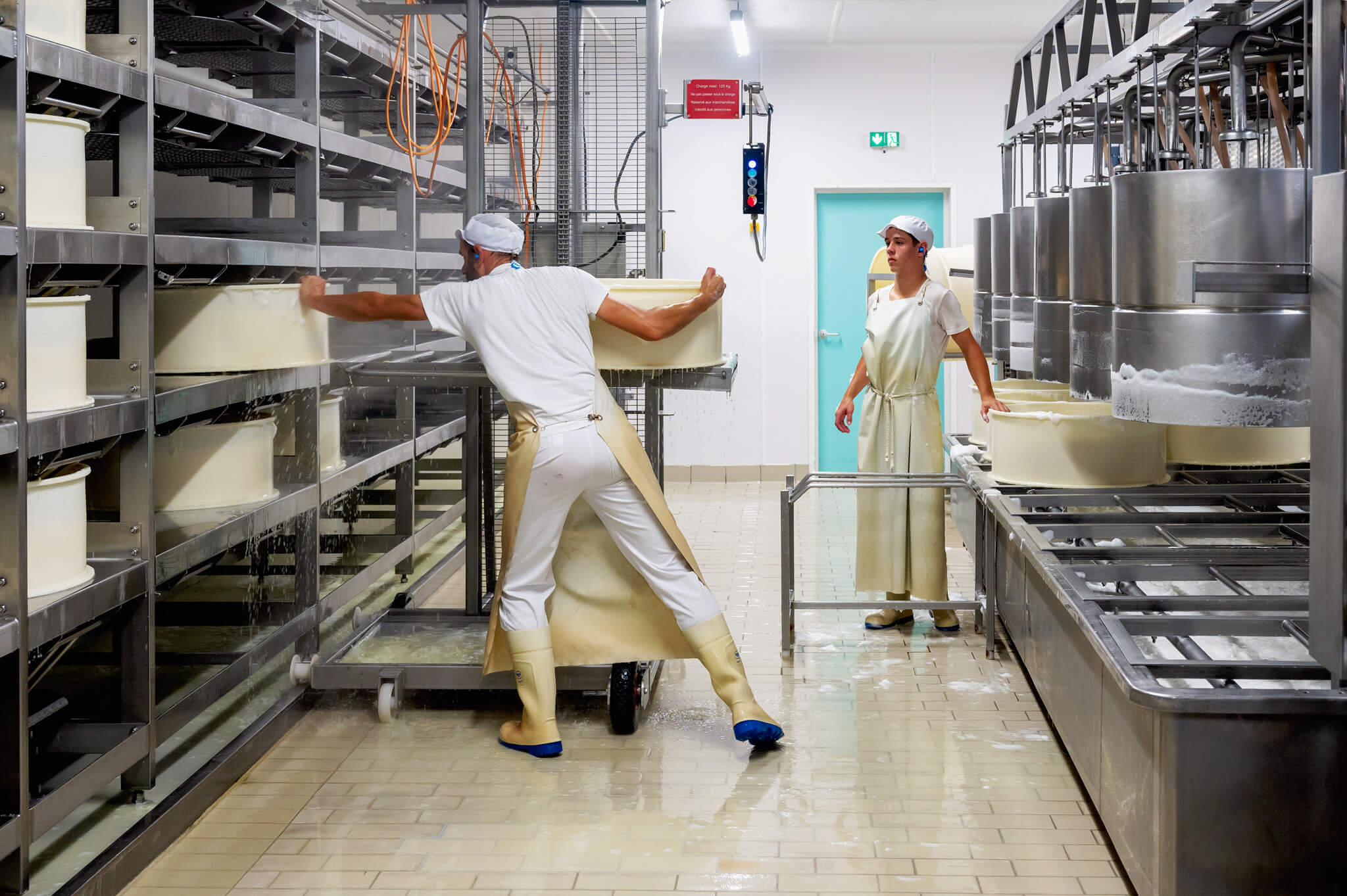
They can collect the whey for other uses, including processing it into whey protein powder. Some fruitières also make cream and butter alongside their Comté cheese.
We also saw the fruitière’s cellar, where the cheeses begin their care before moving on for further aging in the next step.
Those young wheels still had a long way to go before becoming the Comté we would recognize at a cheese counter. The cheesemaker had given them their start. Now another set of experts will help them develop further.
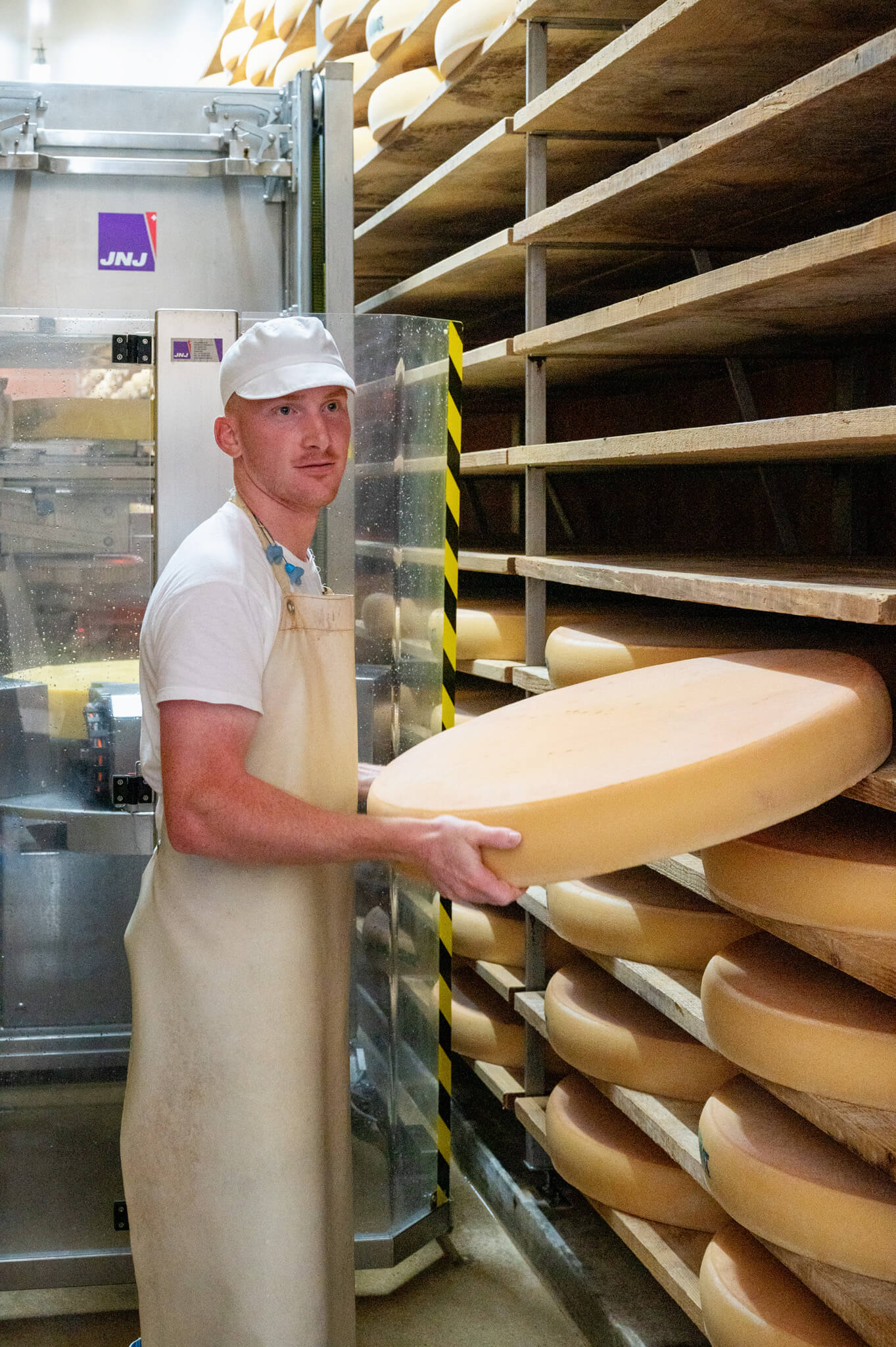
3. The Affineurs Who Age Comté Cheese
An affineur specializes in maturing cheese. The process, called affinage, involves caring for the wheels and monitoring how they develop over time. This happens in one of the 14 Comté aging houses, often cold cellars.
To be honest, I understood that cheese needed to age. But I hadn’t appreciated how much active attention it needs!
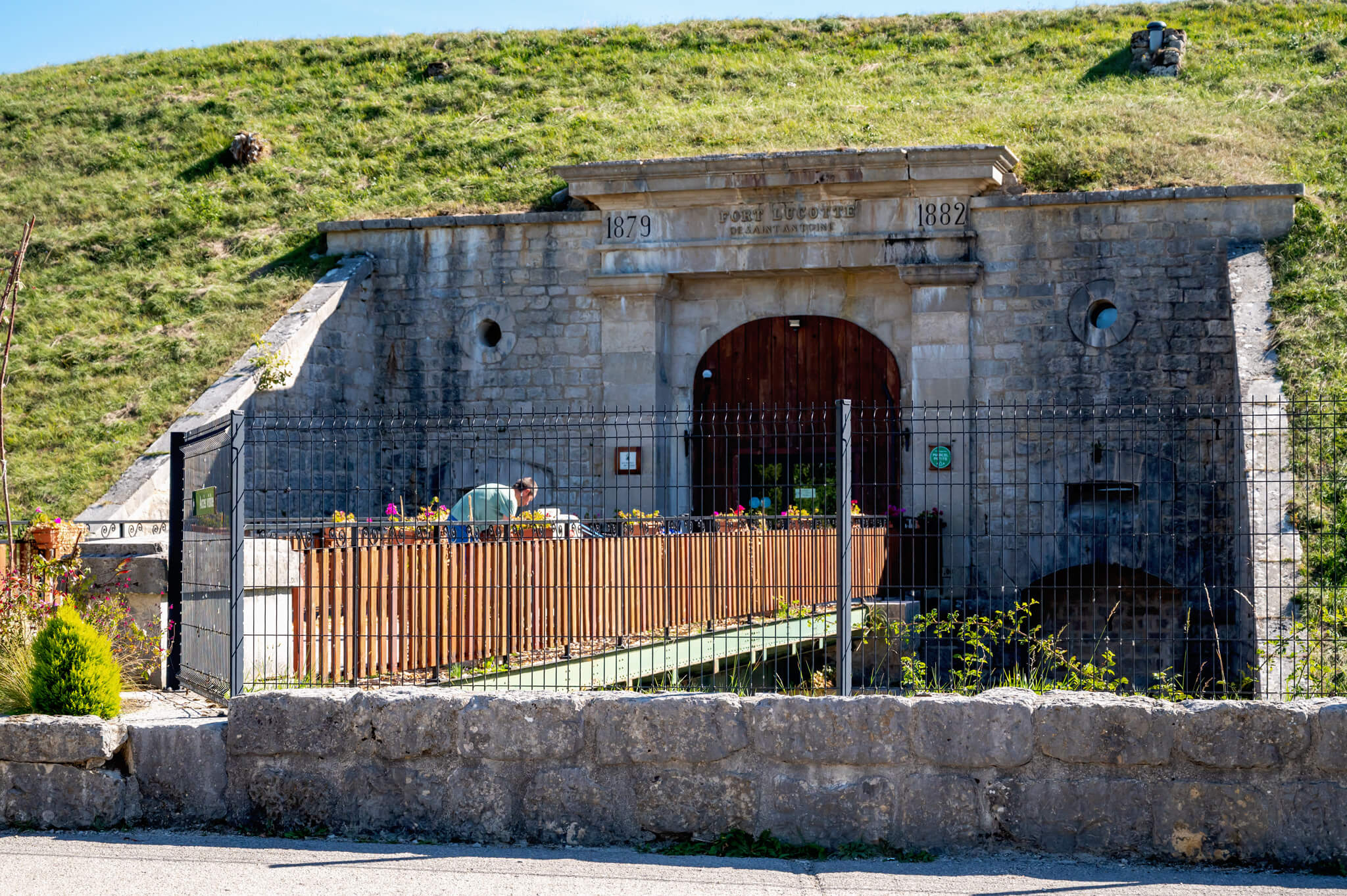
Inside the Comté Cheese Cellars at Fort Saint-Antoine
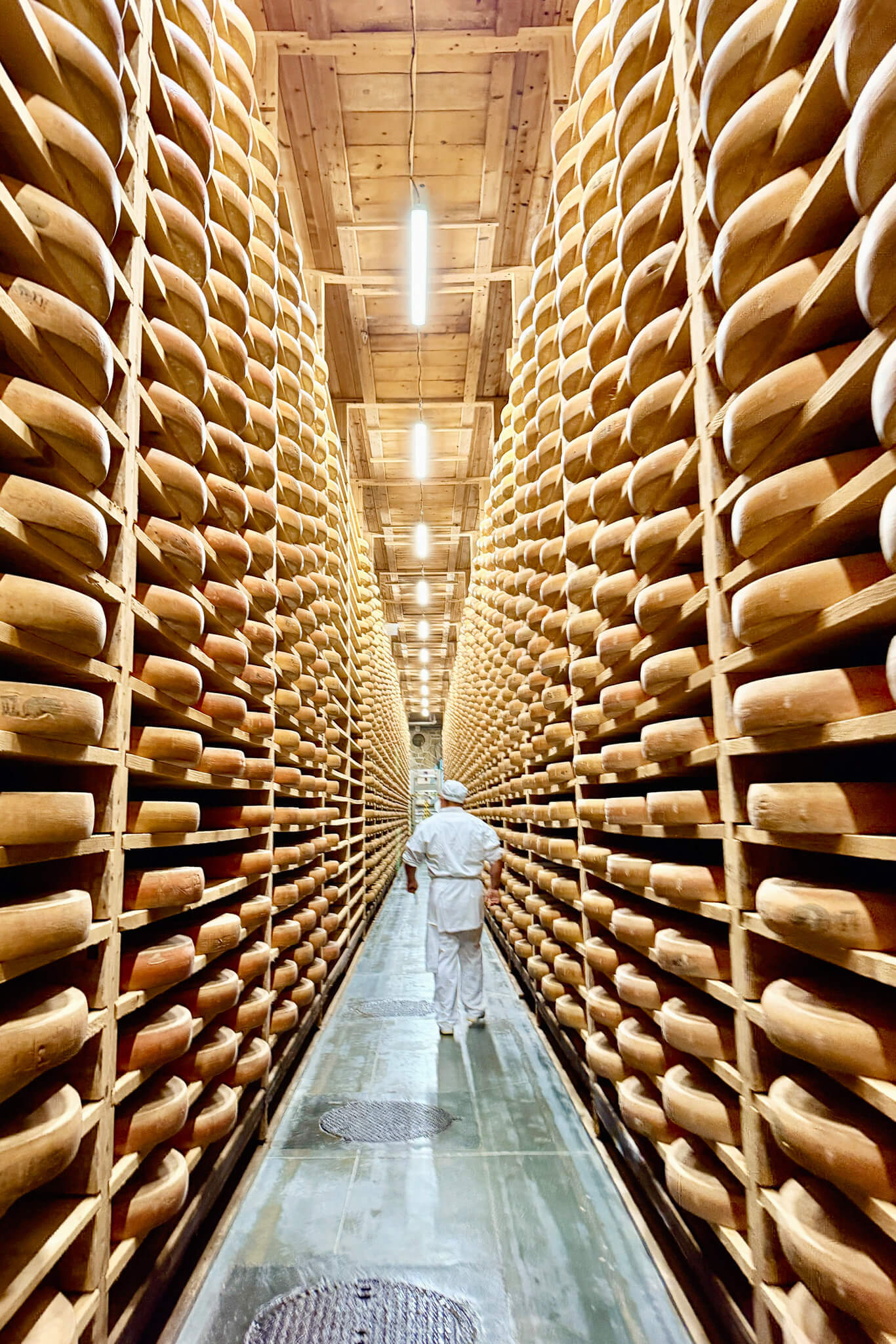
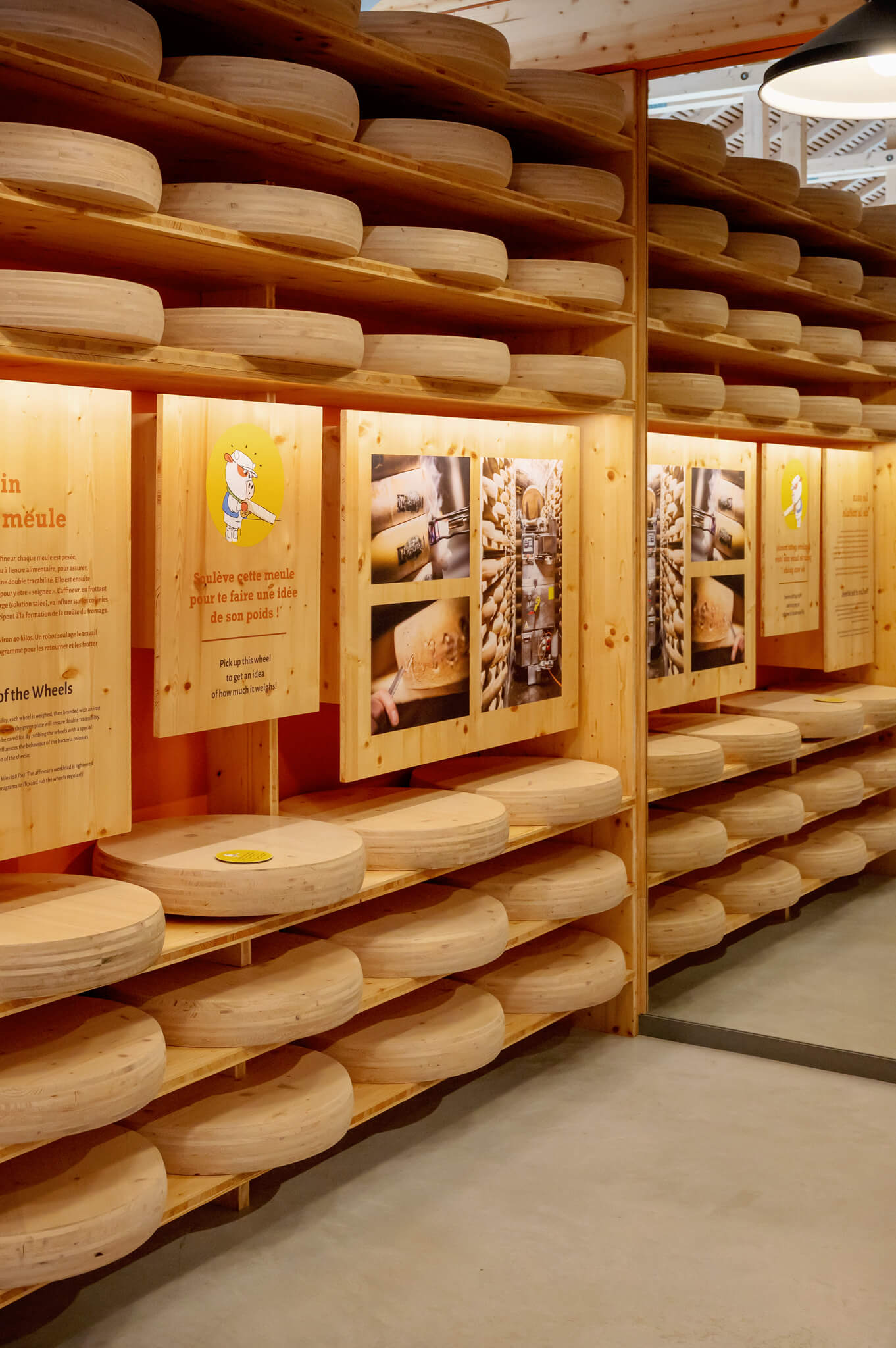
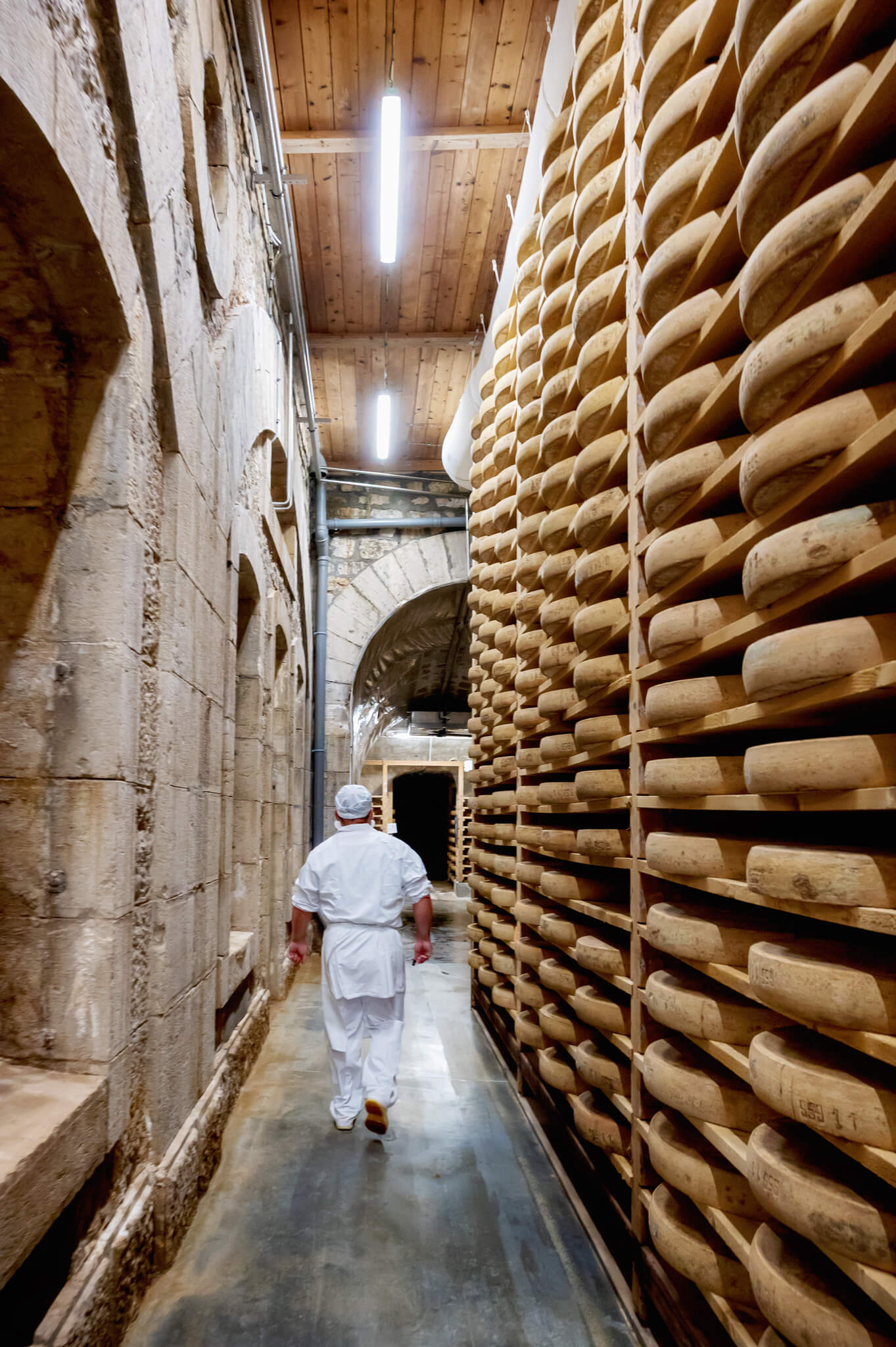
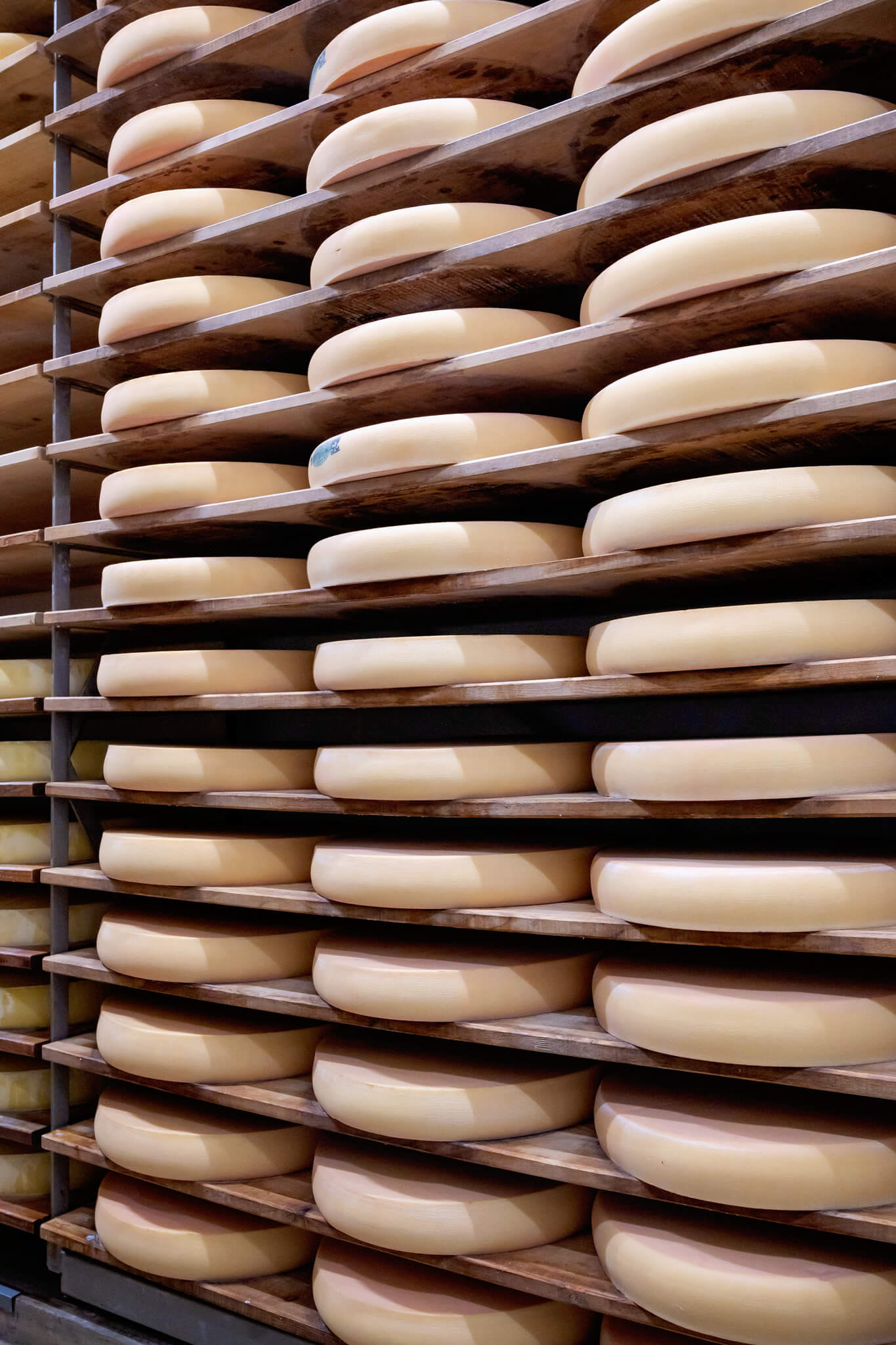
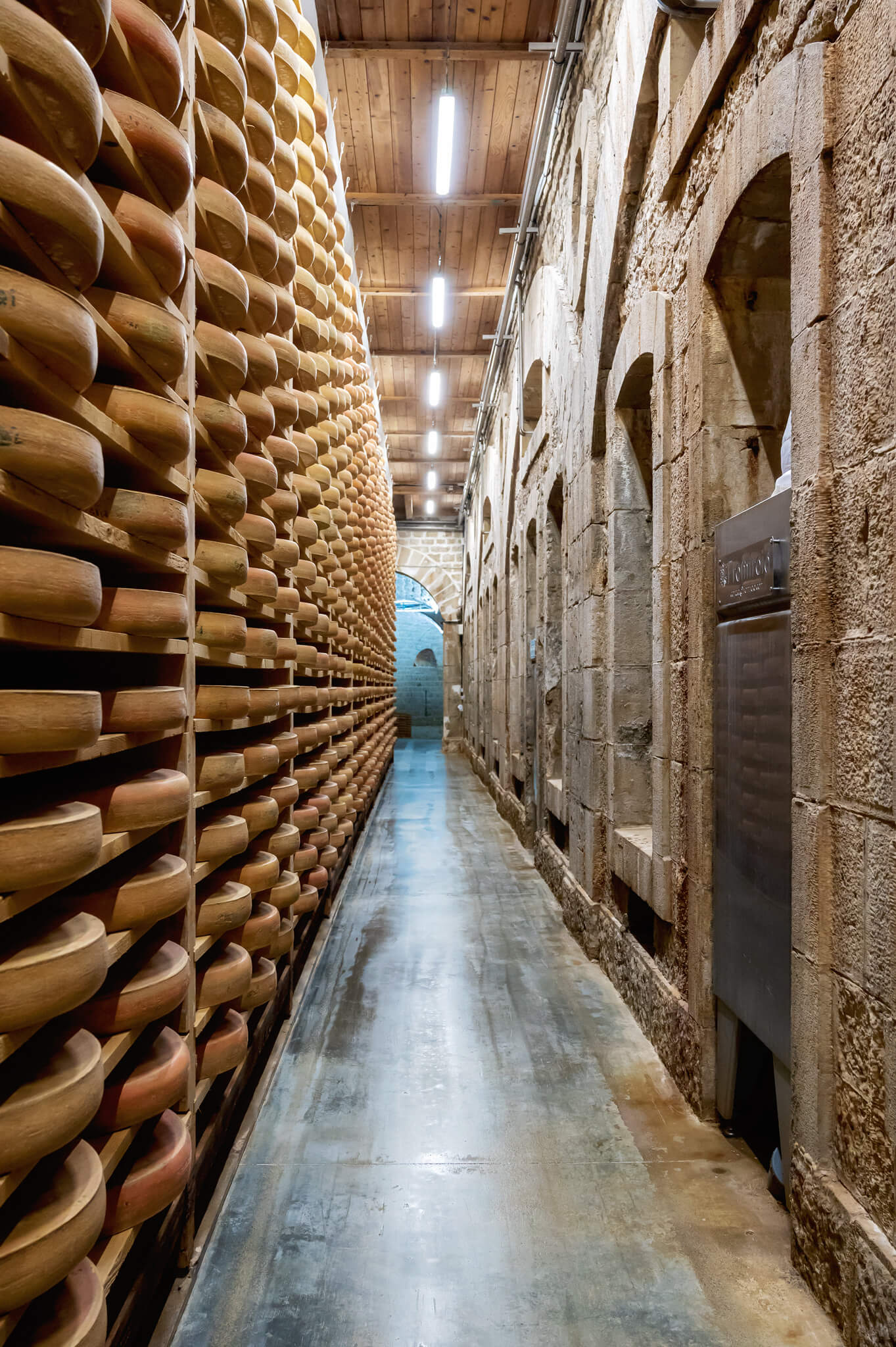
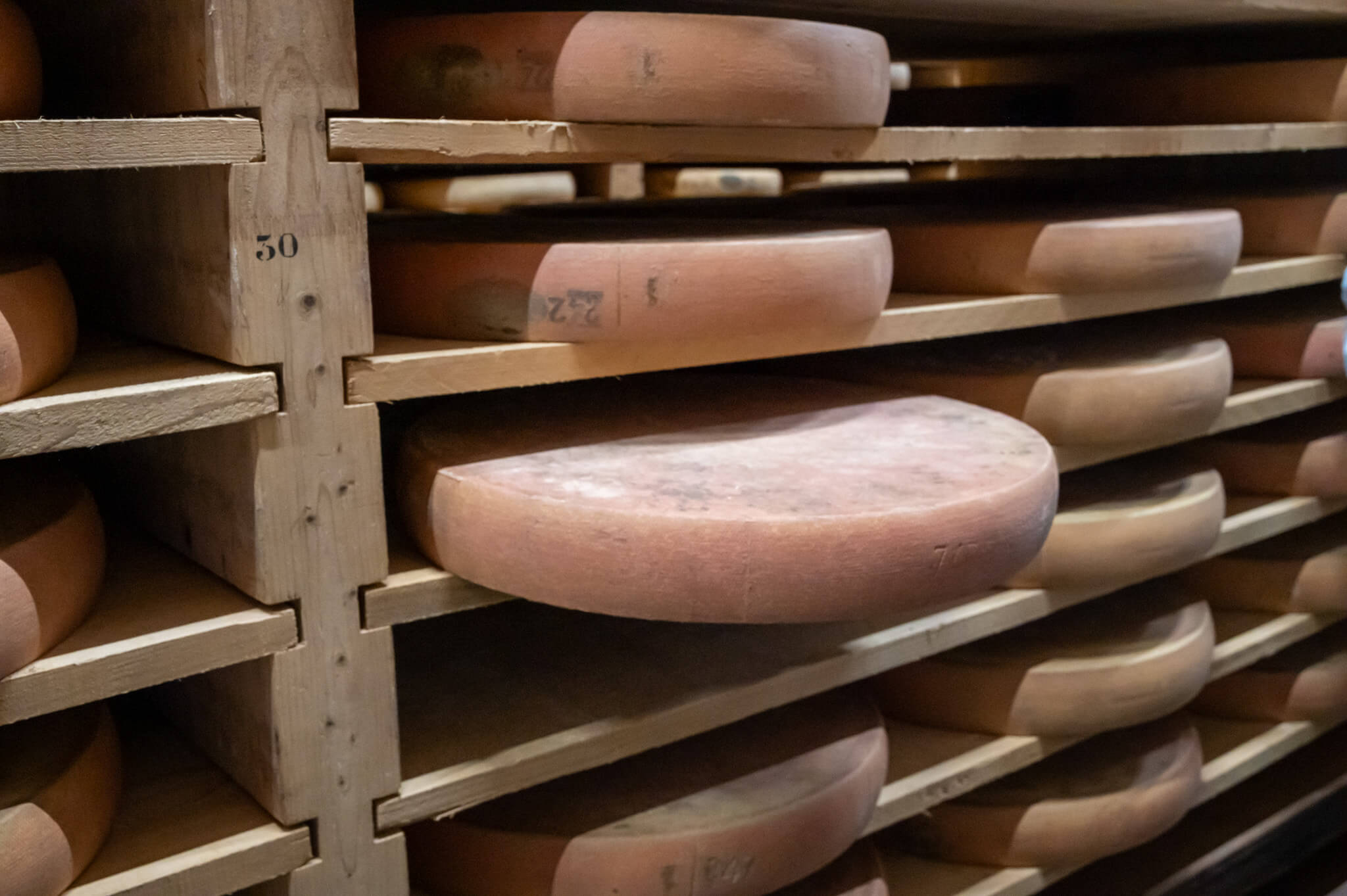
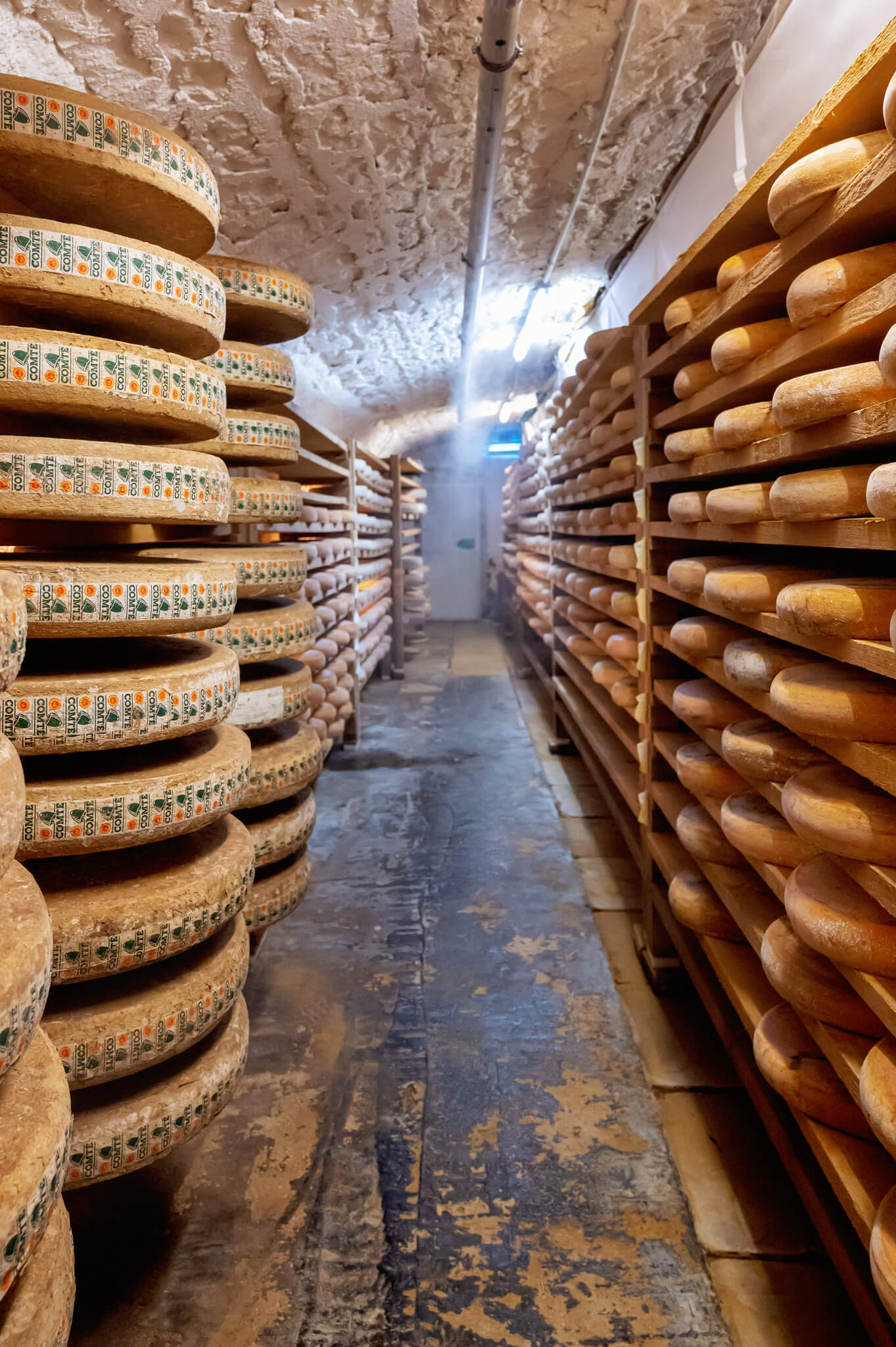
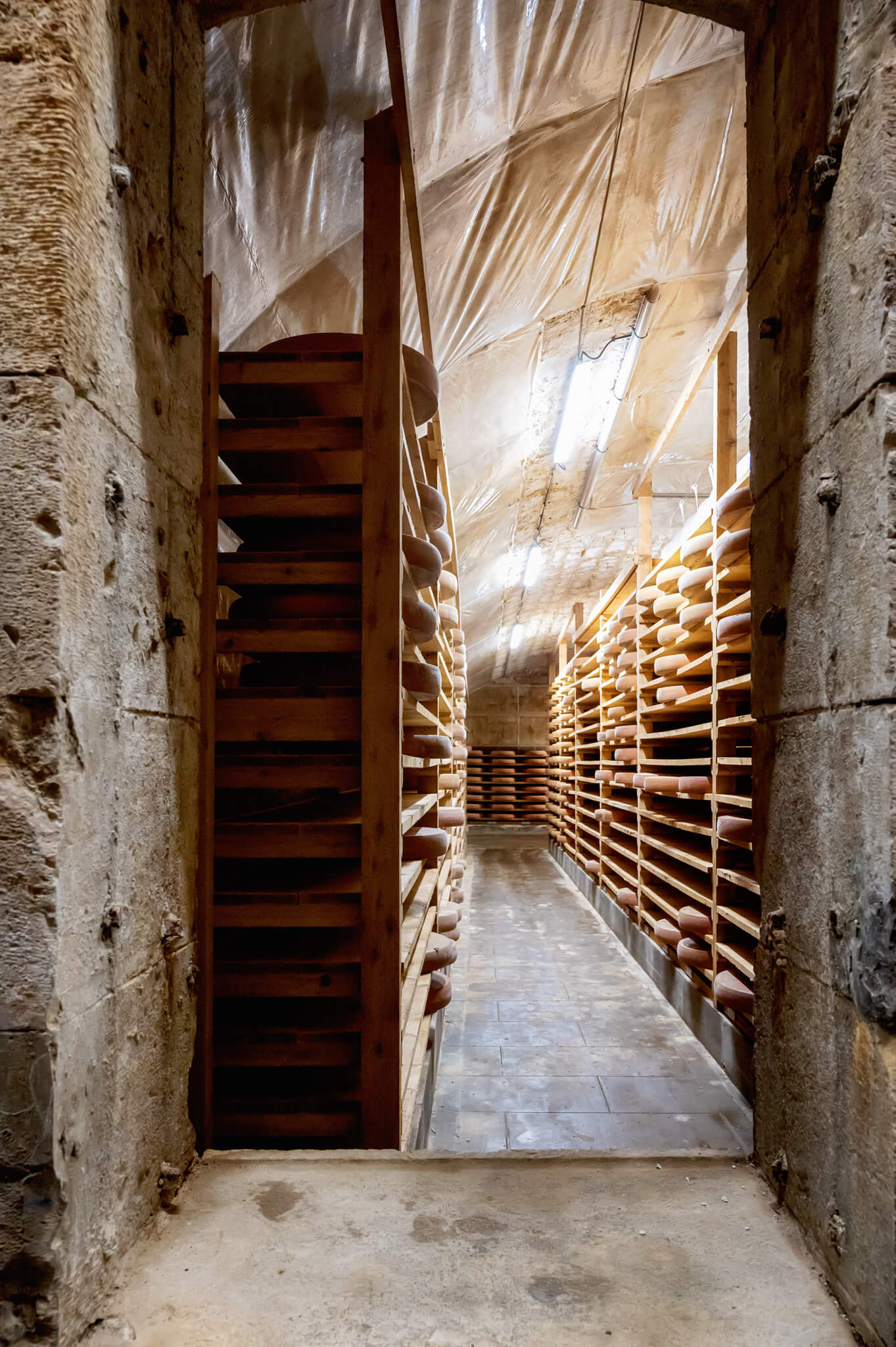
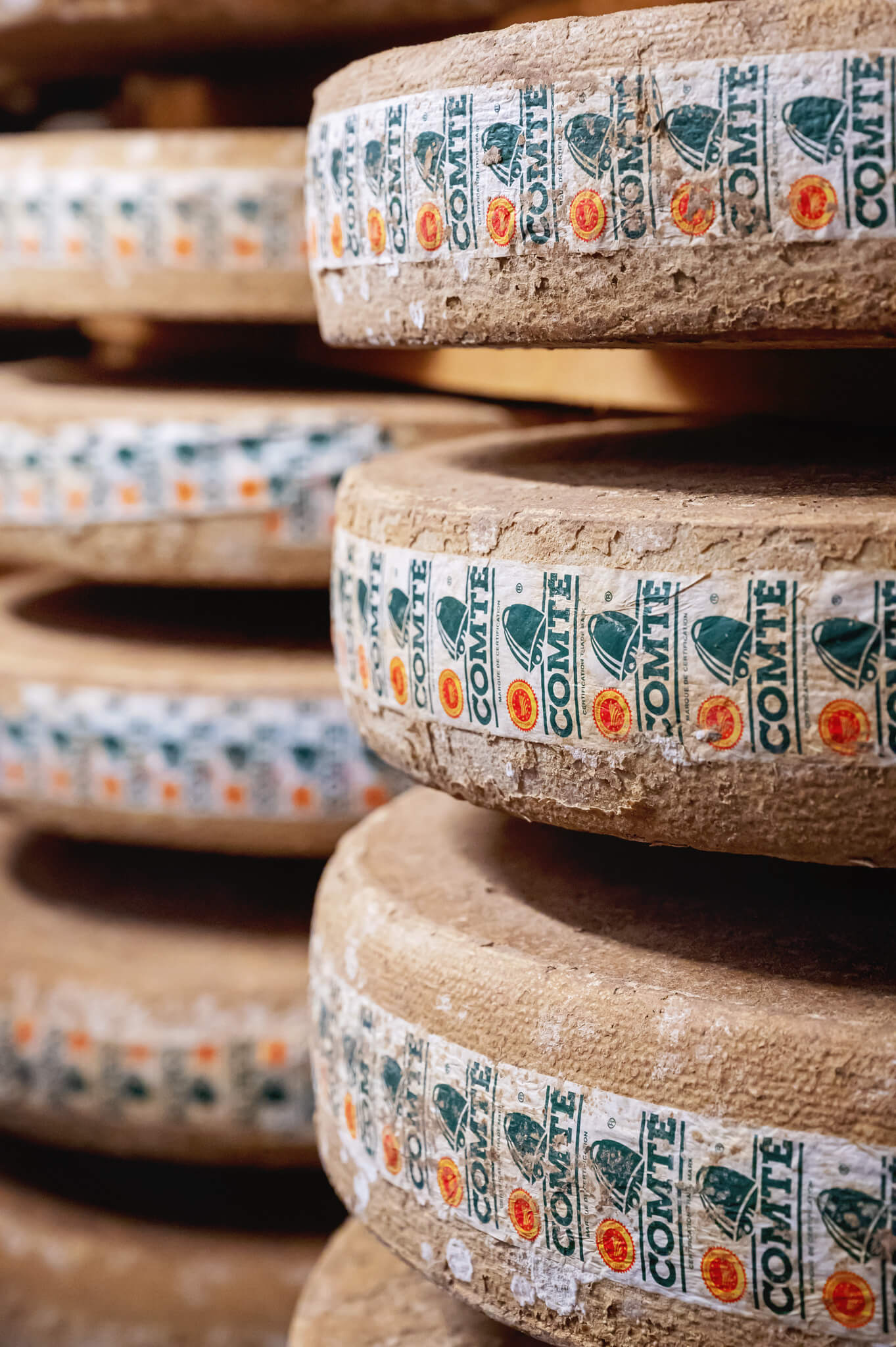
The aging house at Fort Saint-Antoine uses an old military fort as a Comté cellar and holds around 100,000 wheels of cheese. Seeing so much cheese stacked on wooden spruce boards was incredible, especially after learning how much milk and work went into each one.
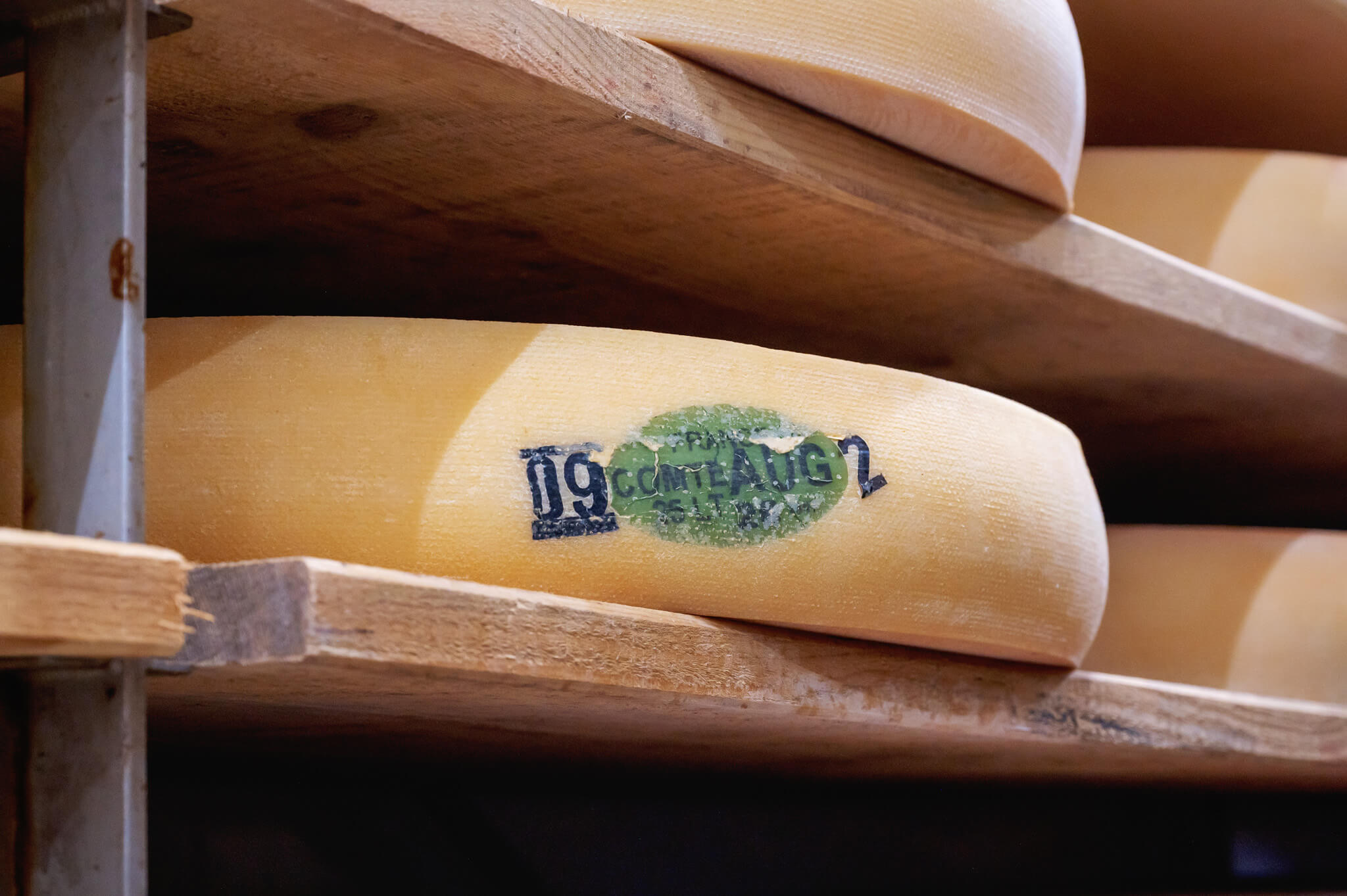
The scale was enormous, but the attention still came down to individual wheels. They are numbered and labeled, each with its own origin story, and routinely rubbed, salted, and turned as they continue to age.
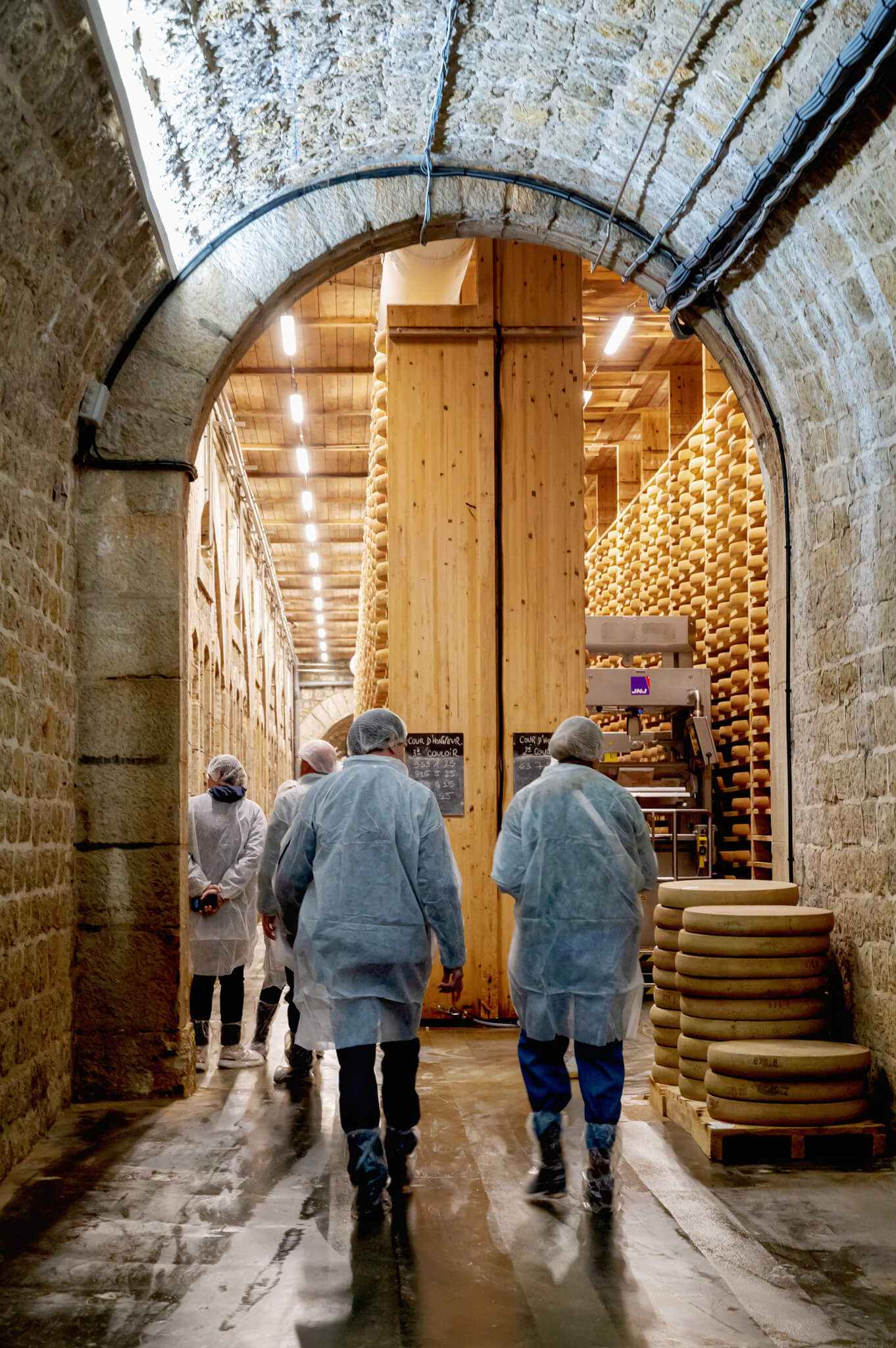
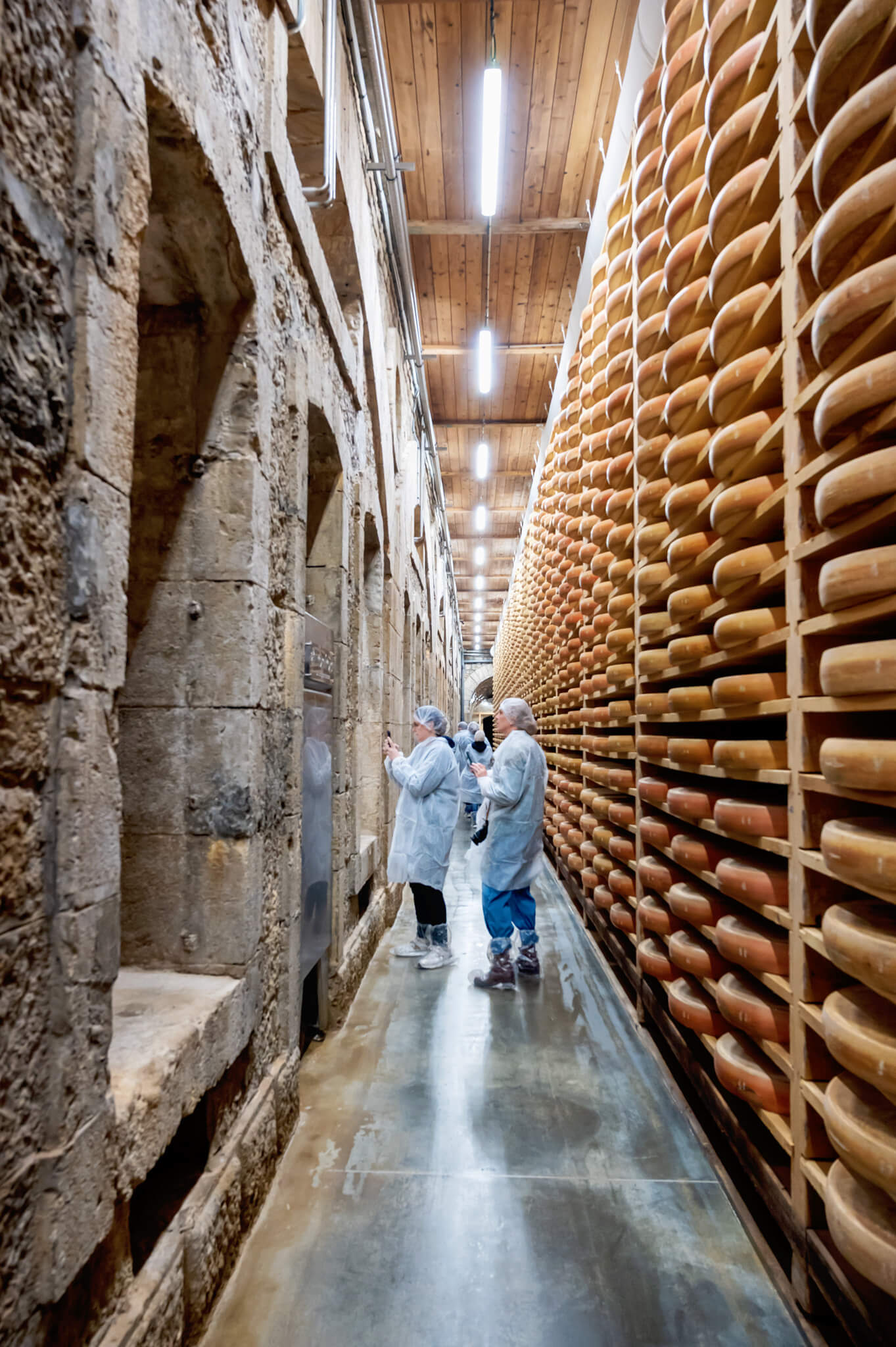
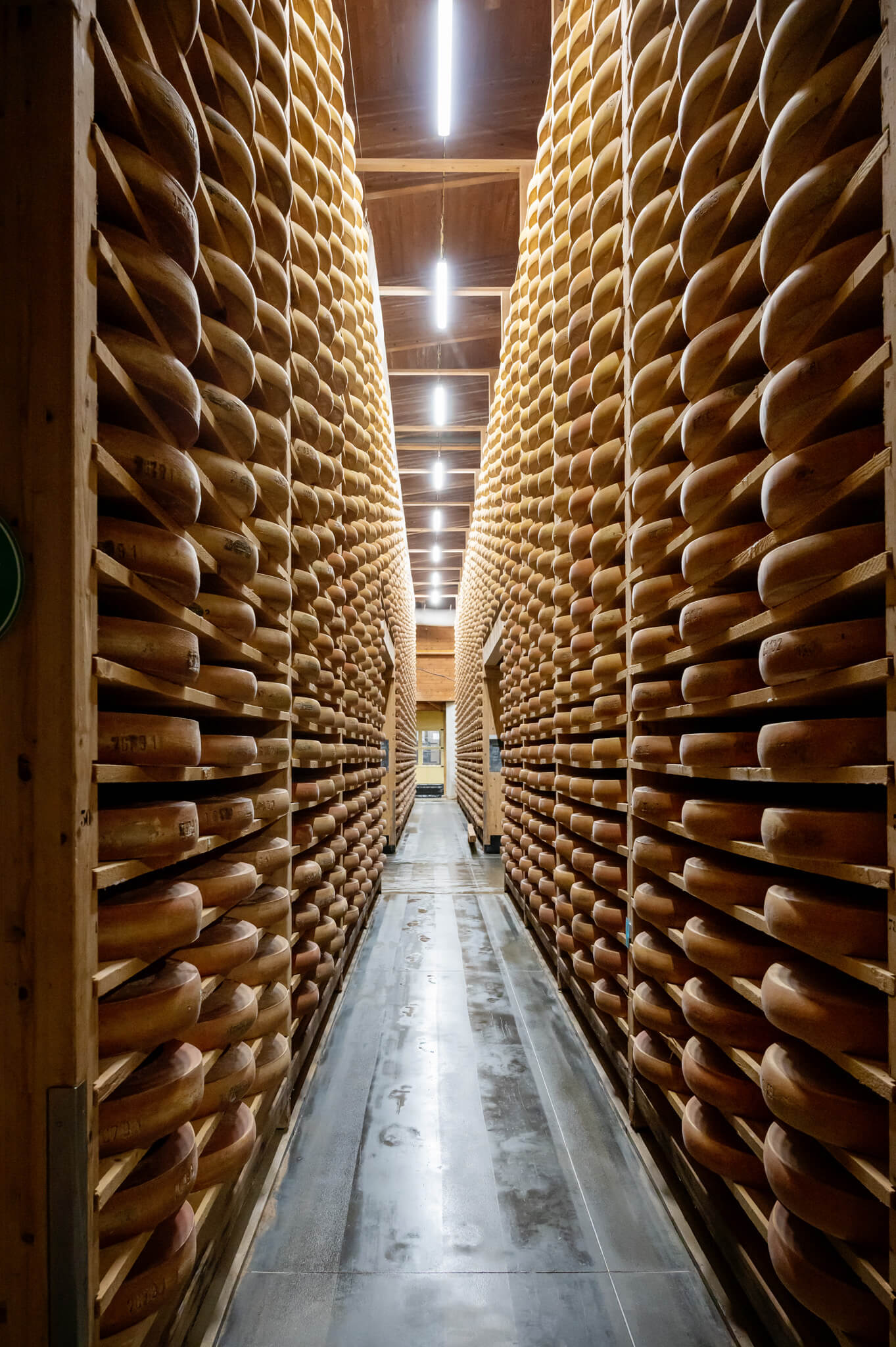
During aging, modern equipment does the heavy lifting, with robots handling much of the routine rubbing and flipping 24/7 while experienced specialists assess how the cheeses are progressing.
We were told that these professional cheese tasters often taste 200-300 wheels of cheese each day!
One of my favorite moments of the trip was watching an expert tap a wheel of cheese and tell us he thought there was a crack inside. He then used a cheese trier to pull out a narrow sample. Sure enough, there it was!
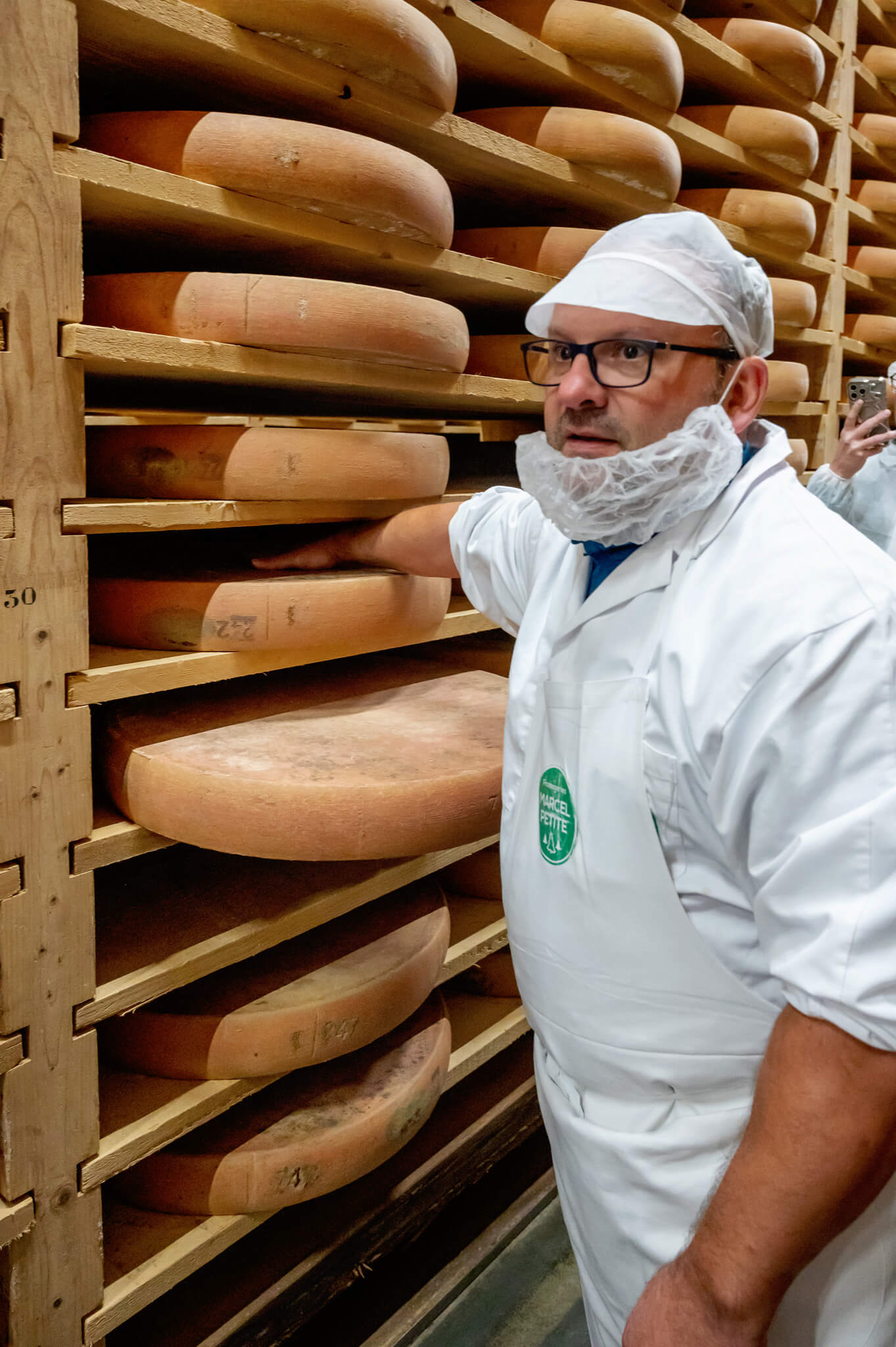
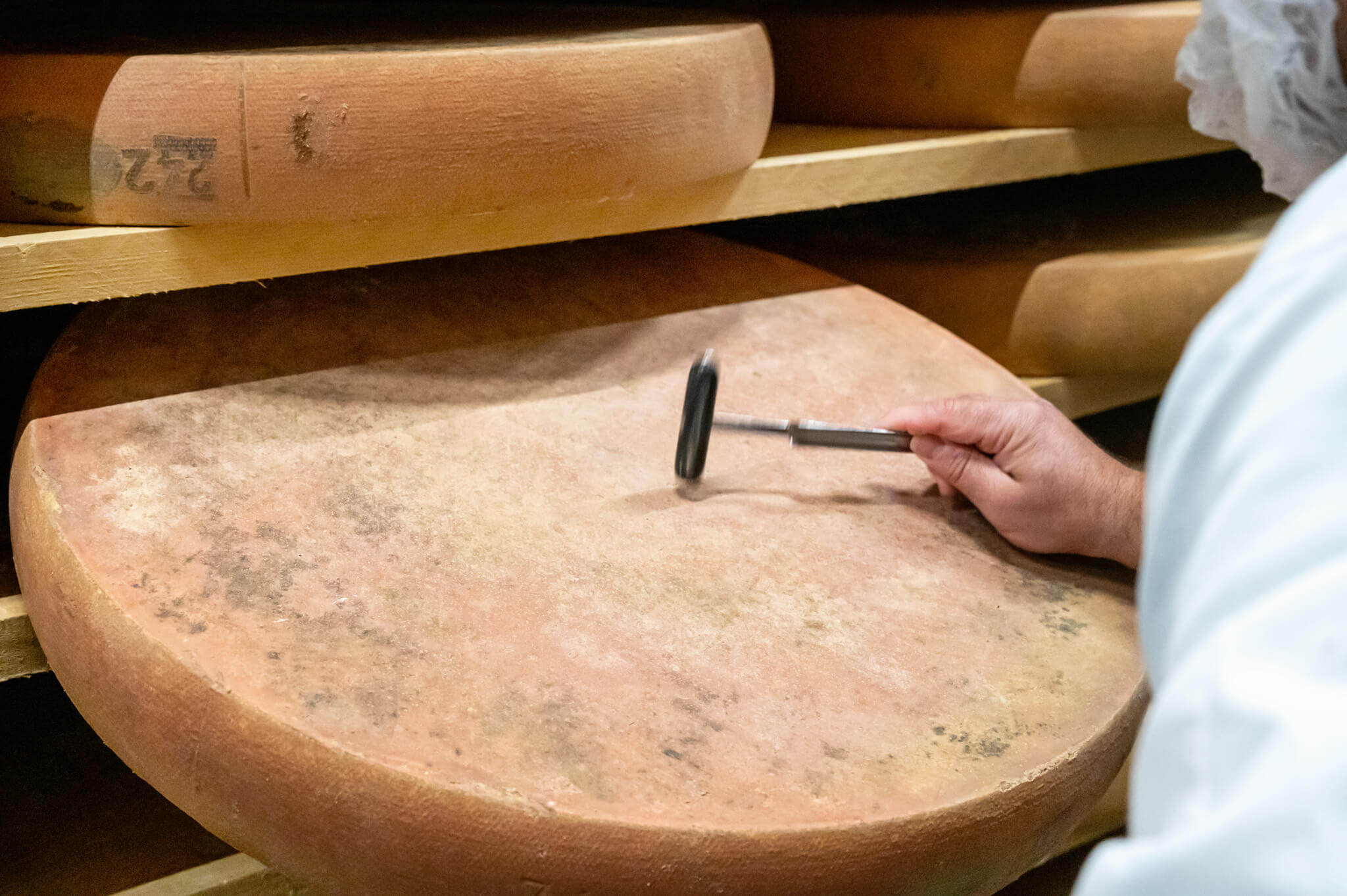
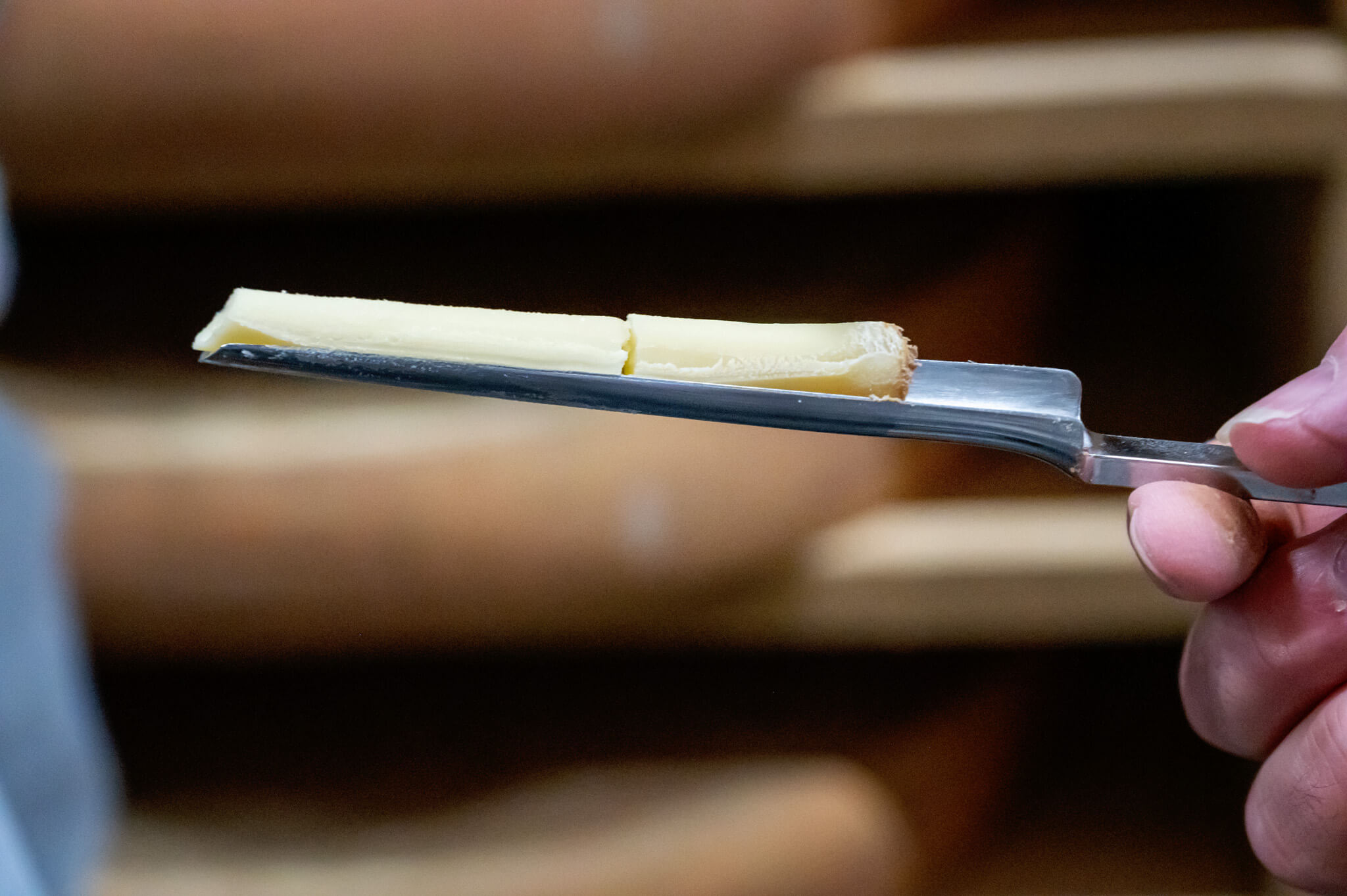
In that particular wheel, he explained, it was a sign that the cheese was ready to go rather than continue aging. It didn’t mean something was wrong with it, and this is perfectly normal.
I found that fascinating! He could learn something from the sound before he ever tasted the cheese.
He also talked about the preferences of the people buying his Comté. Cheesemongers visit, taste, and discuss what they’re looking for, and he learns what will suit their customers.
That helped me understand why longer aging isn’t automatically the goal for every wheel. Part of the expertise is recognizing the right moment and the right destination for that particular wheel of cheese.
4. The Cheesemongers Who Select and Sell Comté Cheese
Our trip actually began at the final stage of this journey, in a popular cheese shop in Champagnole, France. But then came full circle, no pun intended!
By the time we had visited the farm, fruitière, and aging cellar, I understood that first stop very differently.
Meeting Marc Janin at His Cheese Shop in Champagnole
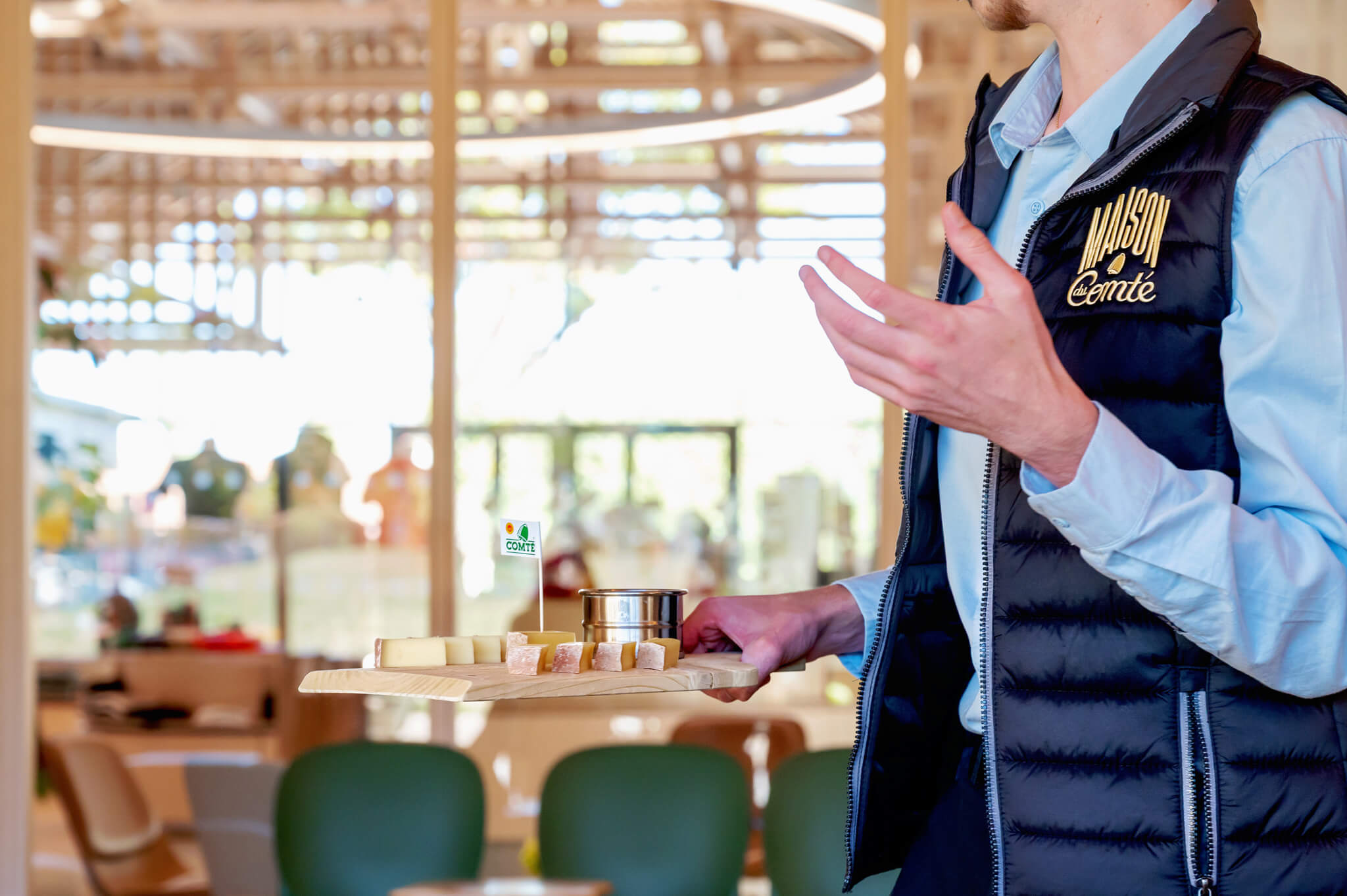
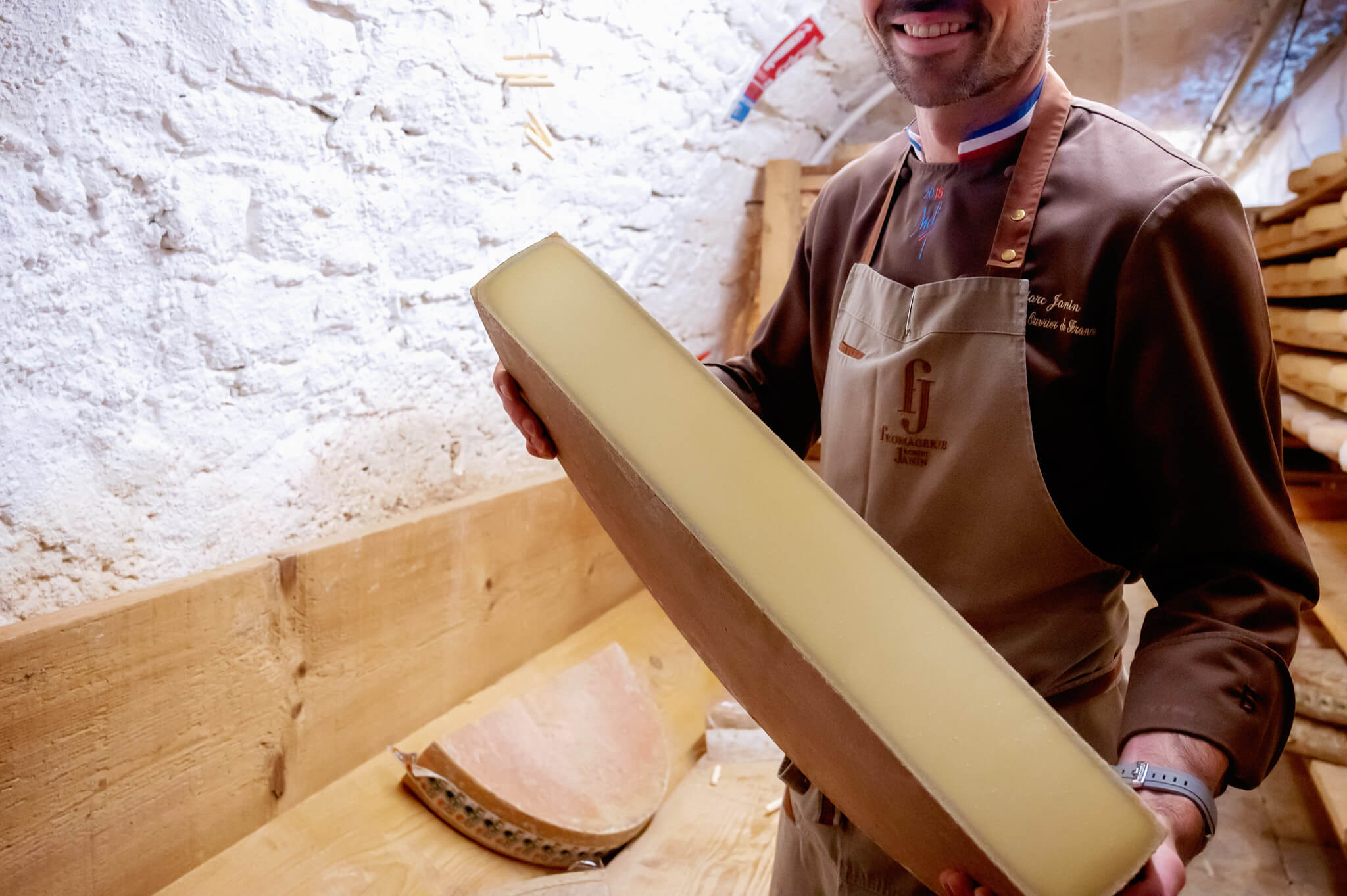
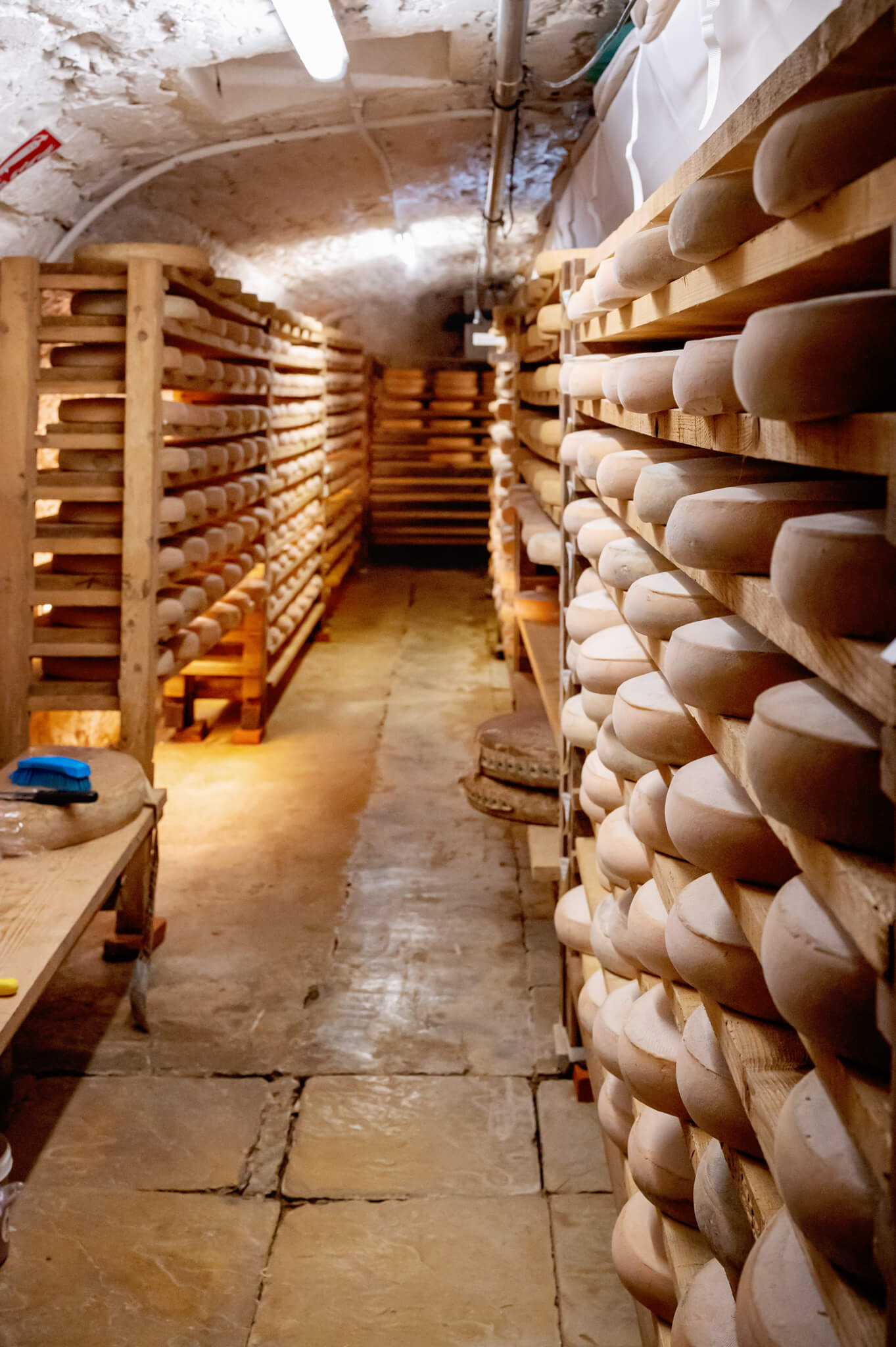
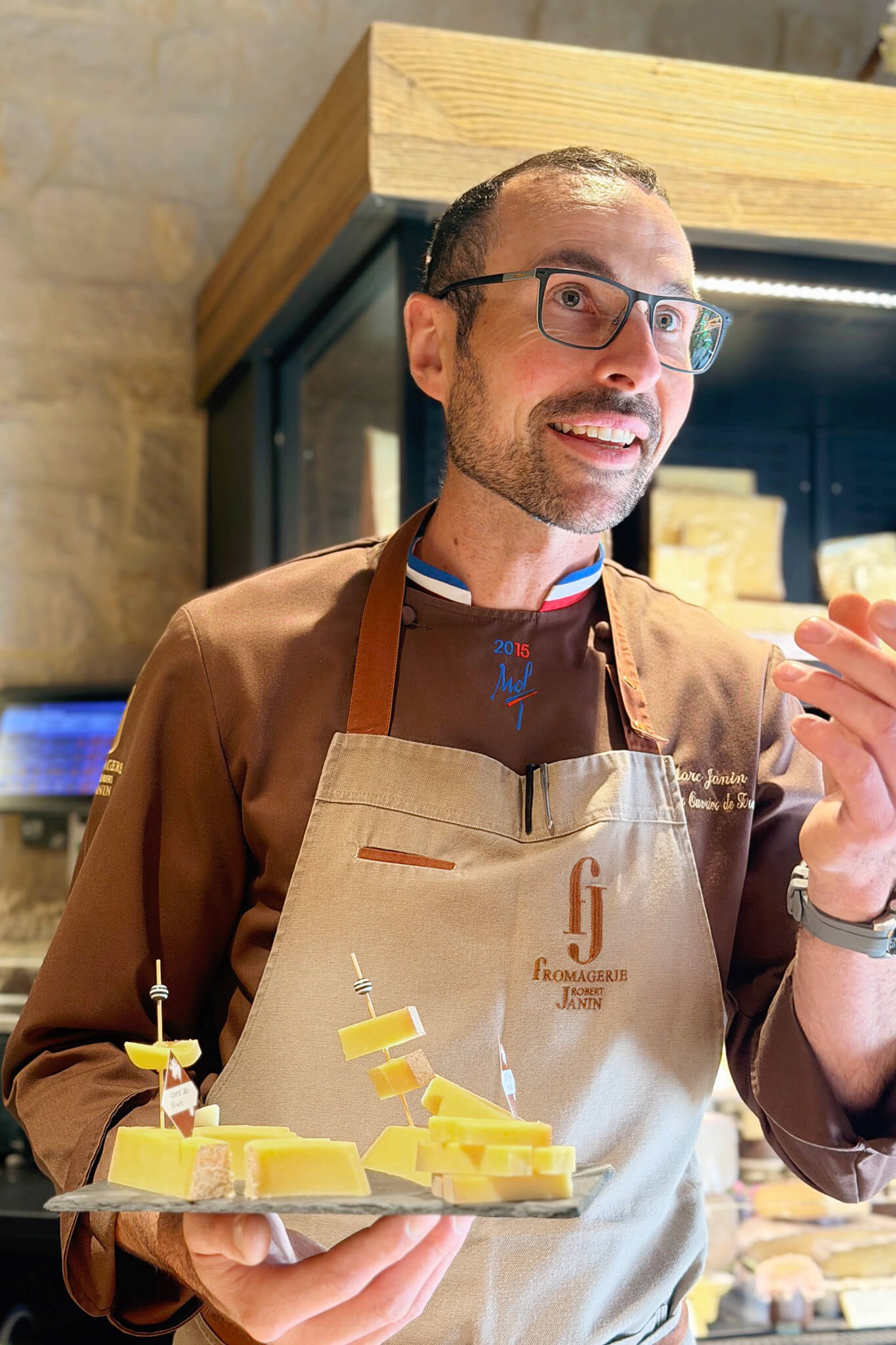
At Fromagerie Janin, we met cheesemonger Marc Janin, visited the shop’s small cellar, and tasted several Comté cheeses.
His cellar served a different purpose from the vast aging spaces we would later see at the fort. Here, we saw how a cheesemonger kept and managed the cheeses selected for his shop.
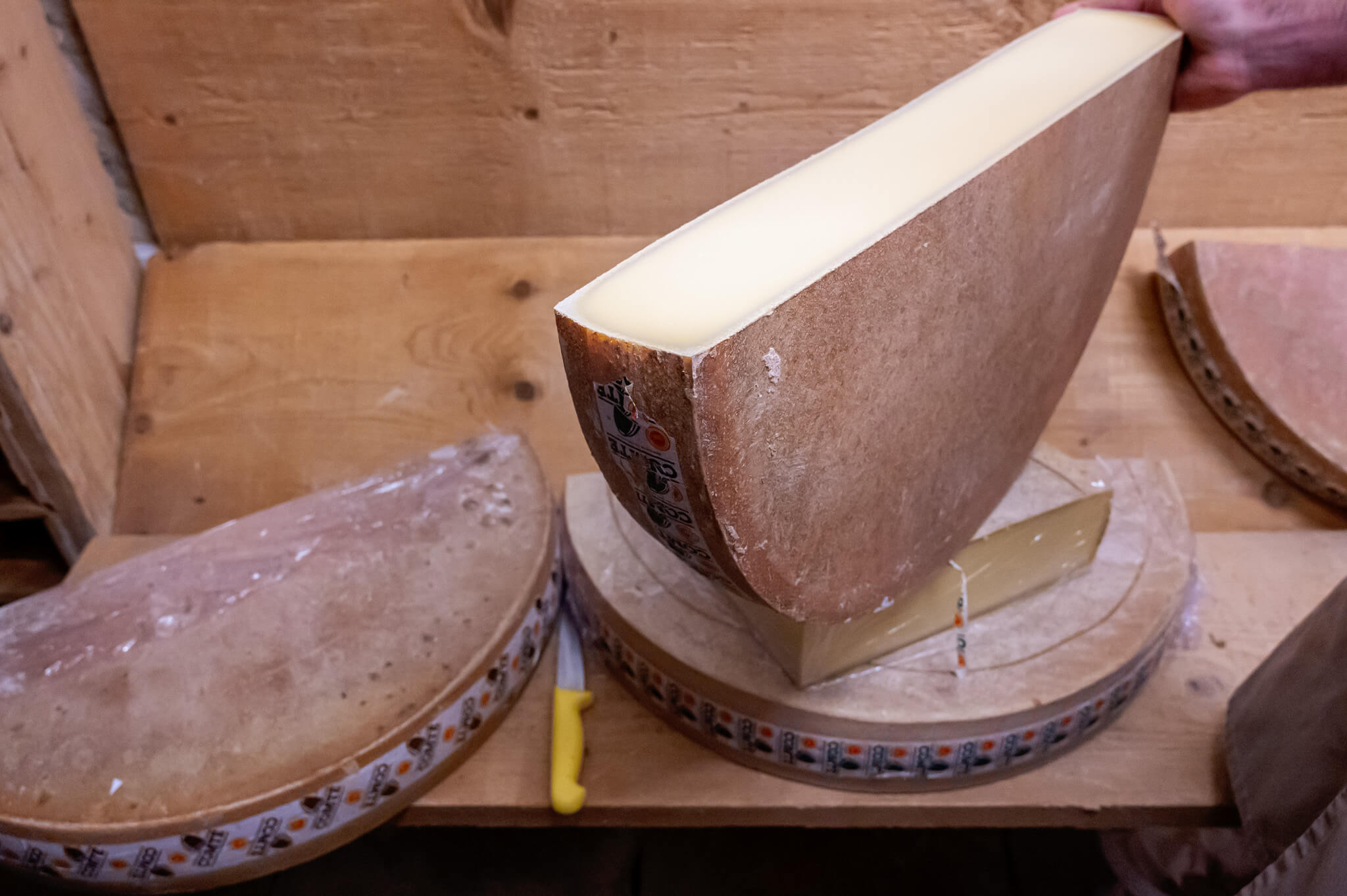
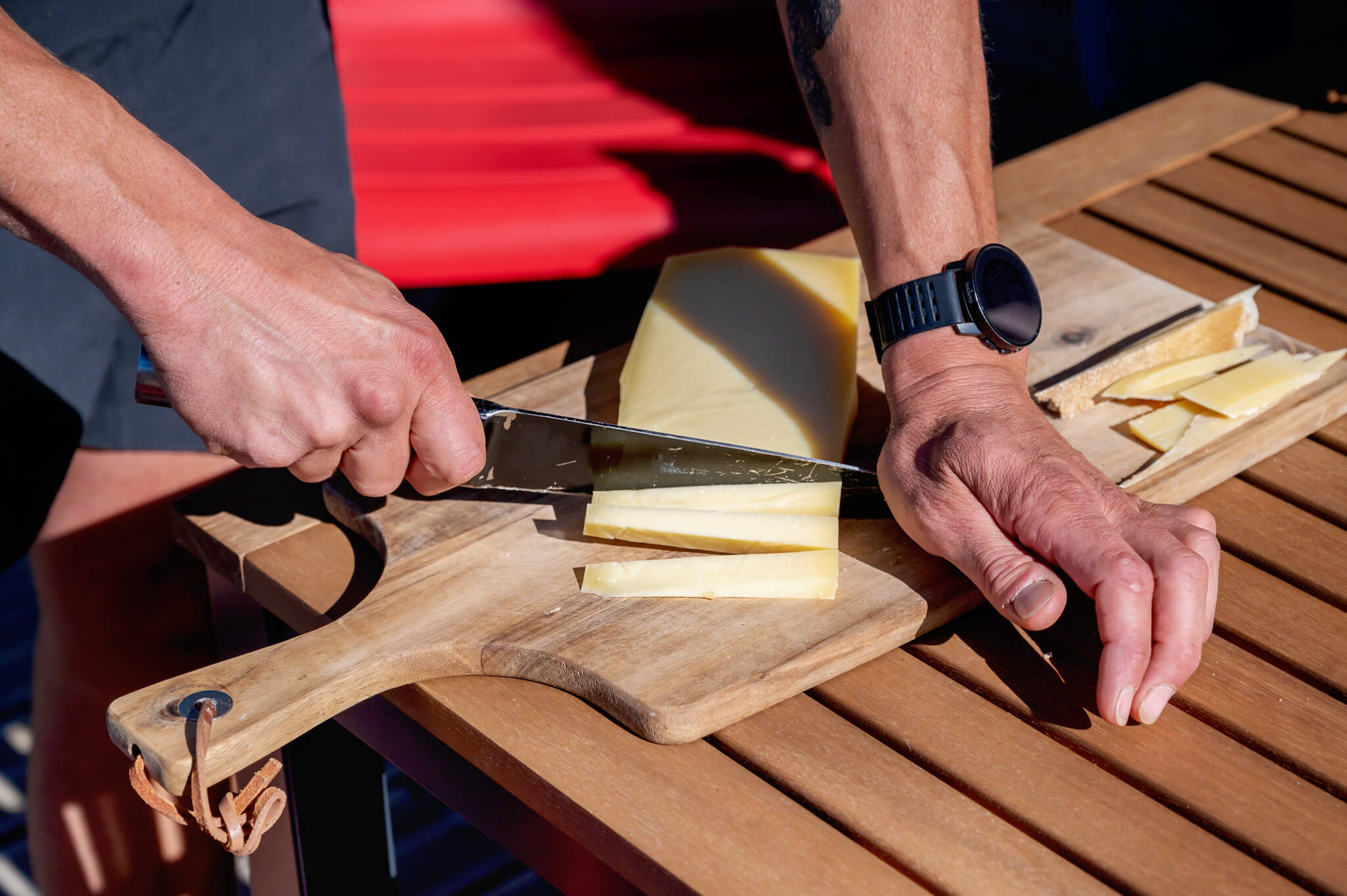
Marc also opened a previously uncut wheel of Comté for us to see, giving us a closer look at the cheese before it became the wedges we usually find at a shop.
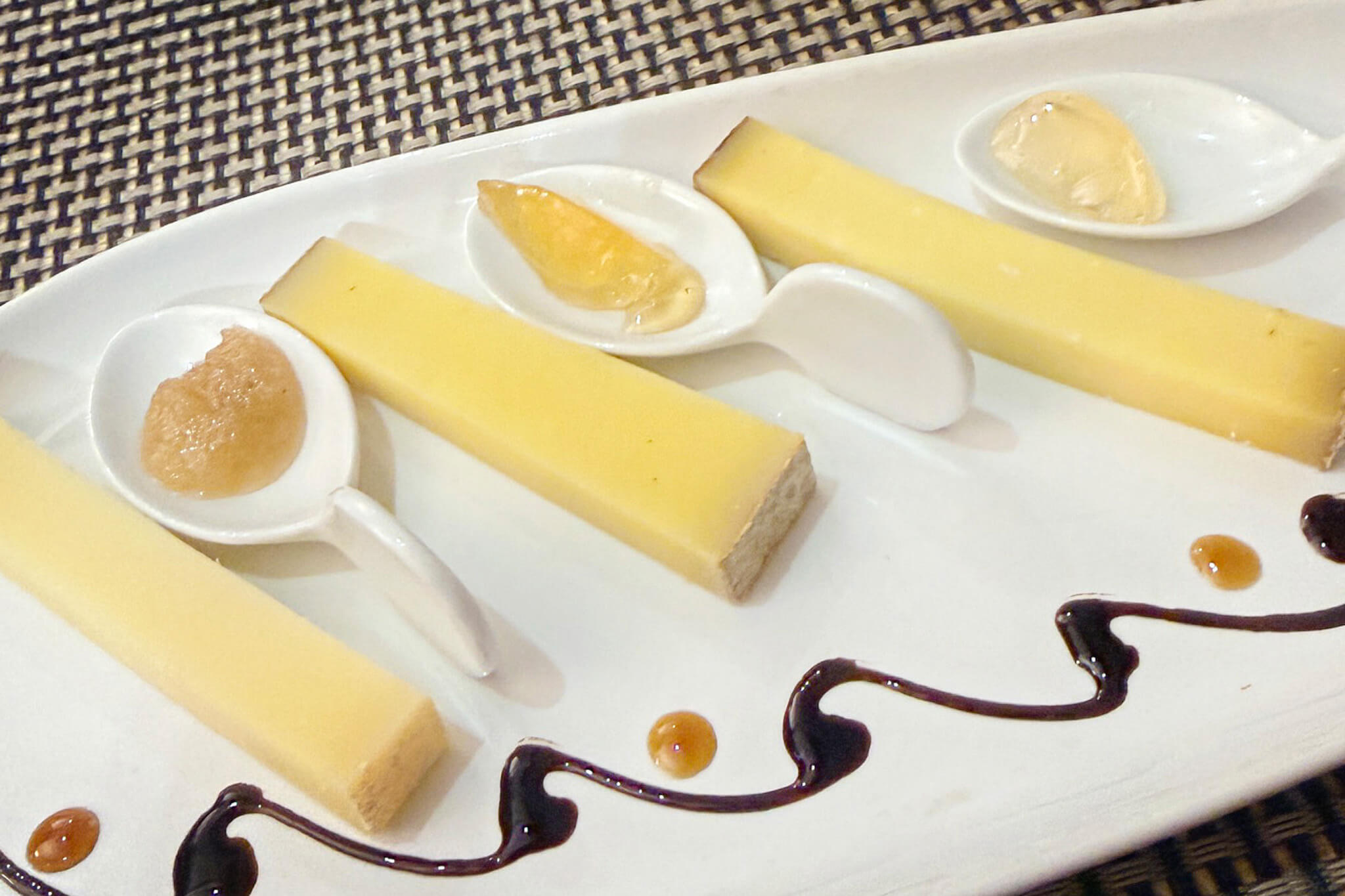
We sampled several Comté cheeses side by side, comparing their flavors and textures. It was my first opportunity to see just how vastly different each Comté can be!
Alongside our tasting, Marc served a local white wine, Domaine Credoz’s 2023 Chardonnay and Savagnin blend from the Côtes du Jura appellation, along with a local yellow wine jelly.
“What grows together, goes together” became a fitting theme throughout our trip, as we frequently enjoyed Comté cheese with Jura wines.
Tasting them together gave me another way to appreciate the region’s terroir and how much of a place you can discover through its food and wine.
Selecting Comté Cheese for Different Tastes
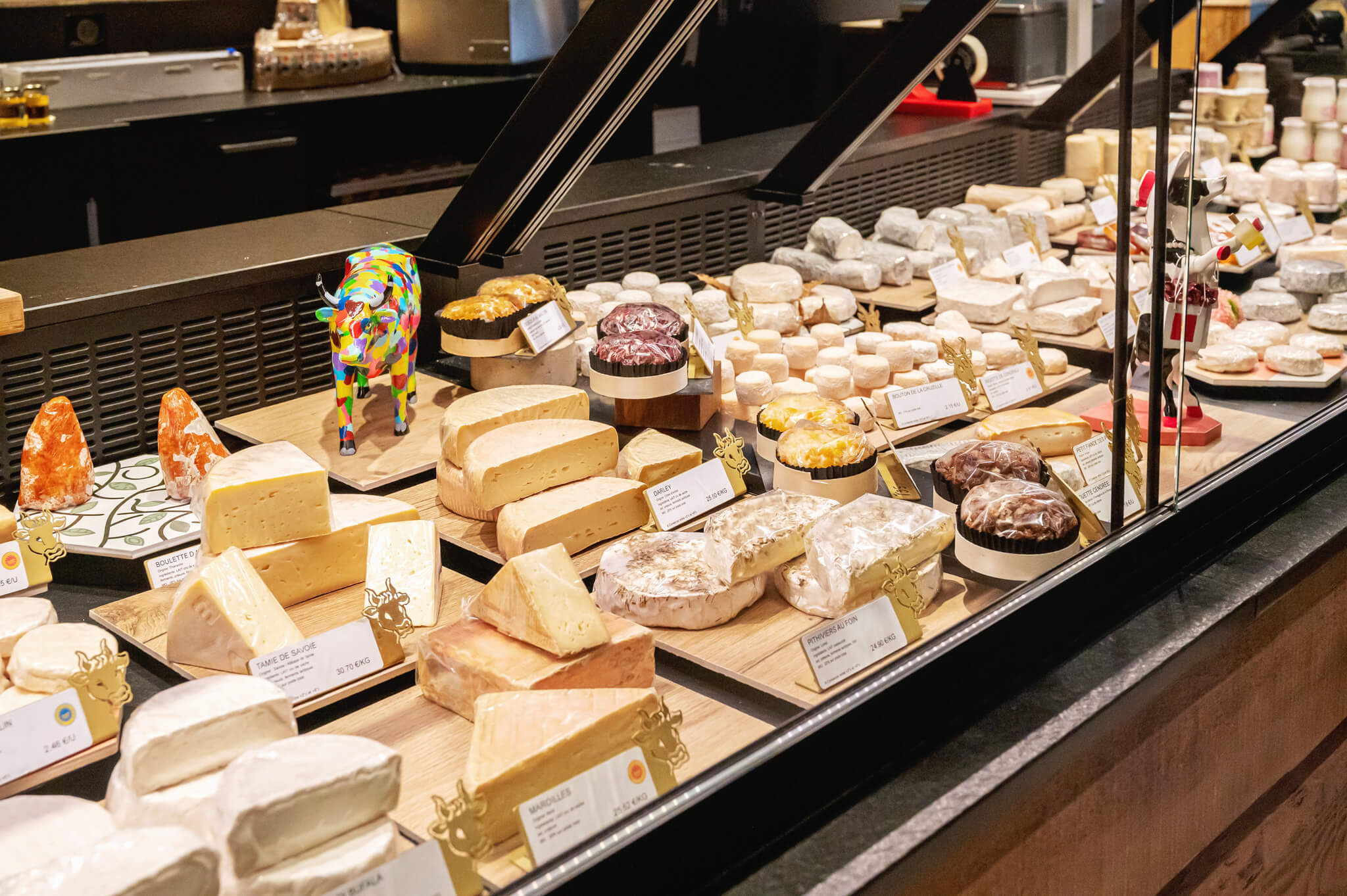
A good cheesemonger adds another layer of knowledge. They know the cheeses they carry and can help you choose based on what you like or how you plan to serve it.
After hearing the affineur talk about his relationships with buyers, I could see how that conversation reaches the person standing at the shop counter, ready to buy cheese.
You might ask for a young Comté to share at breakfast, something with a more pronounced flavor to enjoy with evening wine, or even Comté for a recipe. The cheesemonger can help connect those preferences with a particular wheel.
For someone like me, who is still learning, that makes trying a new cheese much more approachable. And it’s honestly more fascinating than I even imagined.
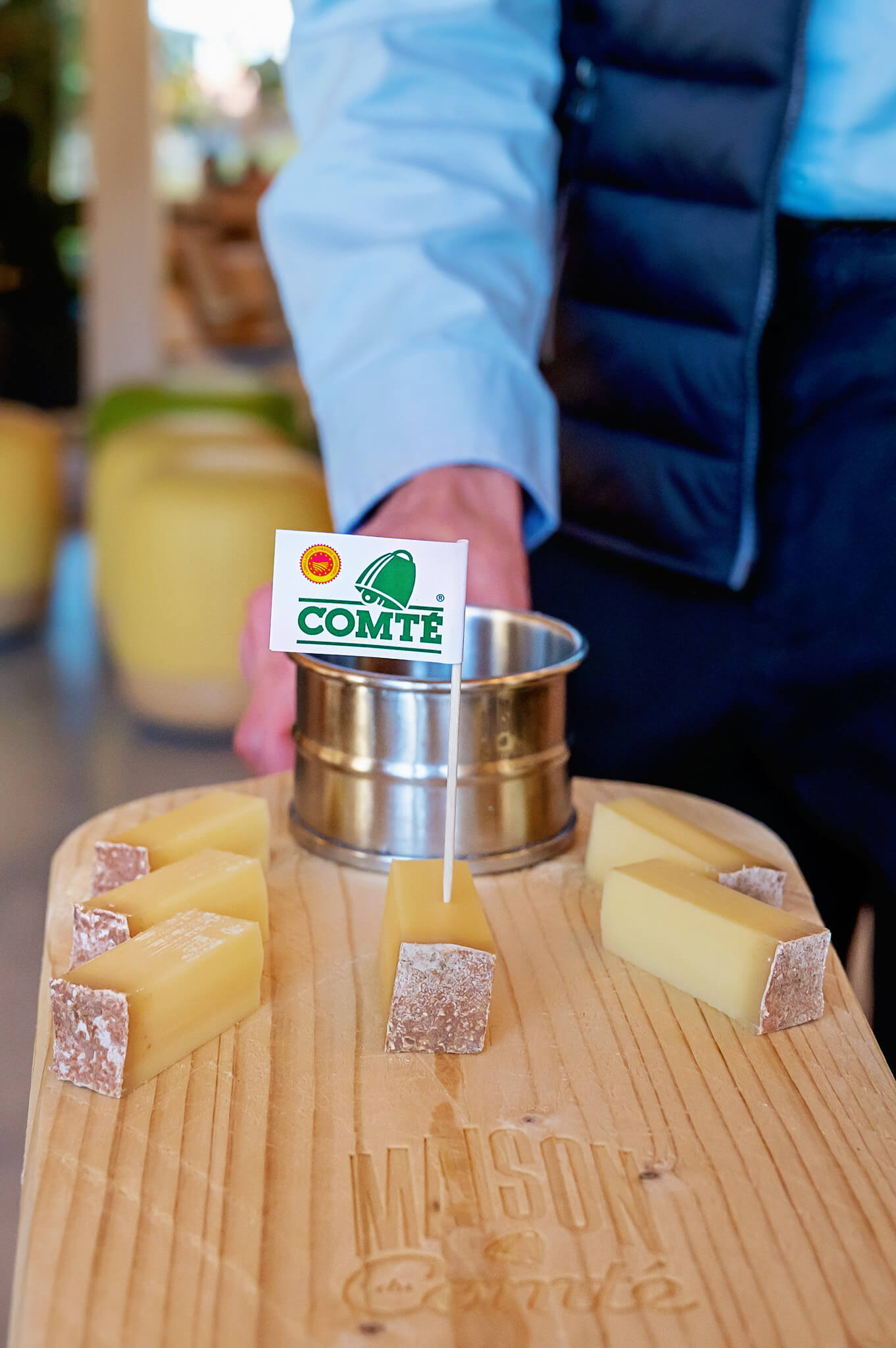
Even the rinds look very different on the young vs. older Comté cheese!
My Experience Tasting Comté Cheese in France
We tasted a lot of Comté cheese during this trip to France, sometimes comparing three different ages at once. And I never felt as though we were just repeating the same tasting.
There was always another flavor, texture, or pairing to notice. And here is some of what I learned!
Young vs. Aged Comté Cheese
I actually preferred the younger Comté cheeses we tried. They felt creamier to me, and I kept coming back to that texture.
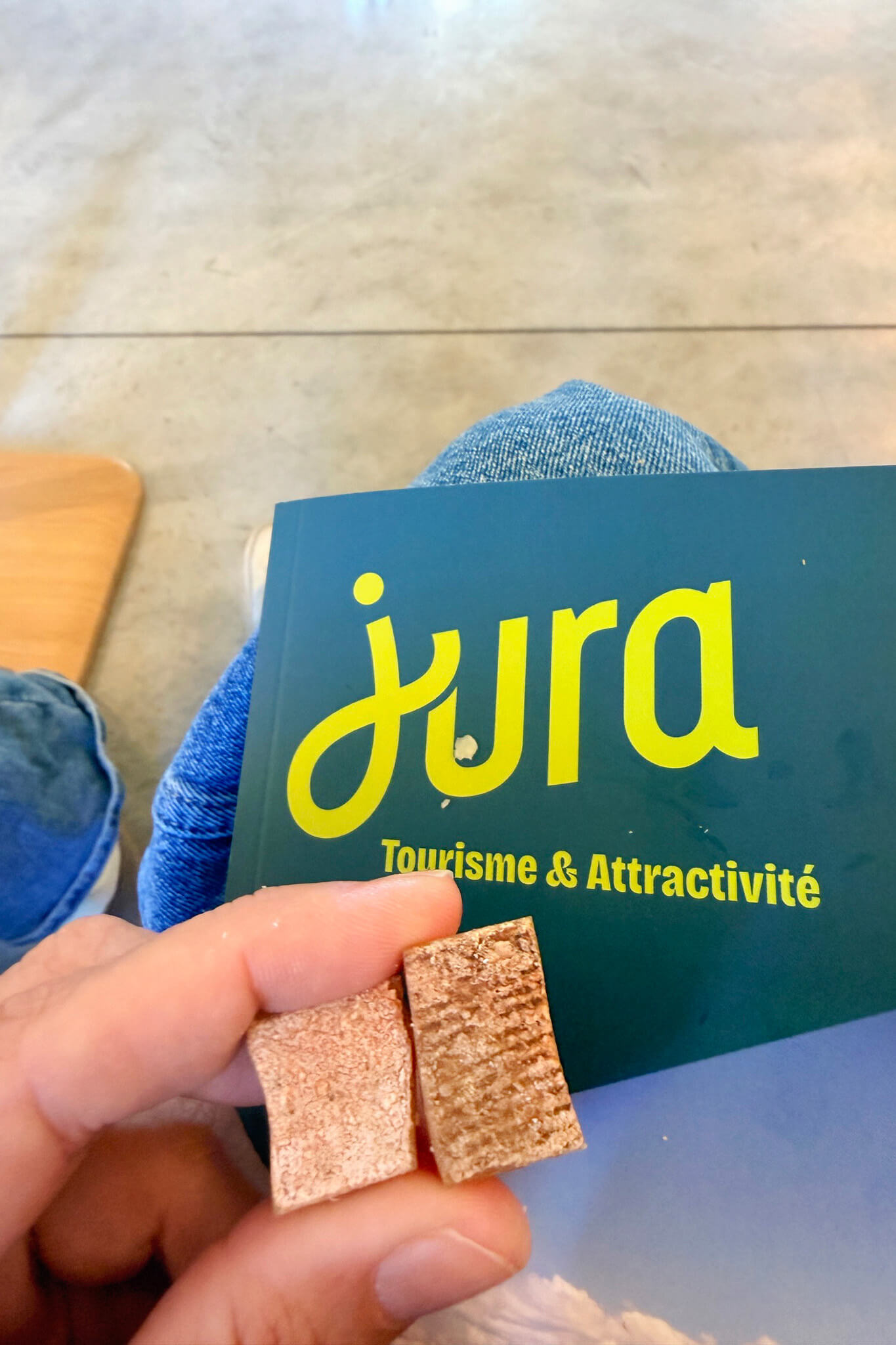
Older Comté could be delicious, too, with more concentrated flavors and sometimes little crunchy crystals. Those white crystals can be formed from tyrosine, an amino acid, during maturation. Our new friend Michael Oliver, who joined us on this trip, calls it cheese glitter!
But I liked realizing that I didn’t have to choose the oldest cheese to choose well. My favorite was simply the one I enjoyed eating most!
Learning to Recognize Comté Cheese Flavors and Aromas
During our tastings, we were encouraged to smell the cheese before eating it. Then we broke it apart beneath our noses and smelled the newly exposed interior.
I was genuinely surprised by how different those two smells could be. Sometimes the flavor was different yet again!
The aroma exhibits at Maison du Comté helped give me a starting point, but I also enjoyed noticing things without worrying about finding the perfect tasting word.
If you try a few Comté cheeses side by side, take a moment with each one. Smell it, break it, taste it, and notice the texture. It’s a simple way to slow down and discover what you actually like!
Comté Cheese Fondue
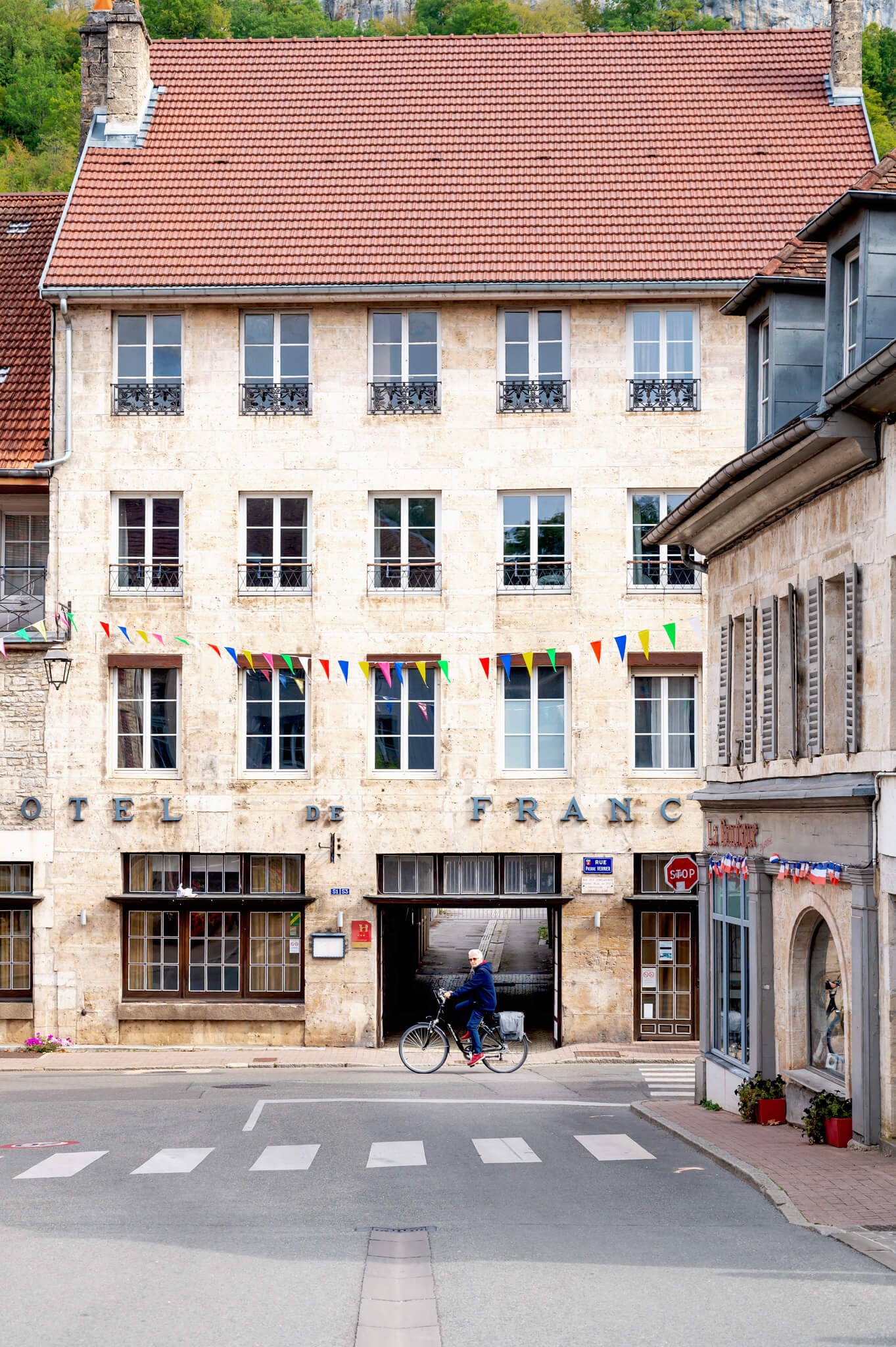
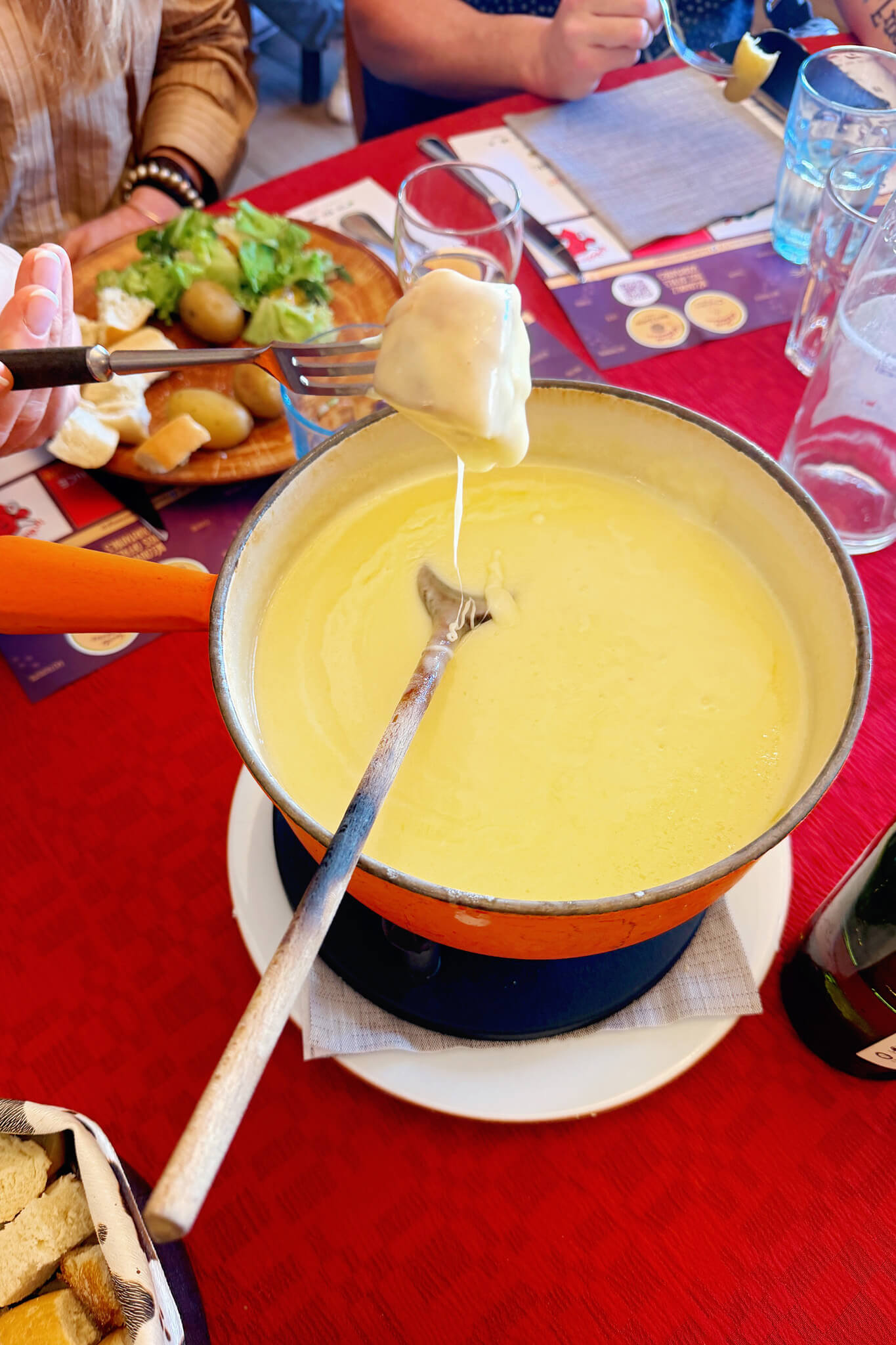
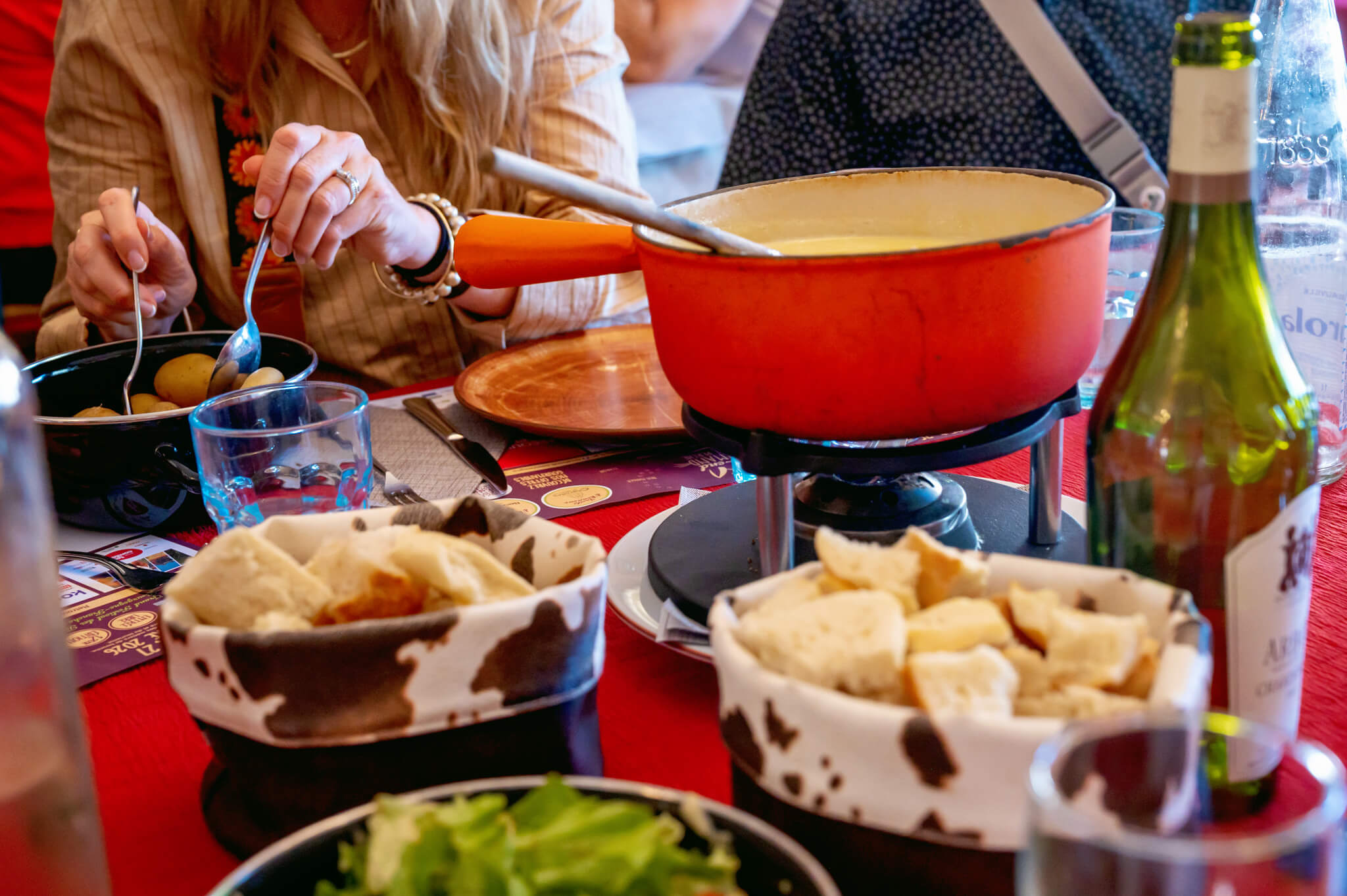
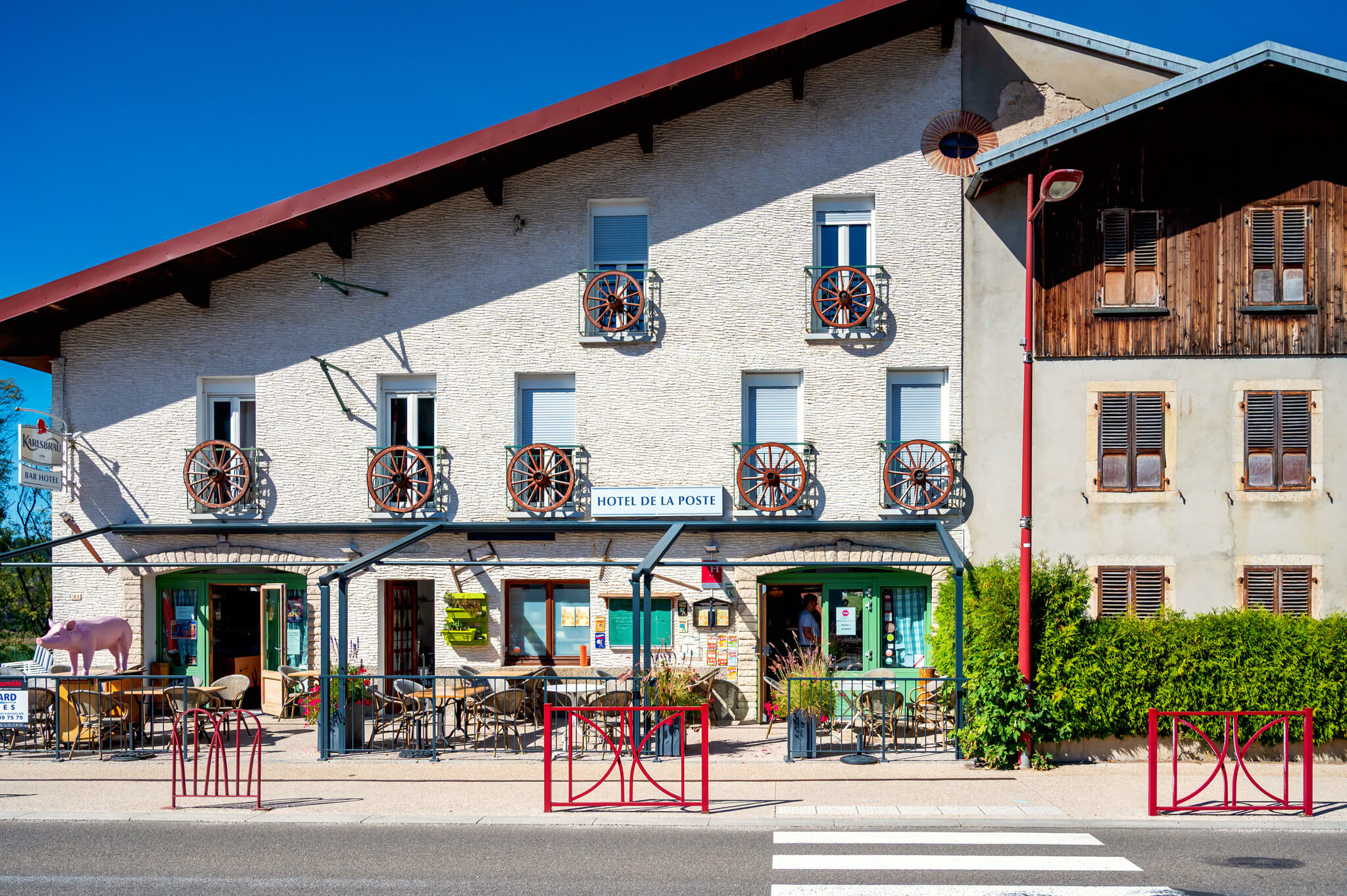
One meal I am still thinking about is our Comté fondue lunch at Restaurant À la Ferme at Hôtel de la Poste in Malbuisson, France.
It was so creamy, with exactly the consistency I want from fondue. And the taste was incredible. I have a feeling that I am going to crave this exact meal for the rest of my life!
I was curious about the recipe, as I would love to try making Comté cheese fondue myself sometime. We were told it combined younger and older Comté with Jura wine. This made sense because younger Comté is often creamiest, while older Comté has a stronger flavor profile. After tasting cheeses of different ages separately, it was fun to enjoy them together in a dish.

Pairing Comté Cheese With Jura Wines
We also tried several Jura wines during the trip, and I liked getting to know them alongside the food.
The region is known for five main grape varieties: Chardonnay and Savagnin for whites, and Poulsard, Trousseau, and Pinot Noir for reds. You may also see Poulsard called Ploussard. And Savagnin is easy to confuse with Sauvignon Blanc, but it’s a different grape!
Names such as Arbois and Côtes du Jura refer to appellations within the Jura wine region, rather than grape varieties. The region is also known for vin jaune, or yellow wine, a distinctive style made from Savagnin.
Some of the whites were very aromatic to me, then tasted drier than I expected. The finish was often very smooth.
The reds gave us something different again. My favorite red was Domaine Berthet-Bondet’s Trio 2020, a Côtes du Jura wine. We had it at dinner our first night, and I loved it so much that I photographed the label to remember it!
I like the idea of trying local wine with local food, especially when traveling in this part of France. Here, it gave us another way to explore the area, one meal, wine glass, or cheese tasting at a time.
Planning a Trip to France’s Comté Cheese Region
You don’t need to be a cheese expert to enjoy this part of France. I certainly wasn’t! Although now, I feel like I could really hold my own in a conversation about Comté cheese. Hopefully after reading this, you can, too!
But I want to take a minute to share just how lovely this part of France is. Honestly, it wasn’t even on my radar, and probably isn’t for most Americans. It’s primarily a place that the French themselves vacation in!
The beautiful scenery, charming villages, wine, and outdoor activities would all give you reasons to visit the Jura region of eastern France. Following the Comté story also helps you understand the place while you’re there.
On this road trip, we covered a lot of ground in a short time, with plenty of hours in the van and a different hotel each night. For an independent trip, I would slow that down and choose one or two bases to really savor and enjoy!
Here is how I would plan a trip to this part of France!
Getting to the Comté Region From Geneva or Paris
We flew round trip through Geneva, Switzerland, and traveled by van from there. That worked well for a route through the mountains near the Swiss border. It was also fun to see Geneva for the first time.
RELATED POST: My Hack for Finding Great Flight Deals
You can also fly into the smaller, nearby airport in Dole, France, that currently offers 5 direct flights from Corsica, Morocco, and even Porto, Portugal. Note that some are seasonal and may require multiple connections from the United States.
That said, Dole is another great gateway to the Jura if you are coming from Paris, France. Some direct trains from Paris Gare de Lyon reach Dole Ville in about two hours, although journey times vary. Check the SNCF timetable for your travel dates.
Dole could also be a stop in its own right. If you want an introduction before continuing into the region, consider this private walking tour of Dole! From there, you can venture into the Comté region by train, but for the kind of trip we took, with village stops and countryside visits, I would want a car.
Plot your planned stops and activities before choosing hotels or towns to stay in, because these places are more spread out than they may first appear on a map.

Comté Cheese Tours, Tastings, and Visitor Experiences
You can experience parts of this story without being on a cheese-specific tour! I would start with Maison du Comté in Poligny for the big picture, then consider a public guided visit at Fort Saint-Antoine to see the aging cellars.
The Routes du Comté are another helpful trip-planning resource, with suggested outings and places to discover the cheese and its producers. I’d browse those itineraries to see how a trip to this region could play out. Consider combining a couple of them, too!
Visitor access to farms, fruitières, and aging houses varies. Some fruitières have shops, viewing windows, or scheduled visits, while others are working facilities with no public tour. Our farm and dairy visits were arranged for the hosted trip, so check each location you plan to visit before adding it to your itinerary.
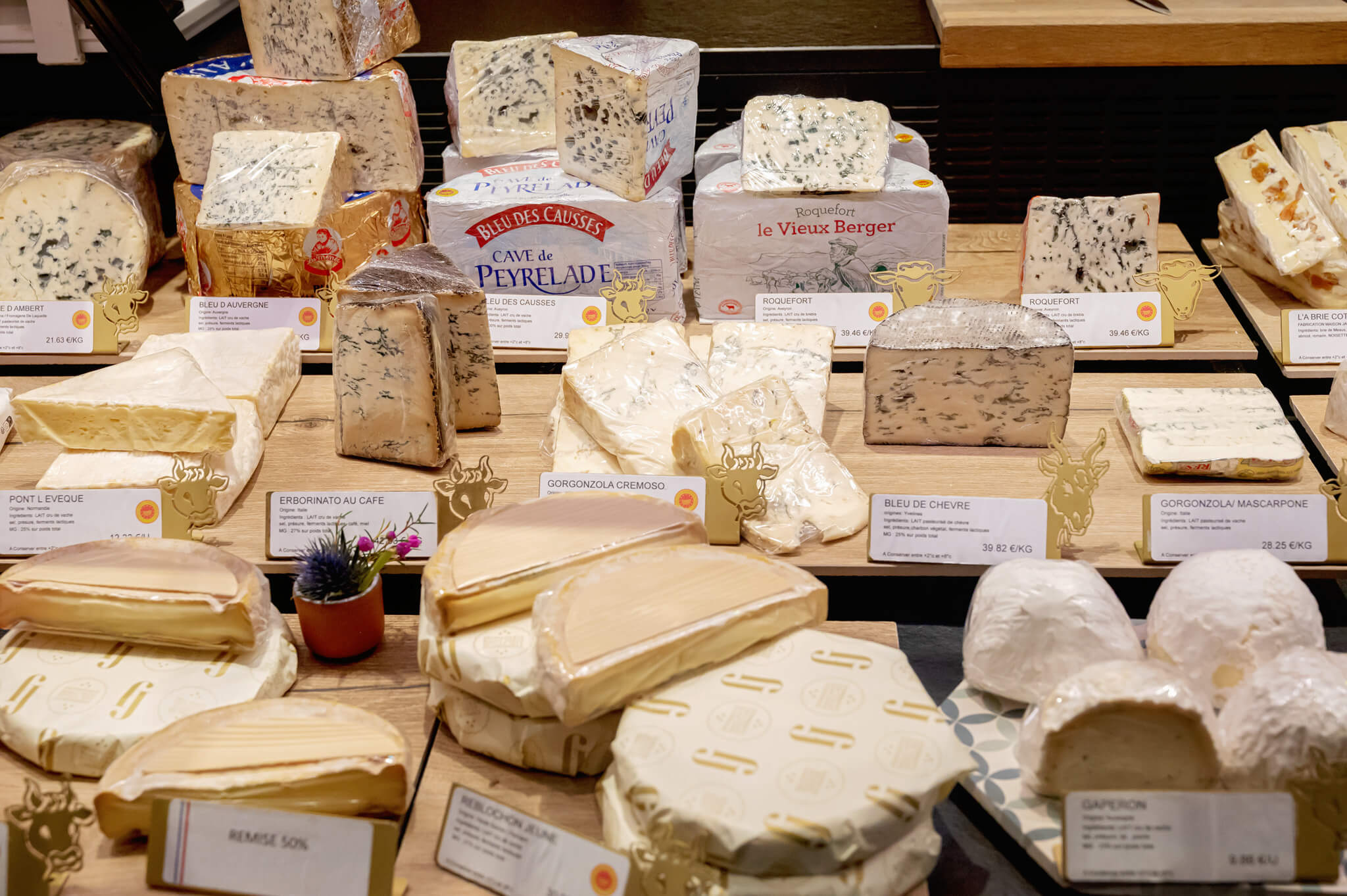
And leave room for plenty of local cheese shops! You can learn a lot by asking questions and tasting a couple of different Comté cheeses, and these professional cheesemongers like Marc Janin are incredibly knowledgeable!
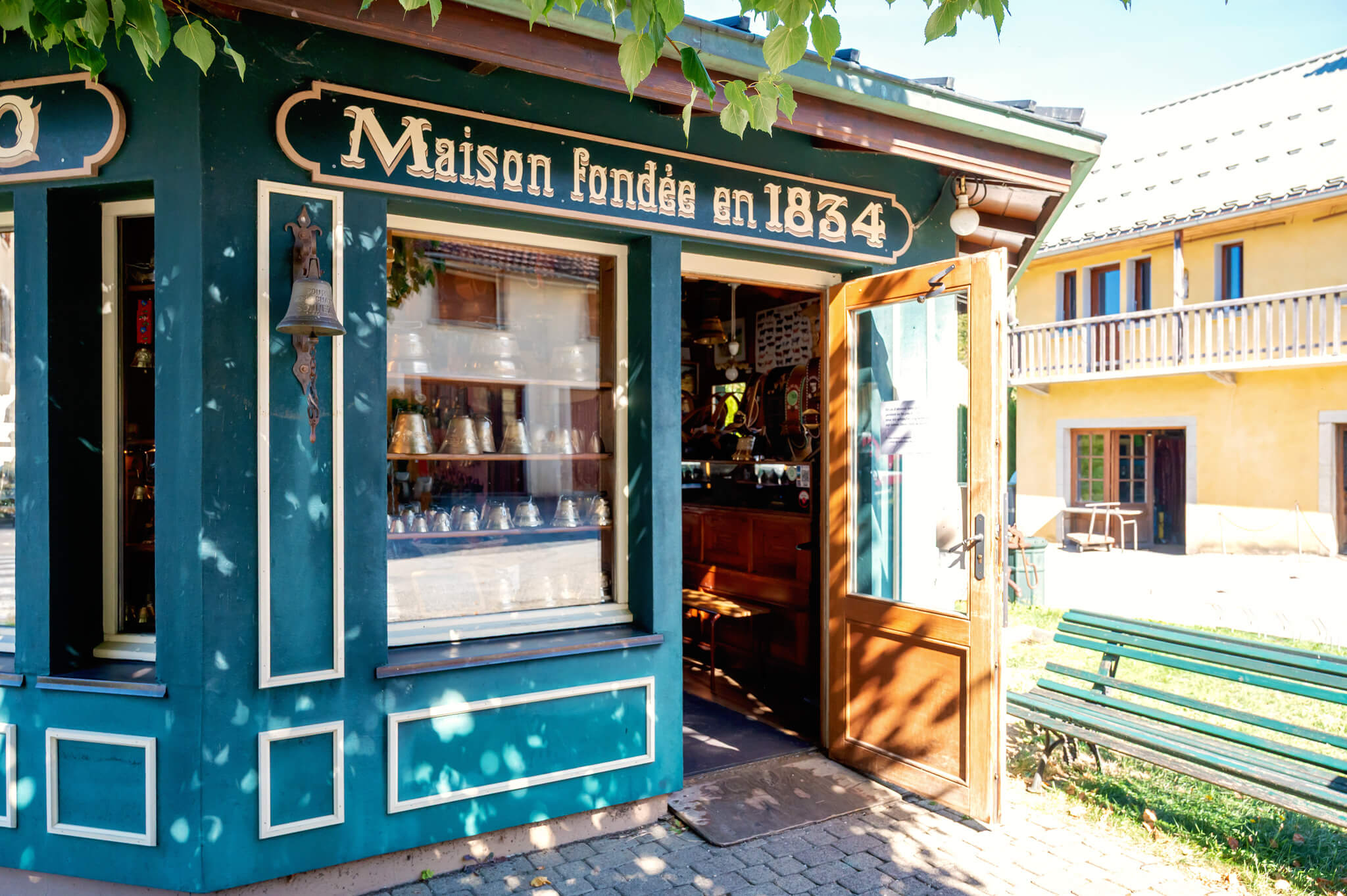
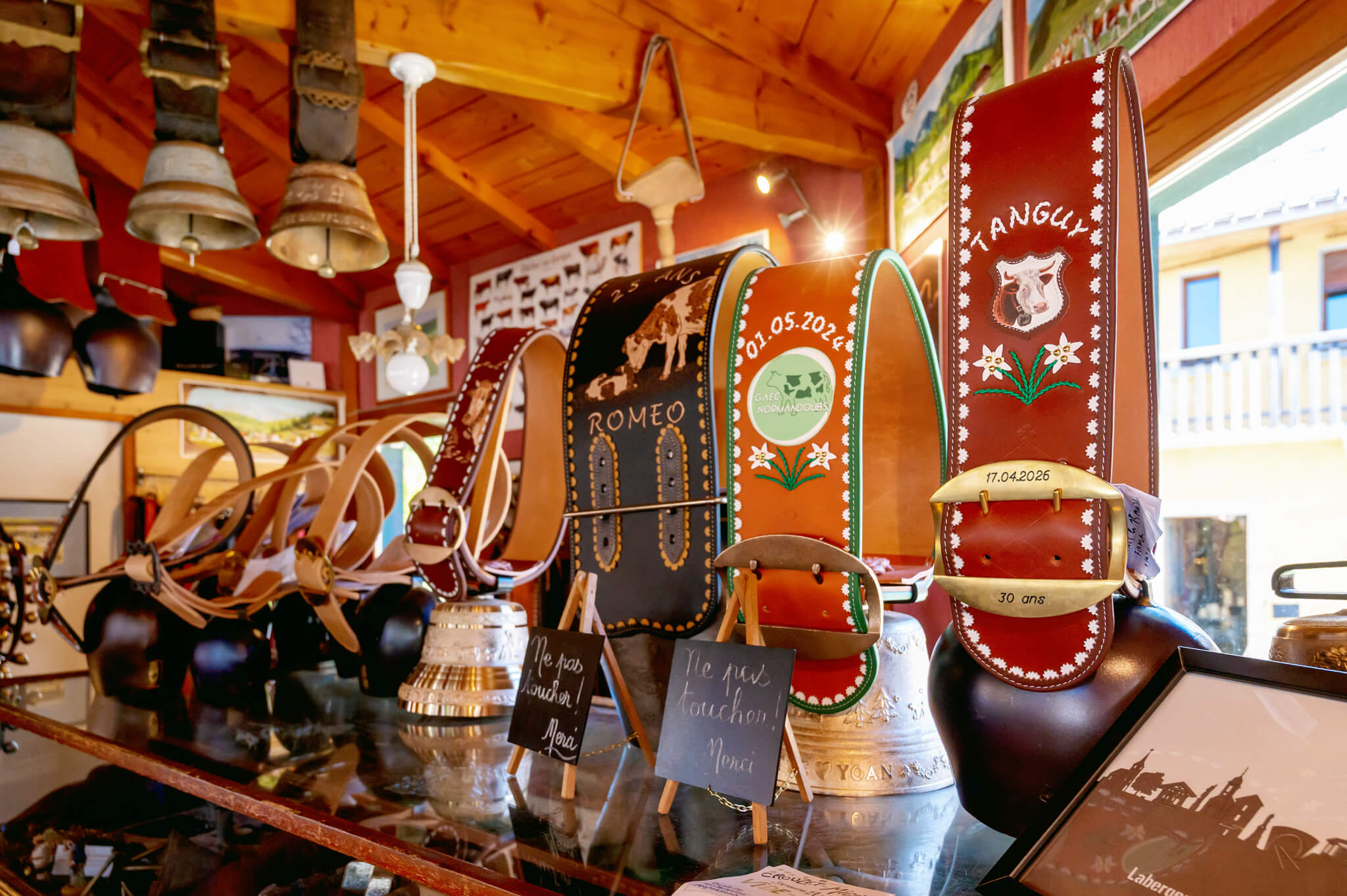
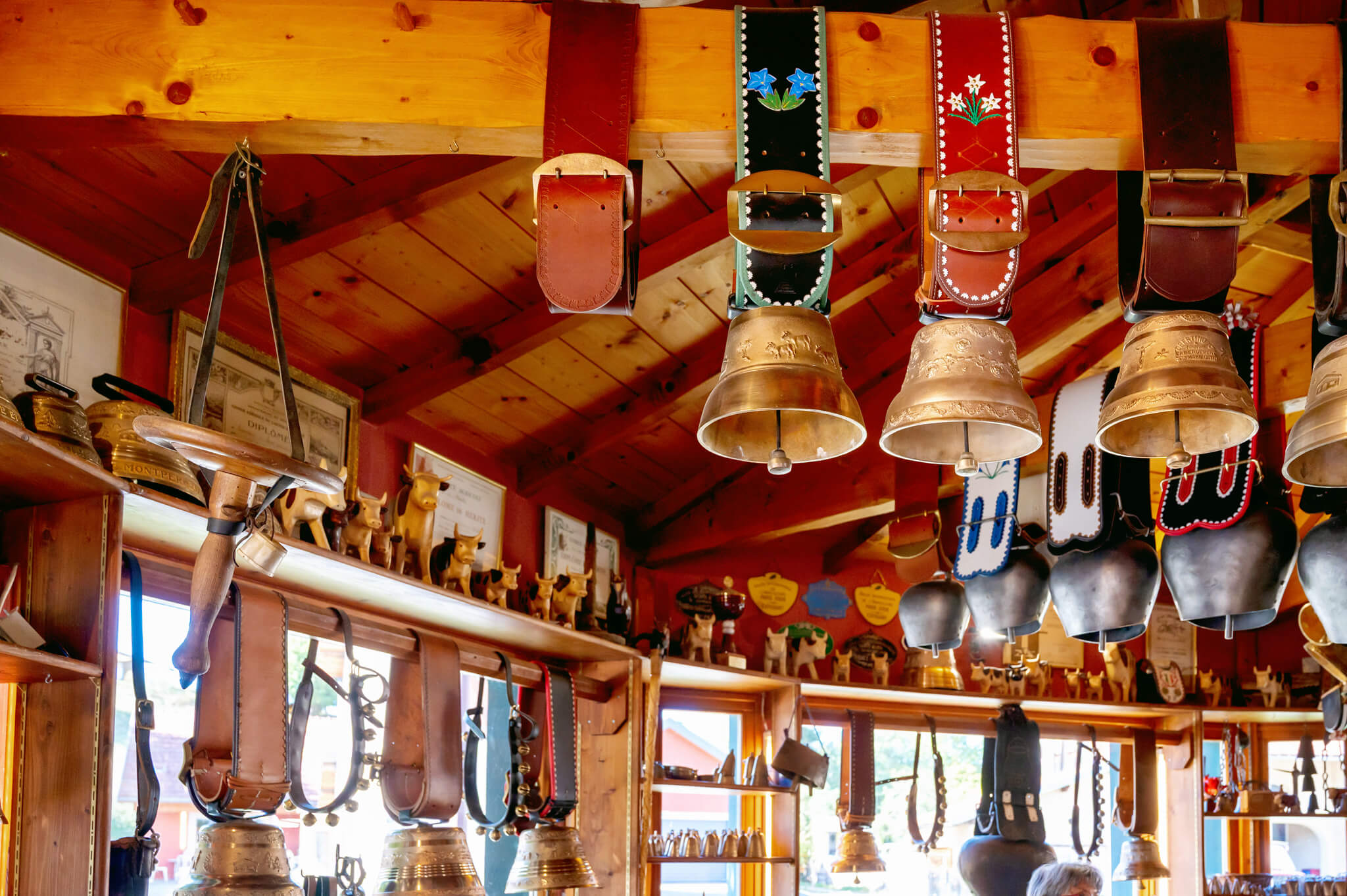
We also stopped at Fonderie Obertino, a traditional cowbell maker in Labergement-Sainte-Marie, near Malbuisson. We didn’t watch the bells being made, but we enjoyed browsing the shop. After hearing cowbells in the pastures throughout our trip, these felt like such a fitting local souvenir!
Where to Stay in the Comté Cheese Region
I’d choose a base around the part of the region you most want to explore. Here are some towns and accommodations I would personally consider for a future trip. There are some unique hotels and beautiful Relais & Châteaux properties I would have loved to stay at!
Here are some places that stood out for me. That said, this Comté cheese region is expansive, and I am sure that there are endless hidden gems that aren’t even on my radar.
Poligny for Comté Cheese and a Village Base
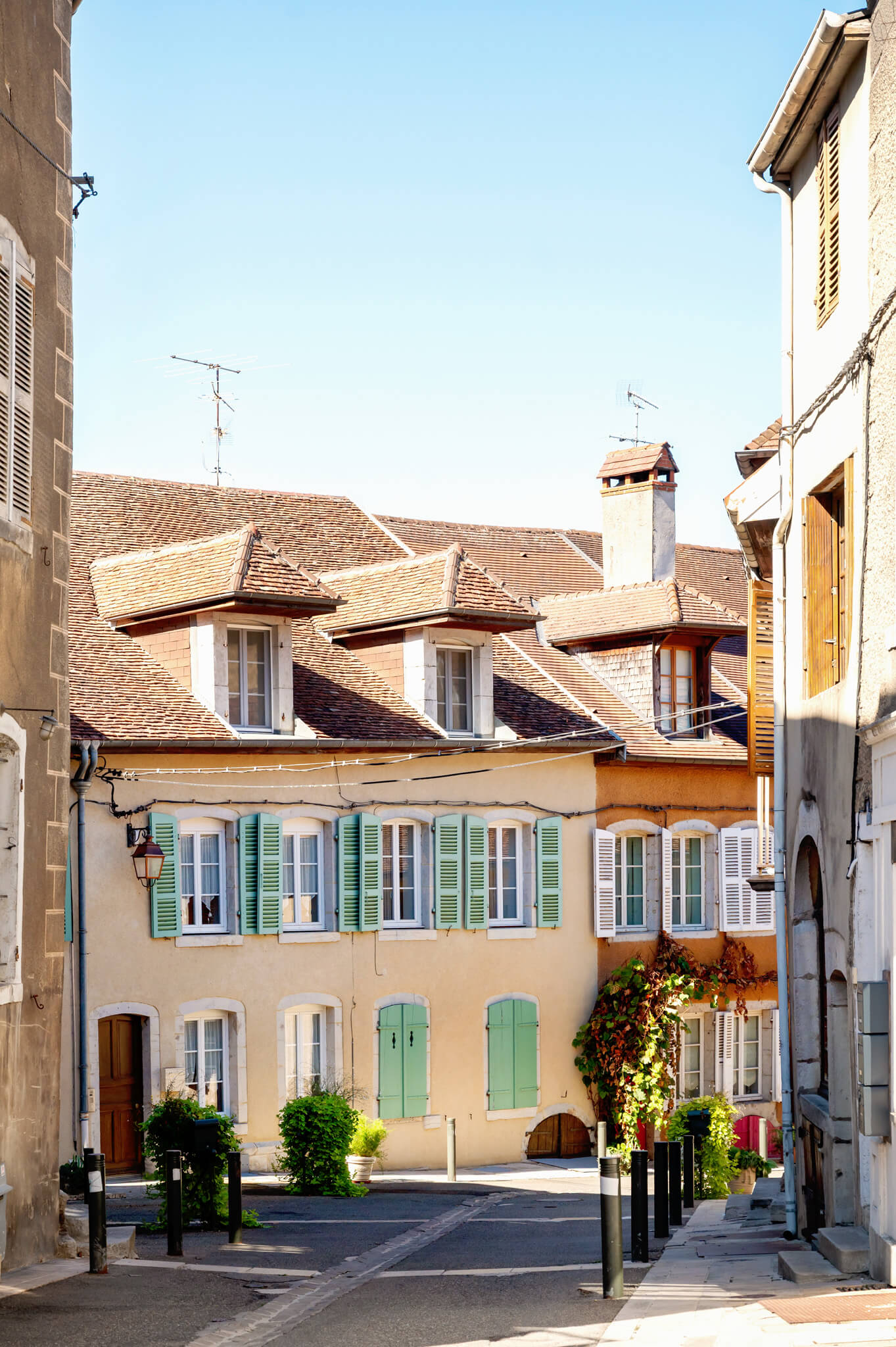
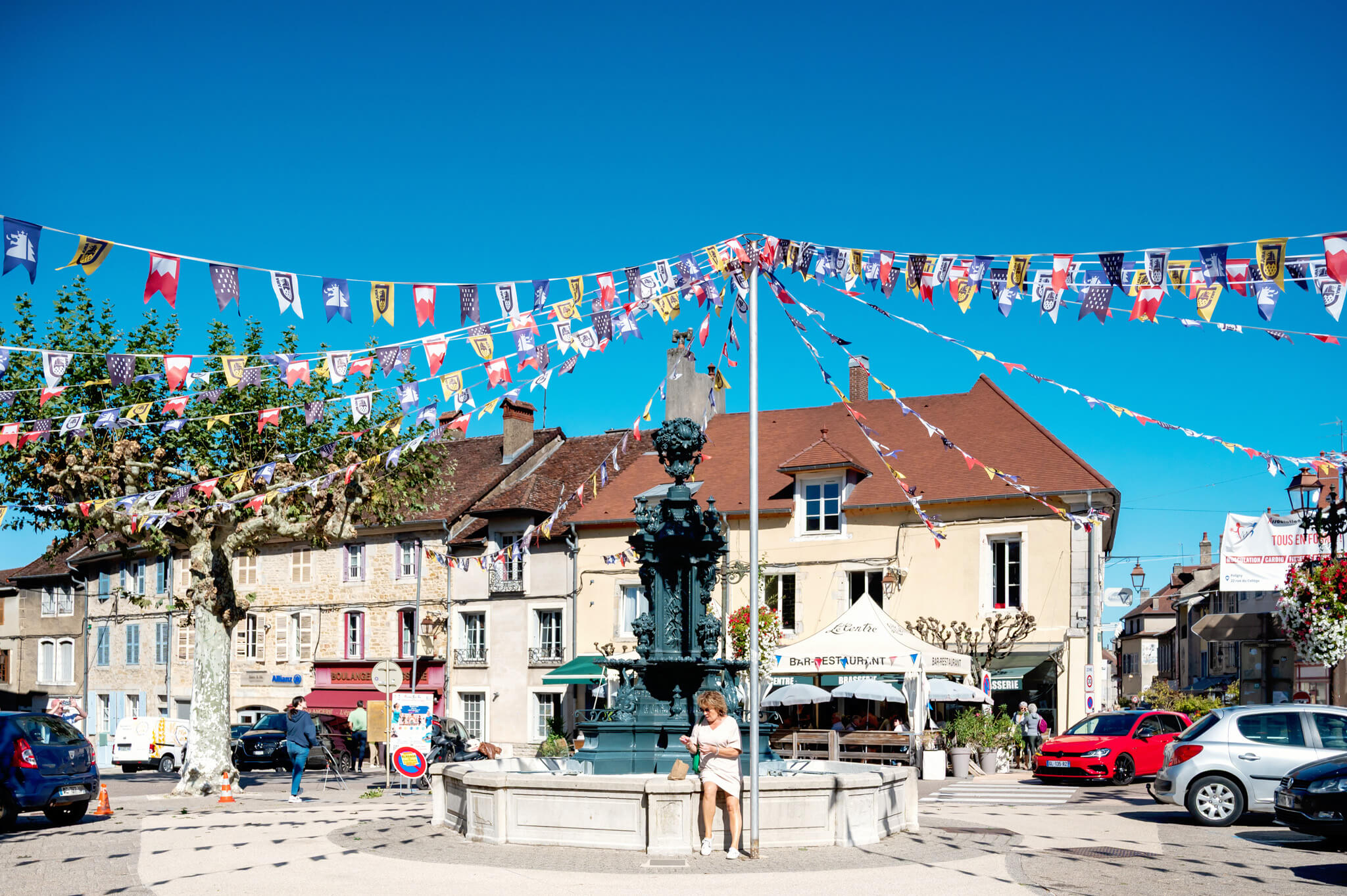
I liked Poligny’s connection to Comté, its cheese shops, and the opportunity to visit Maison du Comté. It’s a great base for exploring the region’s cheese side, especially if you want an easy, walkable town.
For a nearby countryside stay, Maison Zugno in Barretaine is worth a look. It’s outside Poligny, so keep that in mind if you would prefer to walk out of your hotel and explore the town.
Arbois for Jura Wine and Town Life
If wine is a big part of your plans, consider staying in Arbois. It’s a good place to focus on Jura wines while adding some Comté cheese stops to your itinerary.
Arbois is also home to Louis Pasteur’s house and laboratory, which you can visit to learn more about the scientist’s life and work.
La Closerie des Capucines is a small guesthouse option in town that I would consider for a future visit.
Ornans for a Charming Riverside Stay
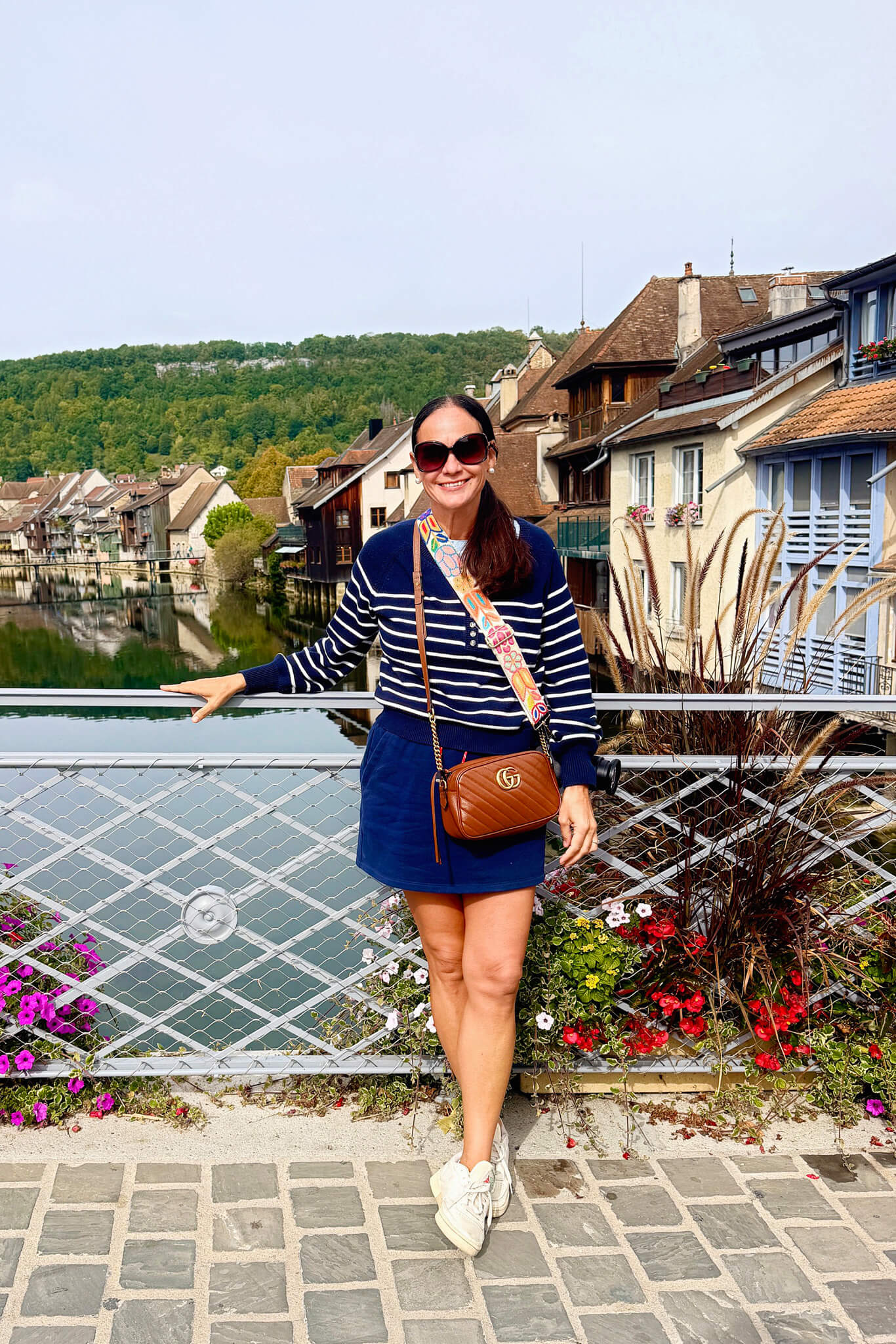
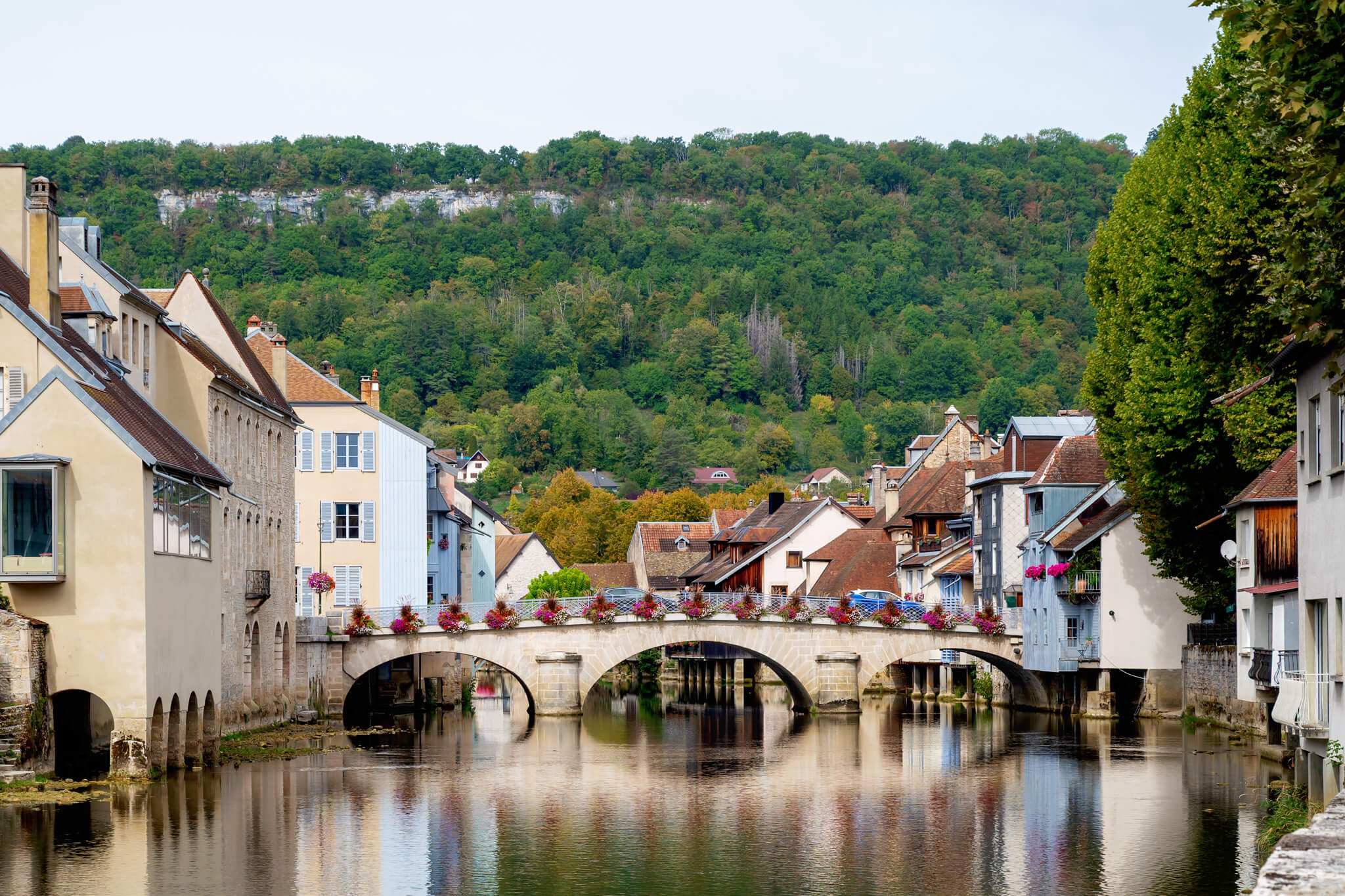
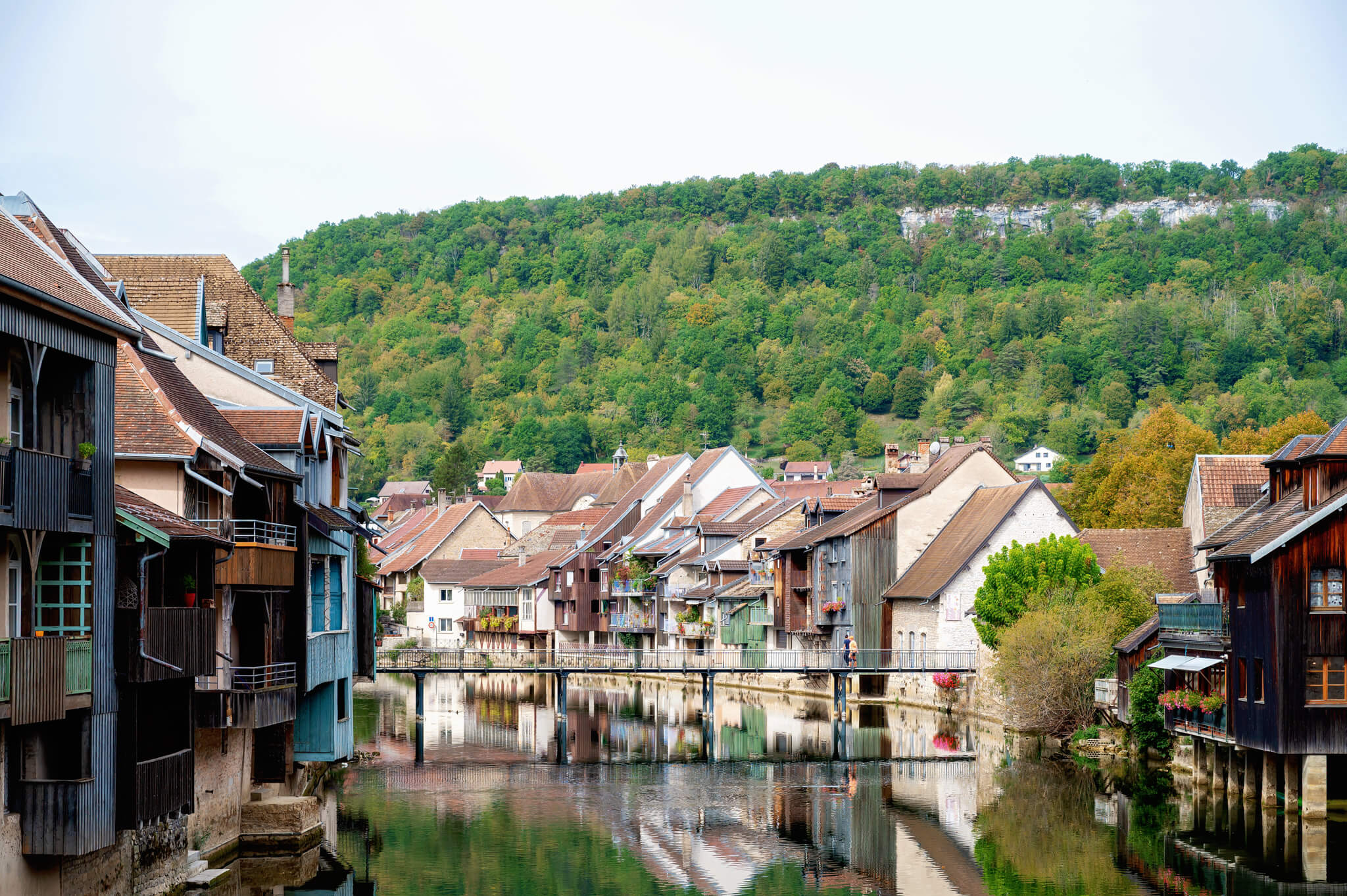
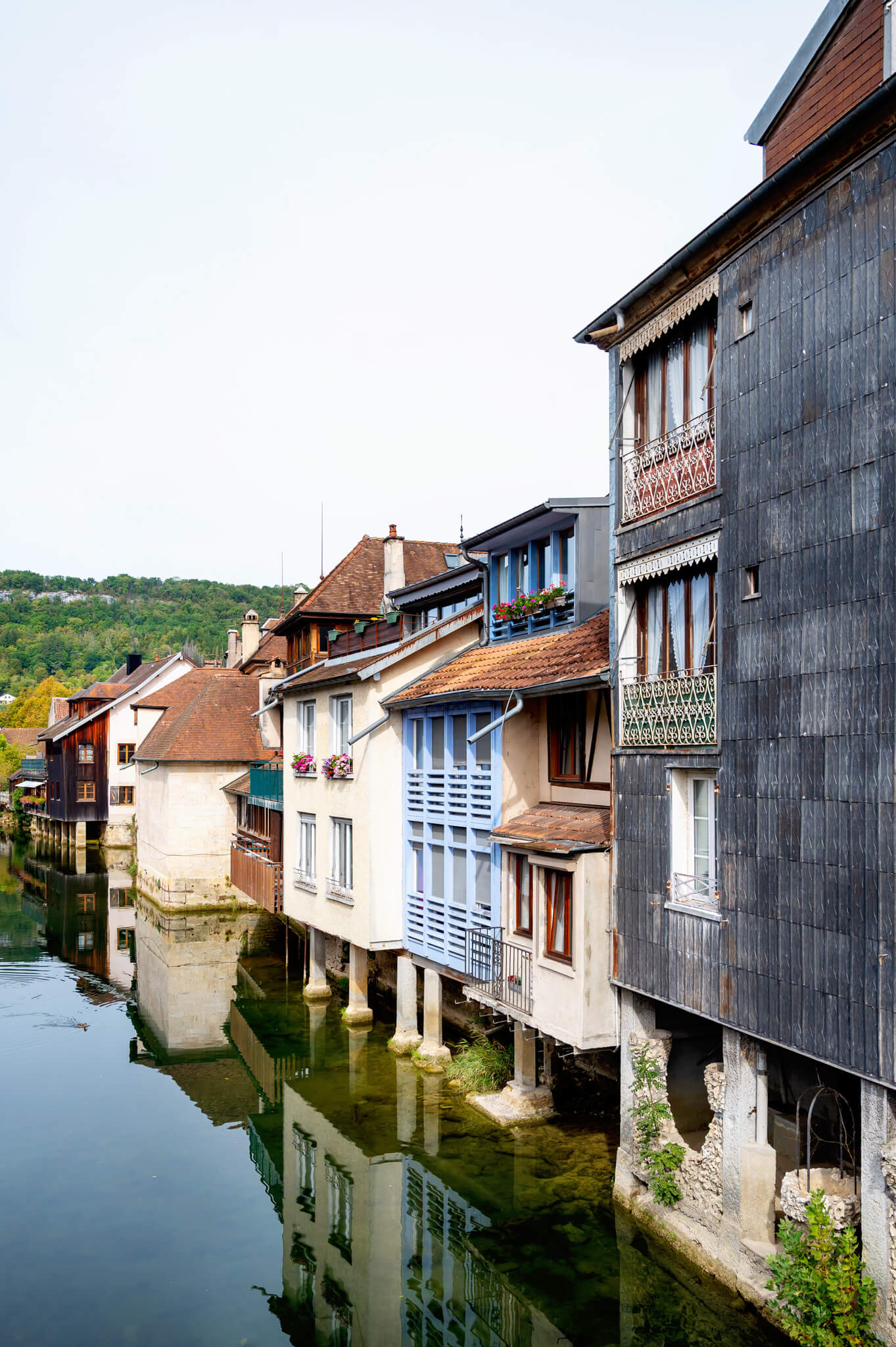
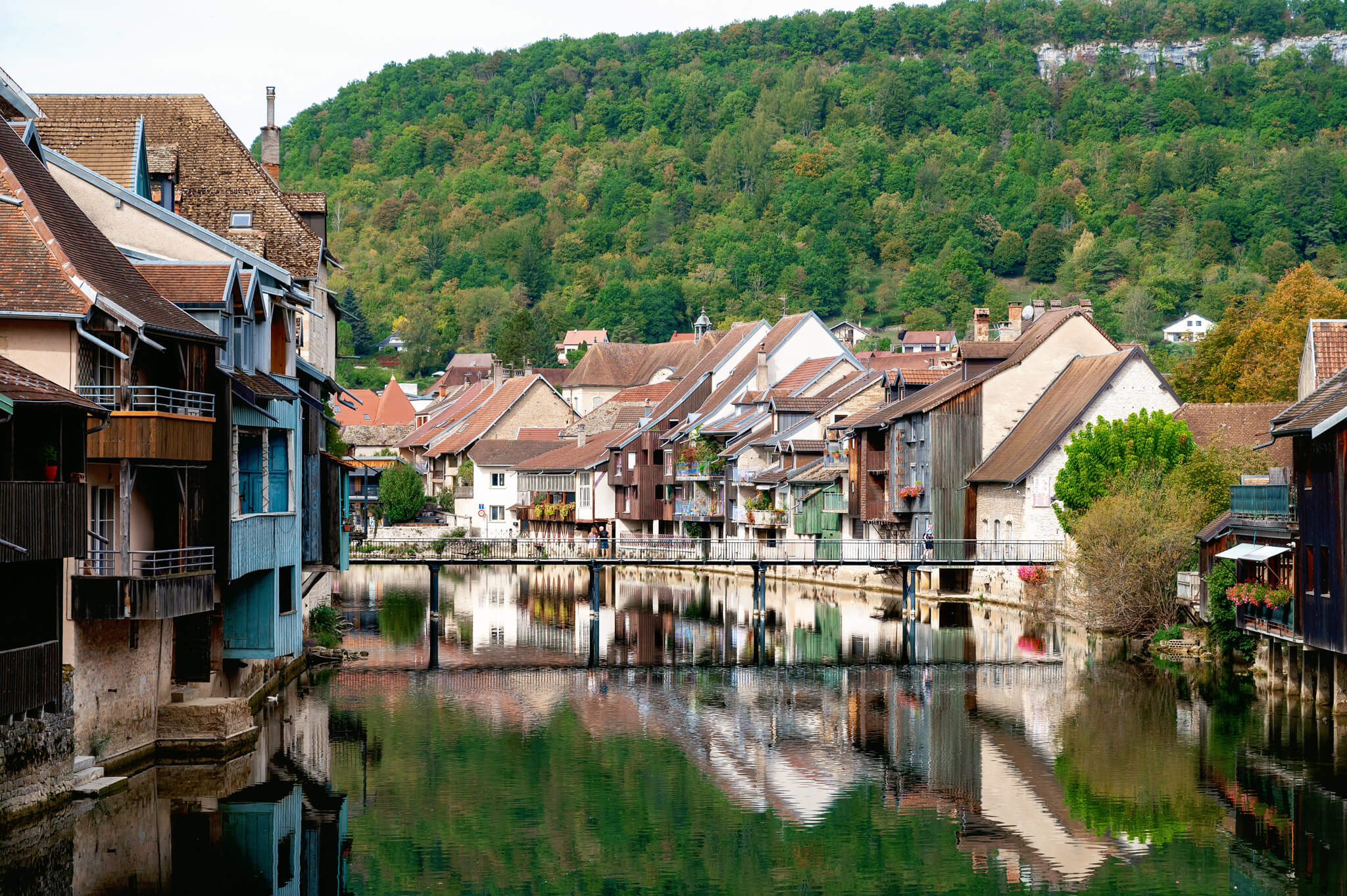
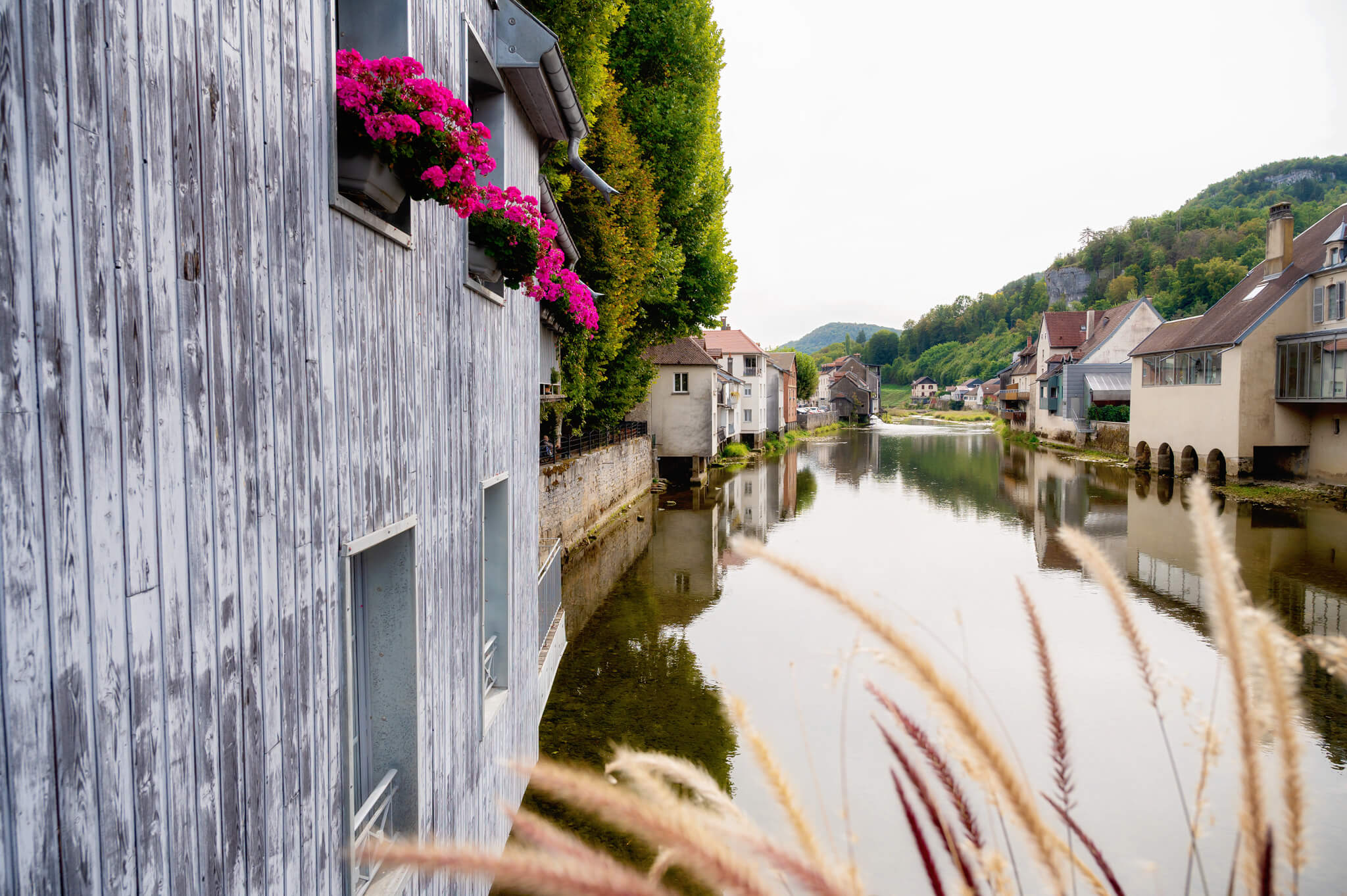
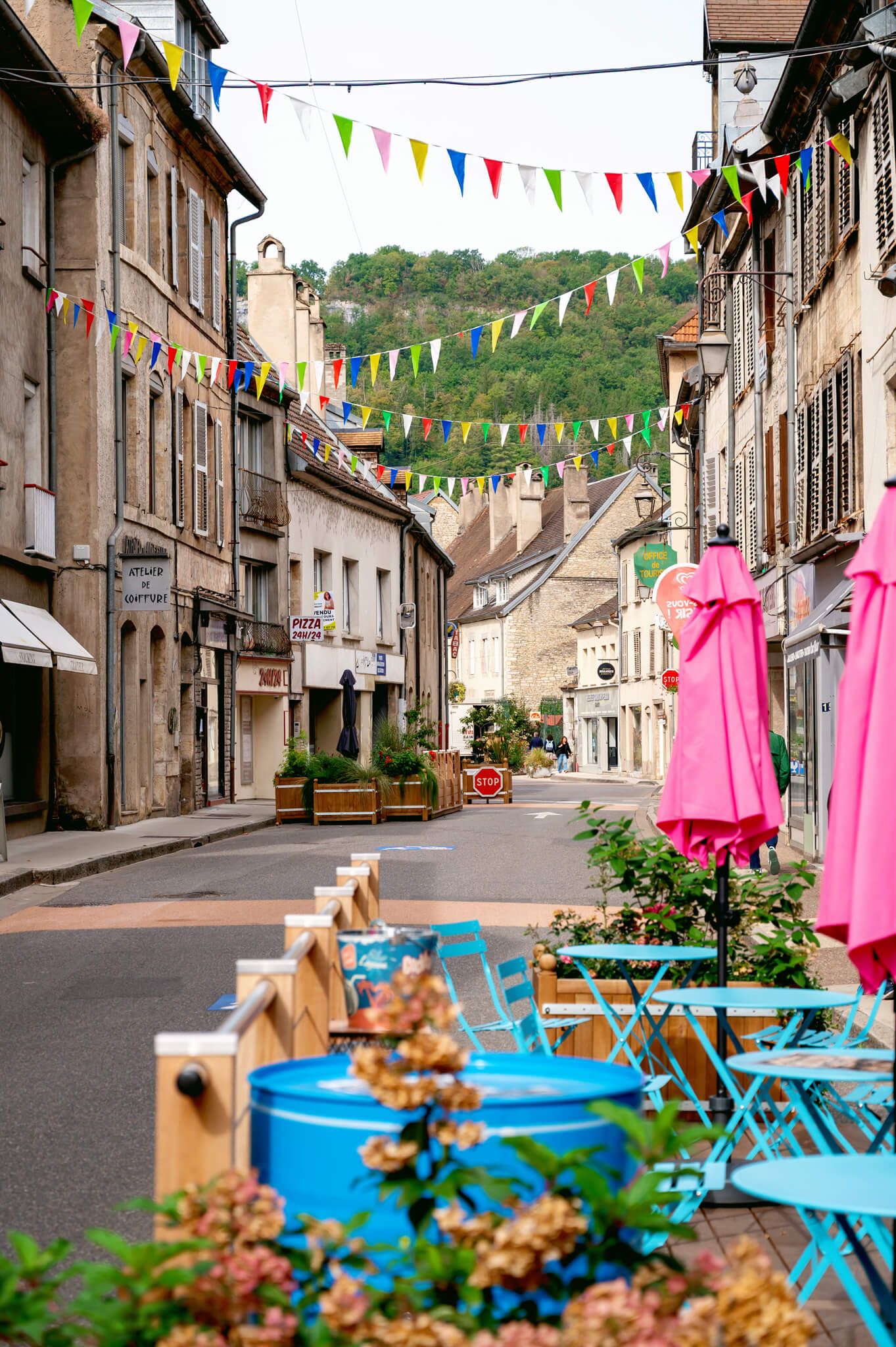
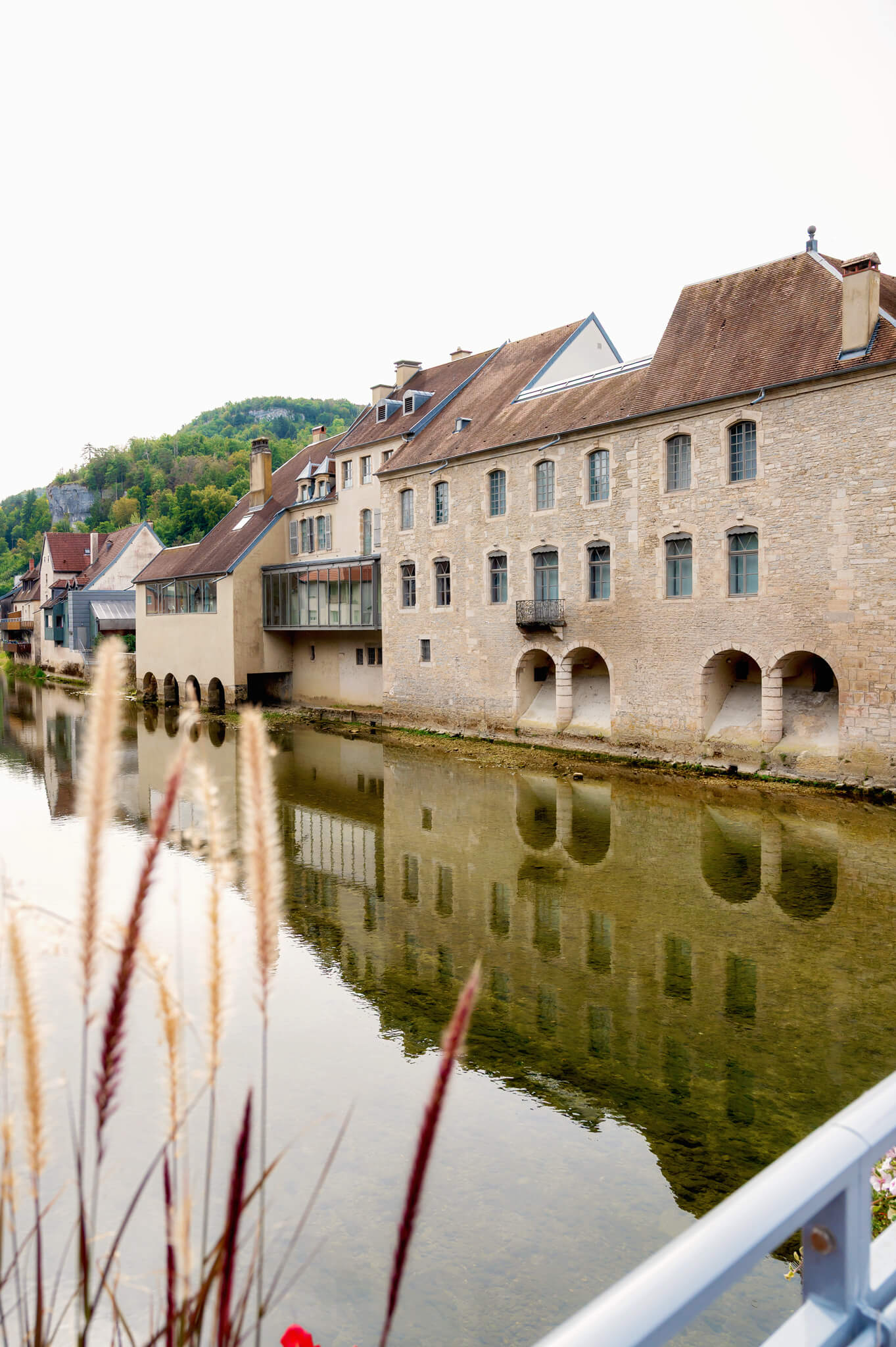
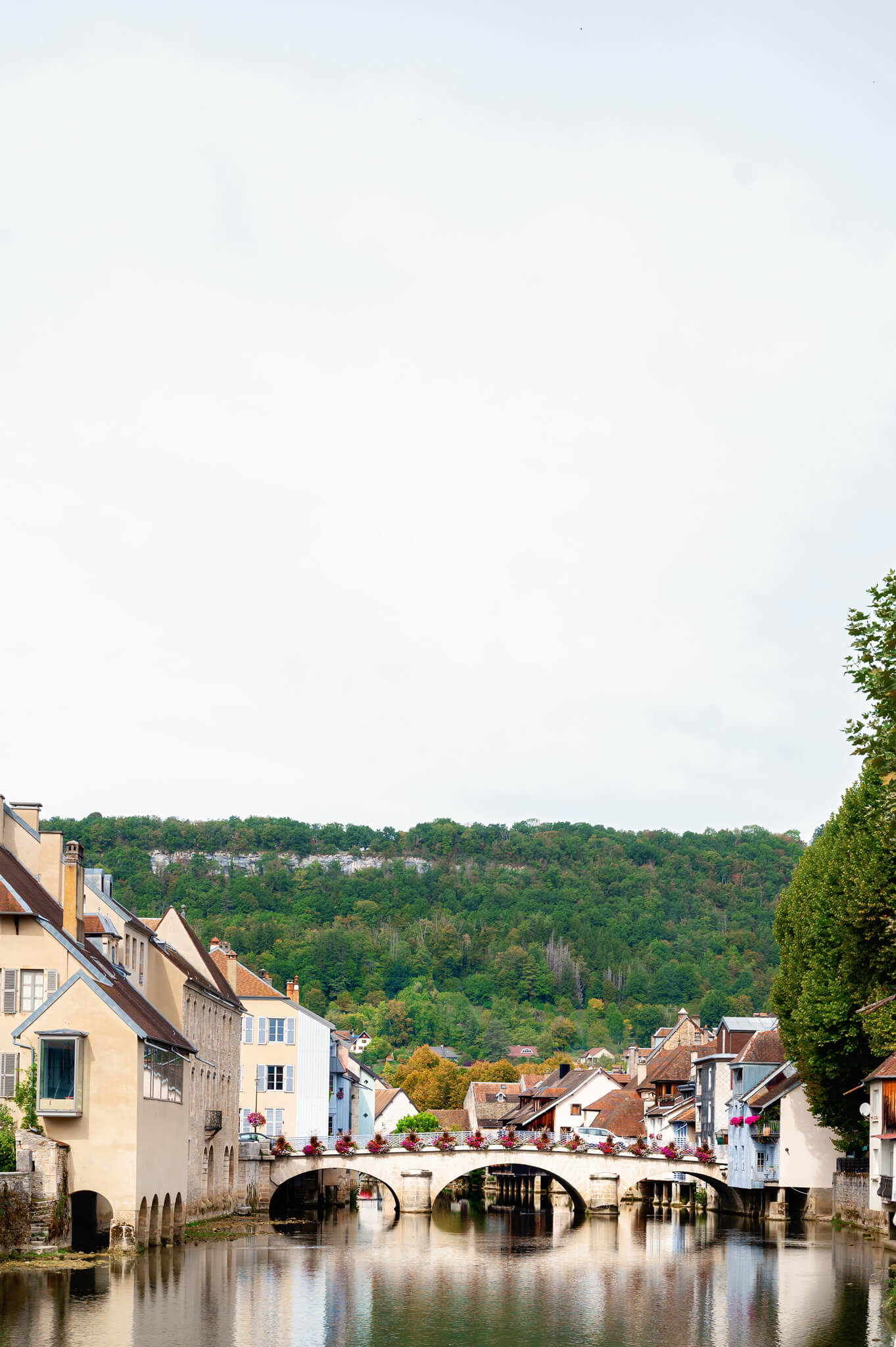
Ornans was one of the towns where I wished we had more time. We stopped for lunch, and I loved photographing the buildings along the Loue River.
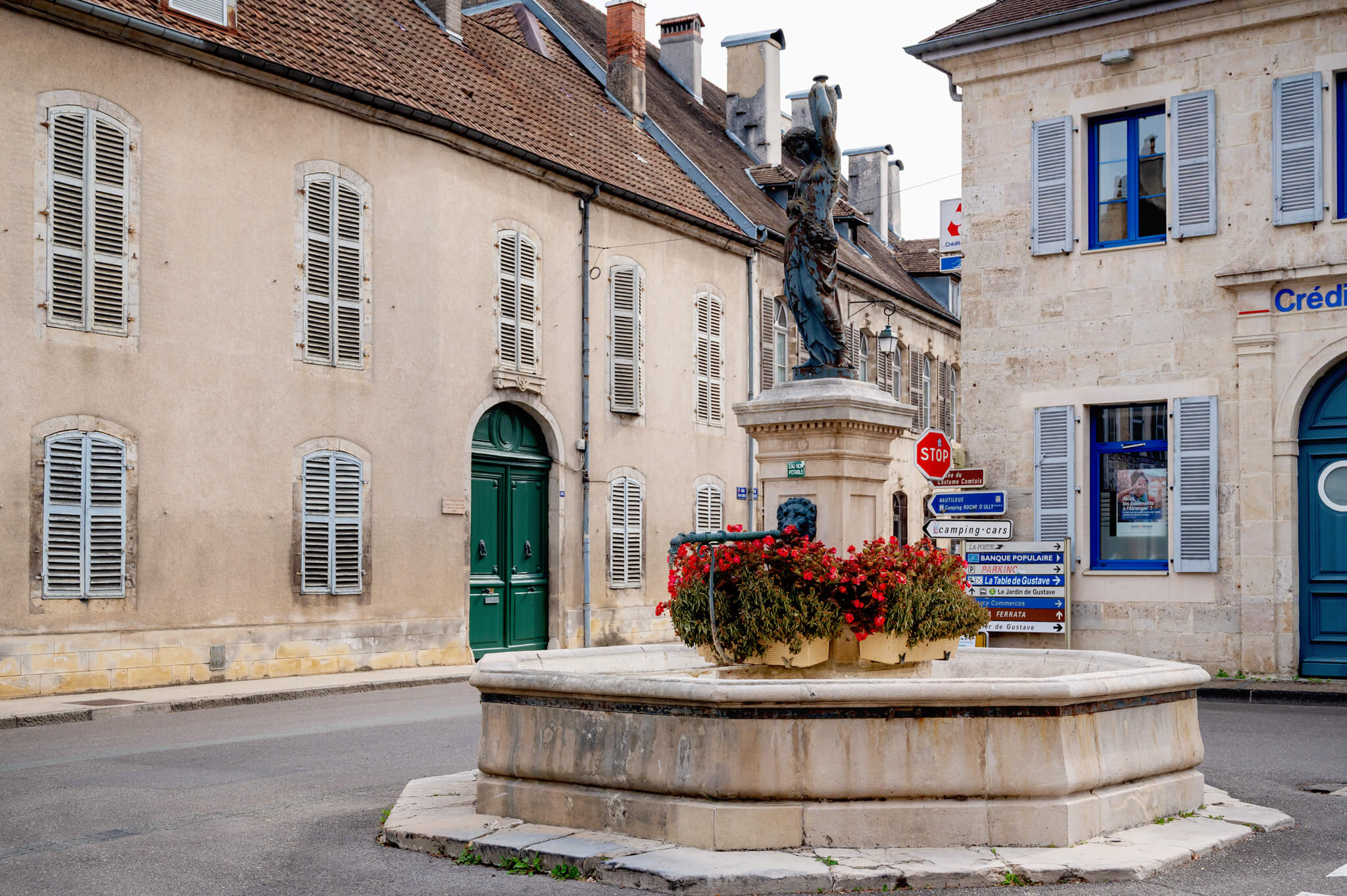
It’s also the birthplace of French painter Gustave Courbet, whose work drew inspiration from the surrounding landscapes and local people.
You can visit the Musée Courbet to learn more about his life and work, giving you another reason to spend some time here.
If you enjoy wandering through small towns with your camera, Ornans is worth considering as a base for the Doubs portion of your trip. I would love to return with more time to explore beyond a quick lunch stop.
For an overnight stay, Le Jardin de Gustave caught my eye. This small guesthouse has a garden beside the river and serves breakfast with regional products.
Port-Lesney for a Quiet Village Stay
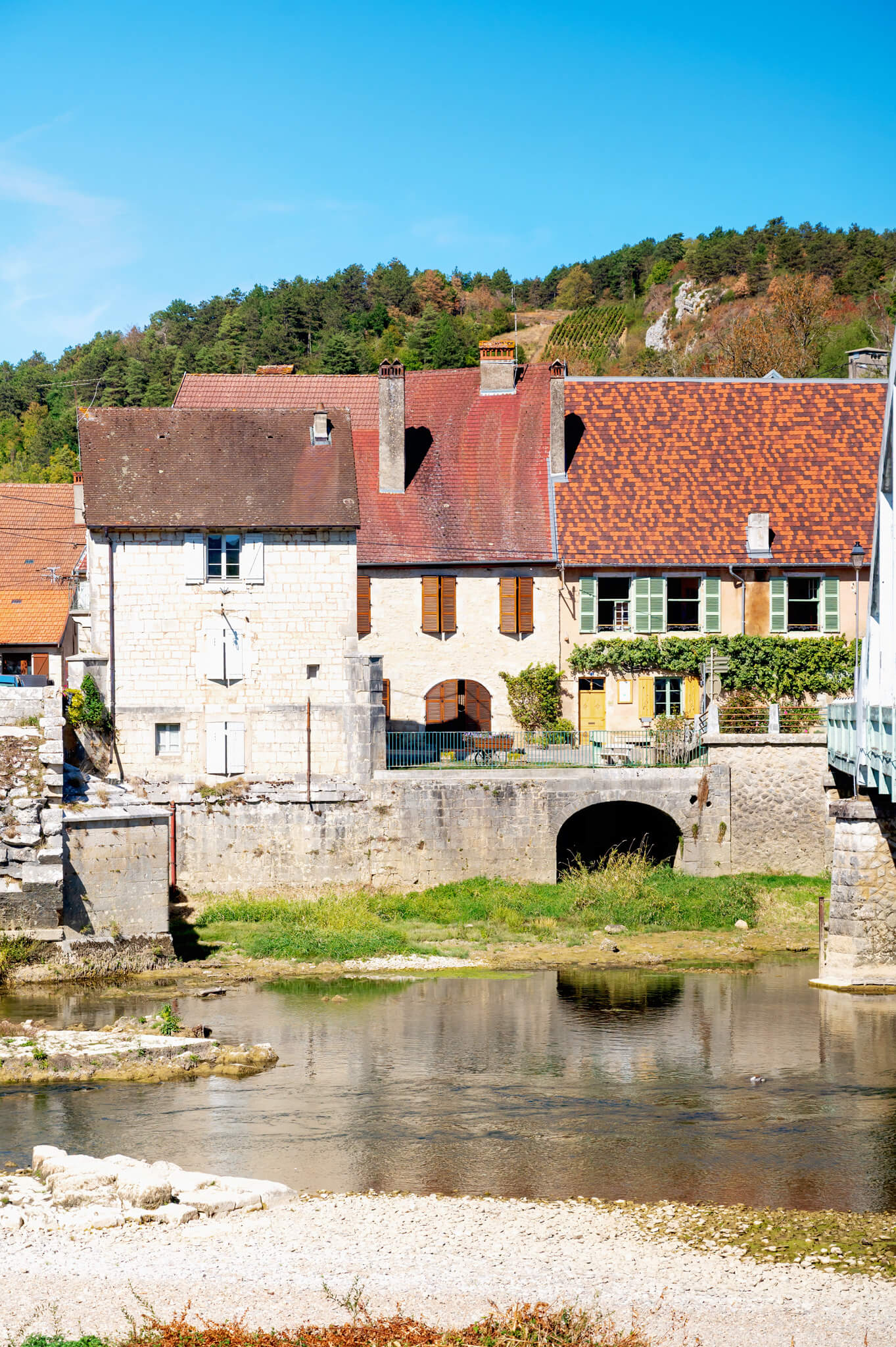
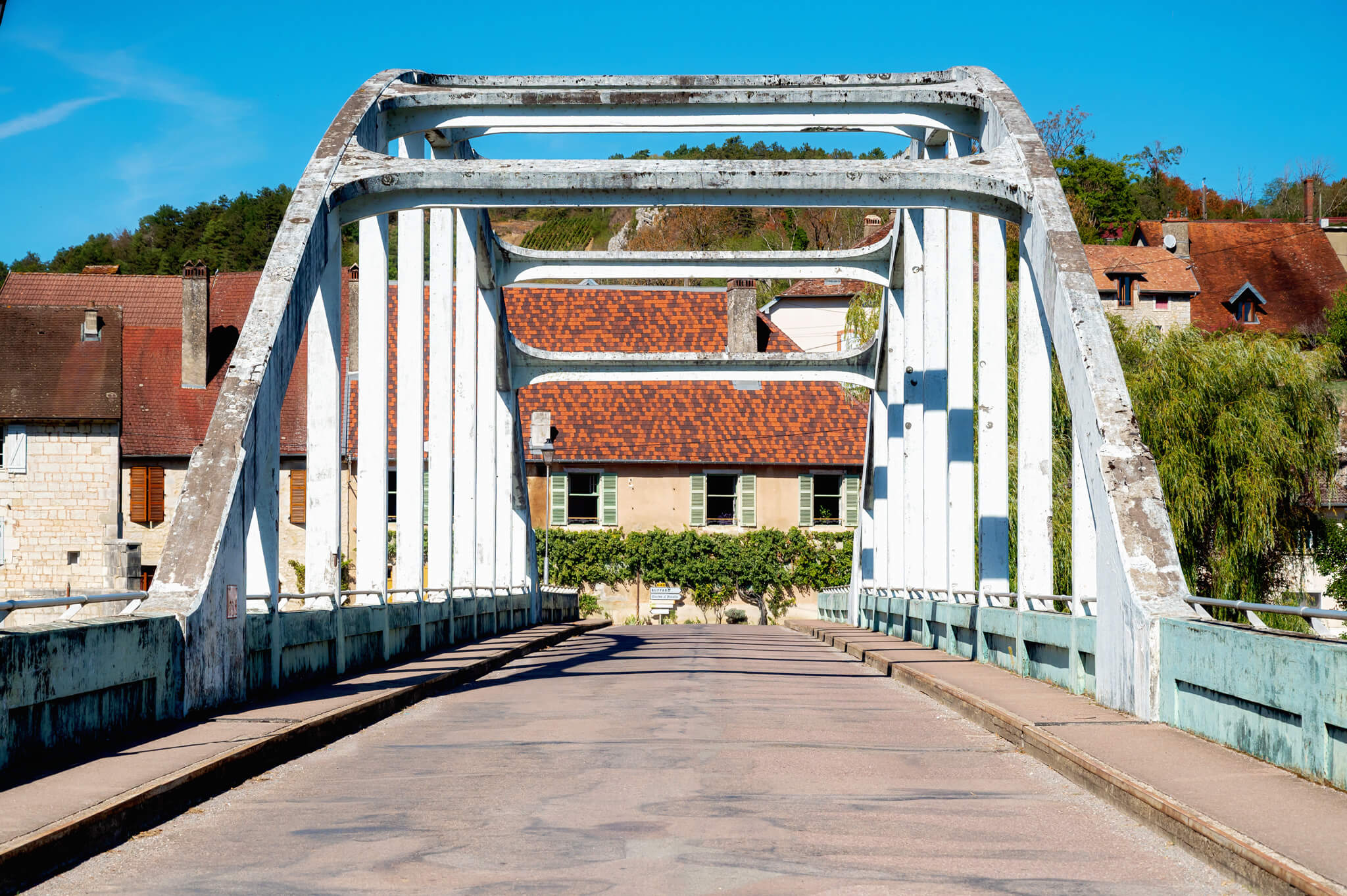
We stopped in Port-Lesney for lunch, and I would have liked more time to enjoy the village. It’s very small and charming. The perfect place to just relax for a day or two.
Château de Germigney, a Relais & Châteaux property, is somewhere I would love to stay on a return trip. I could see myself spending a couple of nights here and exploring the surrounding area at a slower pace.
Malbuisson for Lac de Saint-Point
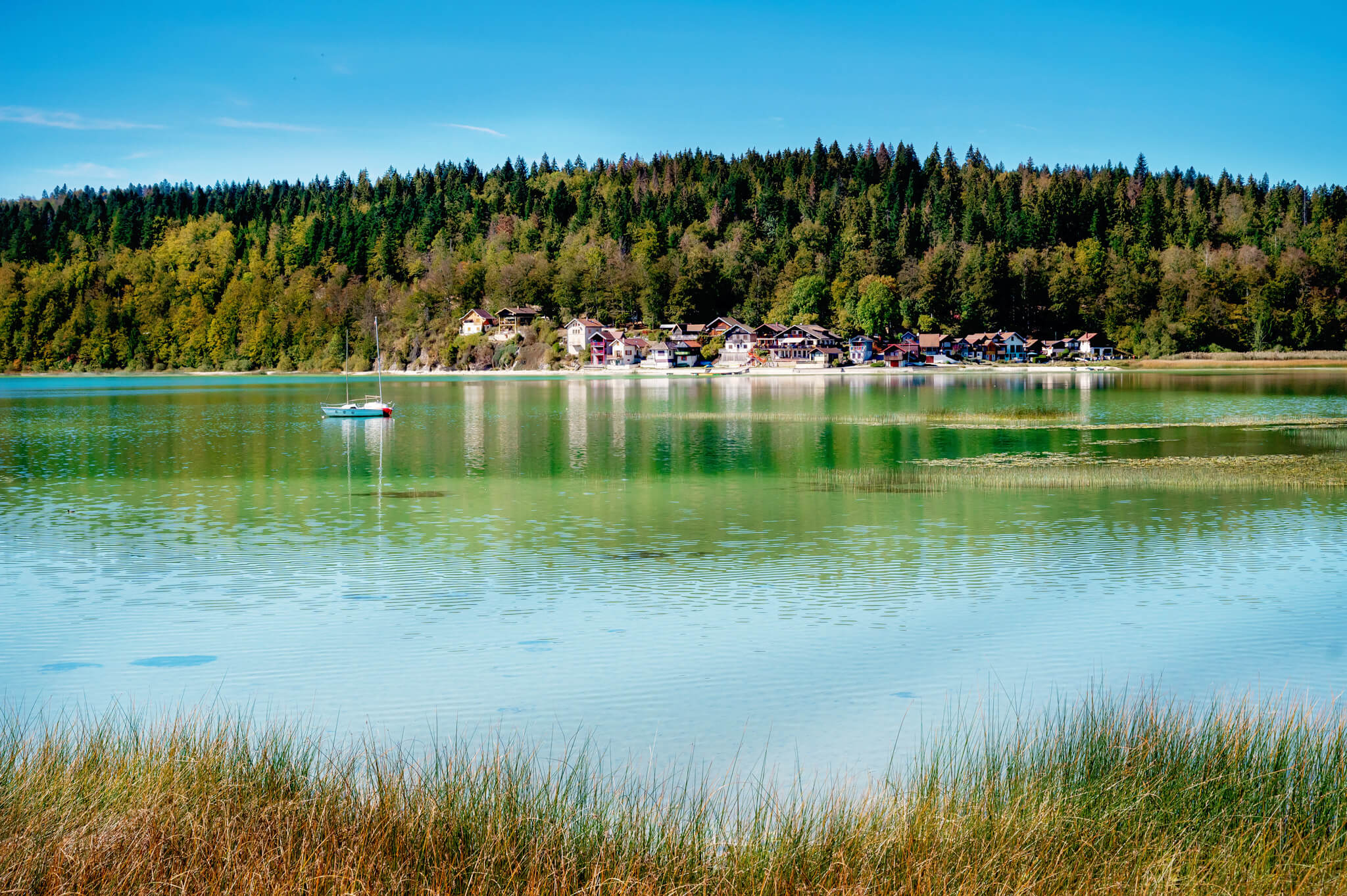
Malbuisson would be my choice for spending more time by Lac de Saint-Point, which is the 3rd largest natural lake in France. It’s a great base for exploring the mountainside of this region. It’s also where we had that fondue lunch I’m still thinking about!
Les Rives Sauvages offers suites by the lake that would be great for families, while La Maison des Cimes is a new Relais & Châteaux option overlooking the water. La Maison des Cimes is opening its offerings in stages during 2026, so check what will be available for your dates.
For my next visit, I’d prioritize having more time in each place and choose hotels that make it easy to enjoy the surrounding town or countryside between outings, while still offering an elevated experience.
Things to Do in the Jura Mountains Beyond Comté Cheese
If you love discovering places beyond the usual France itinerary, the Jura Mountains are worth a closer look.
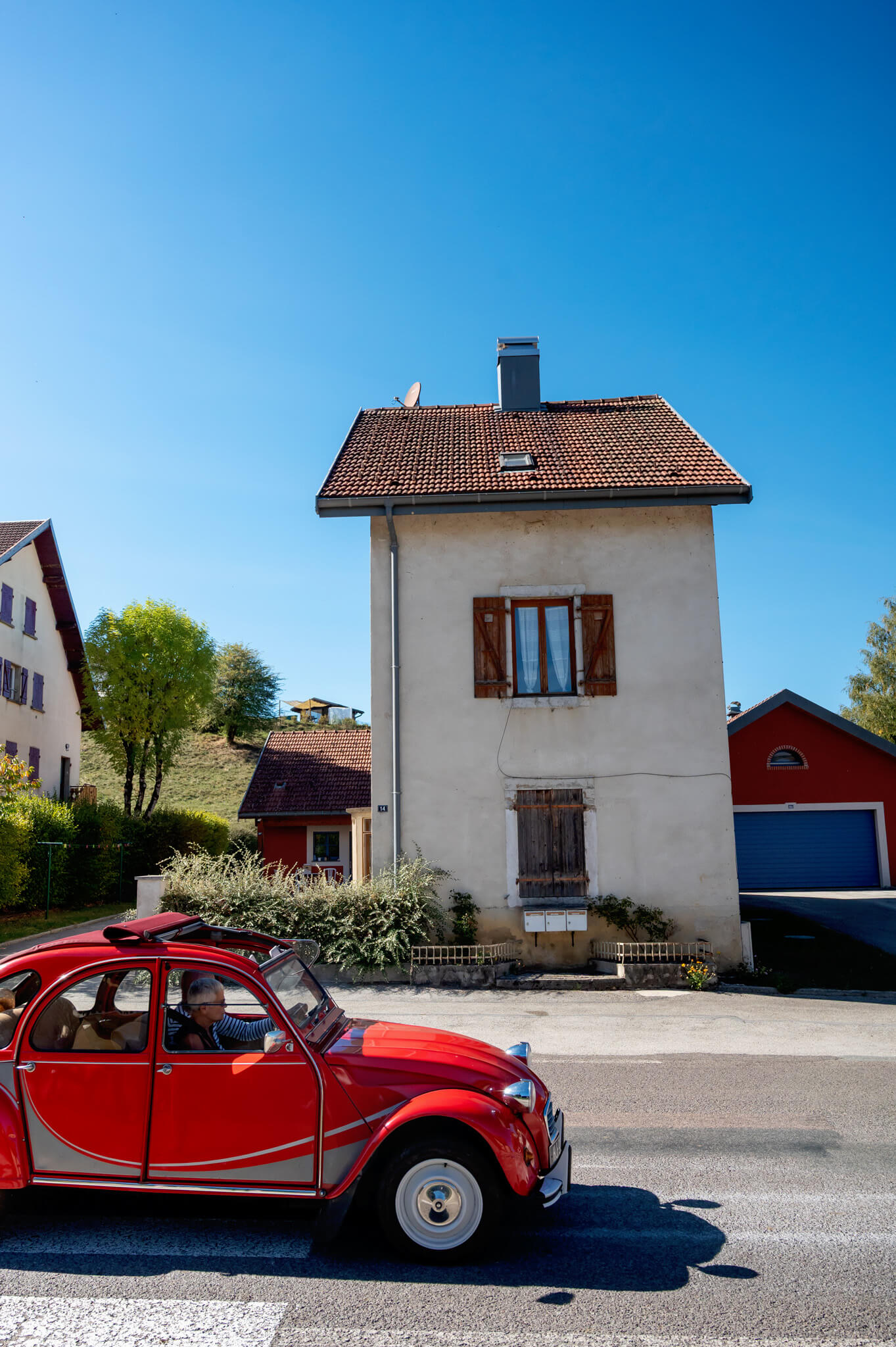
This region draws French vacationers for hiking, biking, camping, lake activities, and winter sports. If you want to vacation where the French vacation, this could be your kind of place!
To me, this part of France felt like a hidden gem, with small villages, beautiful scenery, and plenty of reasons to slow down. You could easily build a trip around outdoor adventures, with Comté tastings and leisurely meals along the way.
Summer Hiking, Biking, and Lake Activities
Summer is the time for hiking, cycling, camping, and afternoons by the water. Check out the Hérisson waterfalls for a scenic hike, or consider this guided forest-and-lakes walk in Clairvaux-les-Lacs.
The region’s lakes offer opportunities for swimming, kayaking, paddleboarding, and sailing, depending on the location. I could easily imagine settling in near Lac de Saint-Point and alternating outdoor adventures with leisurely lunches and strolls through town.
Winter Skiing and Snowshoeing
In winter, the Jura Mountains offer cross-country skiing and snowshoeing, plus downhill skiing at resorts including Métabief, Les Rousses, and Monts Jura.
Choose your base around the activities you want to do, and check snow conditions and resort openings before heading out.
And yes, I would absolutely plan on Comté fondue after a day in the snow!
For more ideas, visit Comté USA’s guide to traveling in the region.
Finding and Enjoying Comté Cheese at Home
You don’t have to travel to France to begin exploring Comté. I’ve found it at a local wine shop in Destin, and it’s worth asking at specialty food stores and cheese counters near you.
In many places, you can even order Comté cheese online through Whole Foods or from other Amazon sellers. Another tip is to check Instacart by just searching Comté. It will often show which local stores (on Instacart) have Comté cheese available, including places like The Fresh Market.
If you can, try two different ages of Comté cheese side by side. And if you visit a specialty cheese shop, tell the cheesemonger what you tend to like, and let them help you choose.
My Newfound Appreciation for Comté Cheese
I went on this trip to France already knowing that I enjoyed Comté cheese. What has changed for me now is my understanding of everything it takes to make it.
Now I can picture the cows coming in for milking, the cheesemaker checking the curd, the rows of wheels in the fort, and the expert listening carefully as he tapped a rind. I feel like I know what questions to ask at the cheese shop, and what to look for!
I also think about how those people depend on one another. Each has their own skill, but the finished cheese is a product of all of their work.
That is what made Comté special to me. And whether your next step is planning a trip to eastern France or simply picking up a wedge for the weekend, I hope you’ll enjoy discovering it, too!
More France Travel Inspiration
Looking for more ideas for your next trip to Europe?
We visit Europe often, exploring unique places like Italy’s Franciacorta wine region, the lovely Douro Valley in Portugal, and the archaeological gems of Southwest Sardinia.
My goal is to share my firsthand experiences and photos from the places I visit to encourage you to book the trip!
Here are just a few of my other firsthand France travel guides that you may enjoy:
- Èze and Hiking the Nietzsche Path
- Exploring the Cassis Calanques
- Planning a Visit to Antibes, France
- Cap Ferrat Coastal Walk
- Cap d’Antibes Coastal Path
- Paris Travel Guides
- French Beauty Favorites
- France Inspired Gift Ideas
You can also browse all of my Europe travel blog posts for more places to explore!
And make sure to follow along on social media! I post all of my trips there, and you can even explore the Comté story highlight for videos I took during my visit last month!
Pin This Comté Cheese Guide for Later