We may earn money or products from the companies mentioned in this post. As an Amazon Associate, I earn from qualifying purchases.
The beach towns along 30A in northwest Florida are some of the most charming places in the United States! That said, because it covers such a large area, planning a trip to 30A raises some additional logistical questions. One of the most frequently asked questions is whether you actually need to rent a car when visiting 30A Florida. And, the answer depends on where you are staying!
The charming beach towns of 30A are spread along the 20+ miles of Highway 30A, with a long bike path (basically a sidewalk) connecting them. Many of these towns are based on New Urbanist design centered around walking and biking, and there is very limited parking in the most popular spots.
Some parts of 30A are incredibly walkable, while others are much more spread out. Transportation, like rideshares like Uber, can be hit-or-miss during busy travel weeks. In this 30A travel guide, I’ll walk you through when you can skip a rental car on 30A, when having one makes your trip easier, and the best ways to get around so you can plan your trip to 30A Florida, with confidence.
You may also enjoy reading about the Top 10 Mistakes People Make When Planning a Trip to 30A Florida!
Do You Need a Car When Visiting 30A Florida?
The short answer is that you do not need a car on 30A Florida if you stay in one of the walkable town centers and plan to spend most of your time nearby.
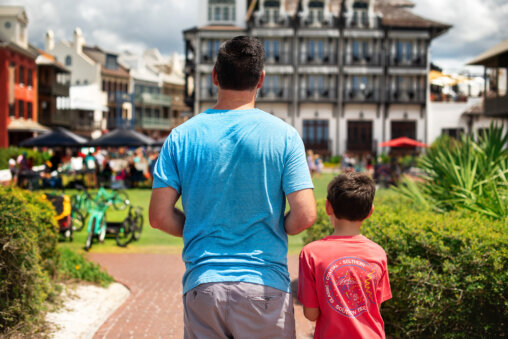
Areas such as Rosemary Beach, Seacrest Beach, and Alys Beach on the east end of 30A are walkable and bikeable. As is Seaside, WaterColor, and much of Seagrove in central 30A.
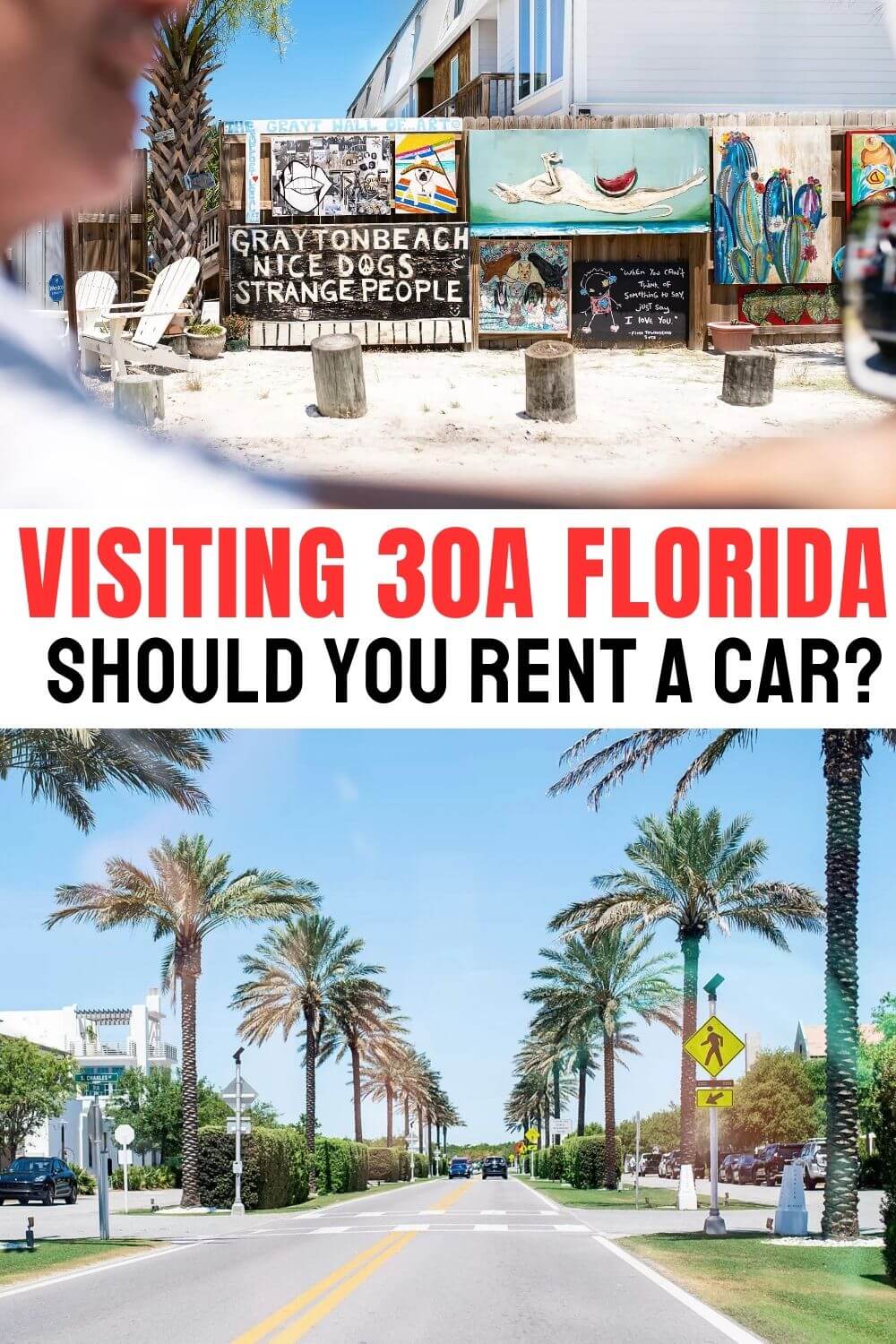
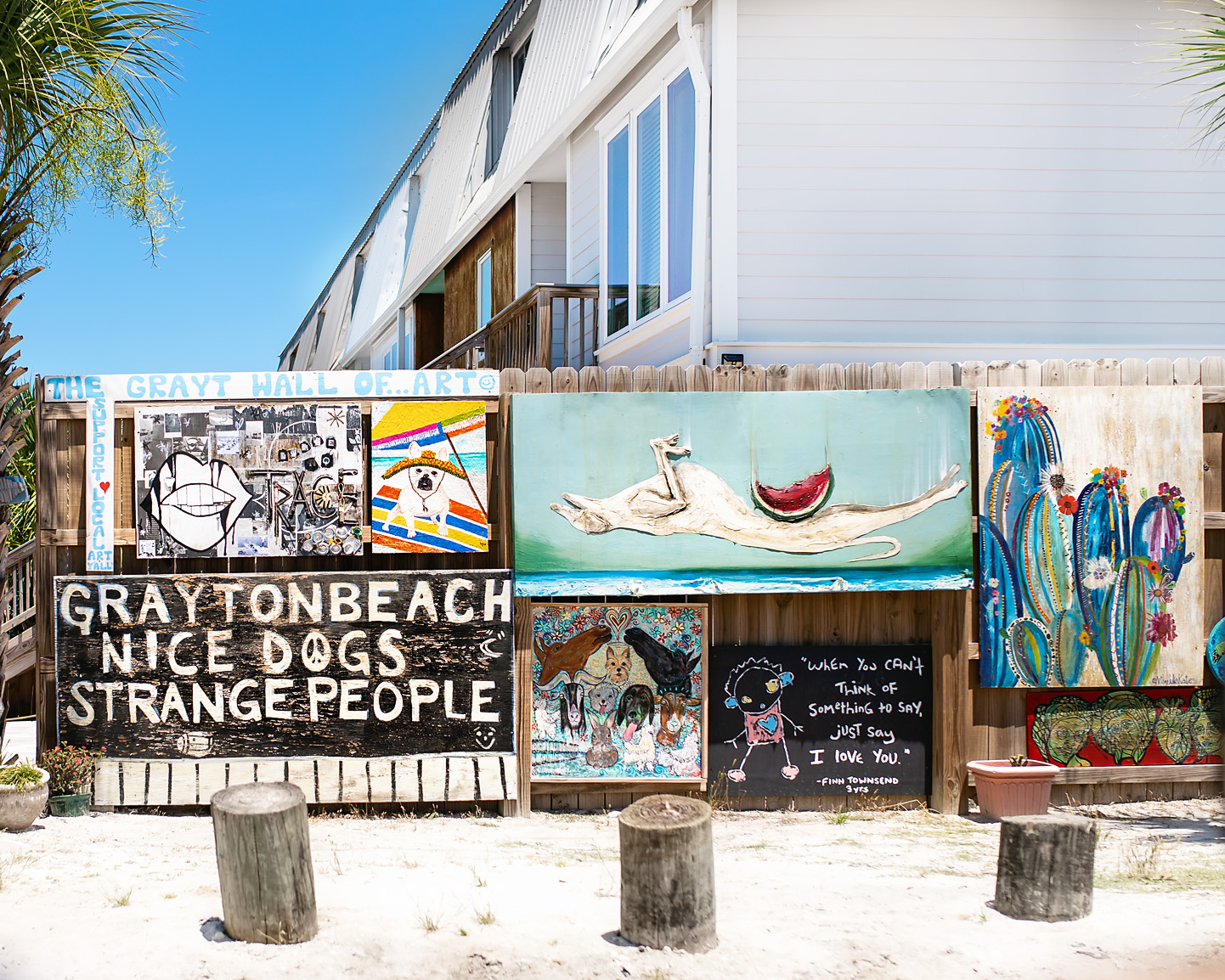
Other areas, such as Gulf Place and Grayton Beach (south of 30A), are designed to be pedestrian-friendly, with restaurants, some shops, and beach access all close together. In these areas, it’s easy to walk or bike to wherever you want to go and structure your trip around a single hub.
That said, having a car on 30A Florida, can give you more flexibility, especially if you want to explore multiple towns, do grocery runs, or head to places like Destin or Panama City Beach. Rideshare services like Uber and Lyft do operate along 30A, but they can be unreliable, especially in peak season, with longer wait times and fewer drivers available. I would not rely on them as a primary form of transportation.
Seasonality also matters. The answer also depends on when you visit. In the off-season, especially November through February, having a car is very convenient. The area is less crowded, parking is much easier, and it’s a great time to explore different towns without the usual congestion, making a car more of a convenience than a hassle during these months. This is one of the pros of visiting 30A in the winter.
That said, having a car during the peak summer season isn’t always helpful, as traffic is usually fairly backed up, and it can be difficult to find parking in many popular areas.
RELATED: When Is The Best Time To Visit 30A?
Walkable Areas on 30A Where You Can Skip a Car
If you want to visit 30A without renting a car, where you stay matters most. Some areas of 30A are built around walkability, while others are more spread out and feel much more car-dependent. This is why I would first ask yourself what your needs are, choose an appropriate accommodation/area, and then consider if you want a car.
For example, if you are planning a bachelorette or girls’ trip to 30A, I would almost always recommend staying in one of the following walkable areas. You don’t want to worry about driving or finding transportation for every meal and activity, which is a real concern if you stay in one of the quieter (and usually more budget-friendly) areas!

East End of 30A (Rosemary Beach, Seacrest Beach, Alys Beach)
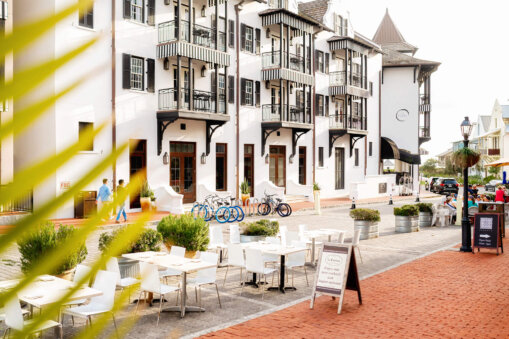
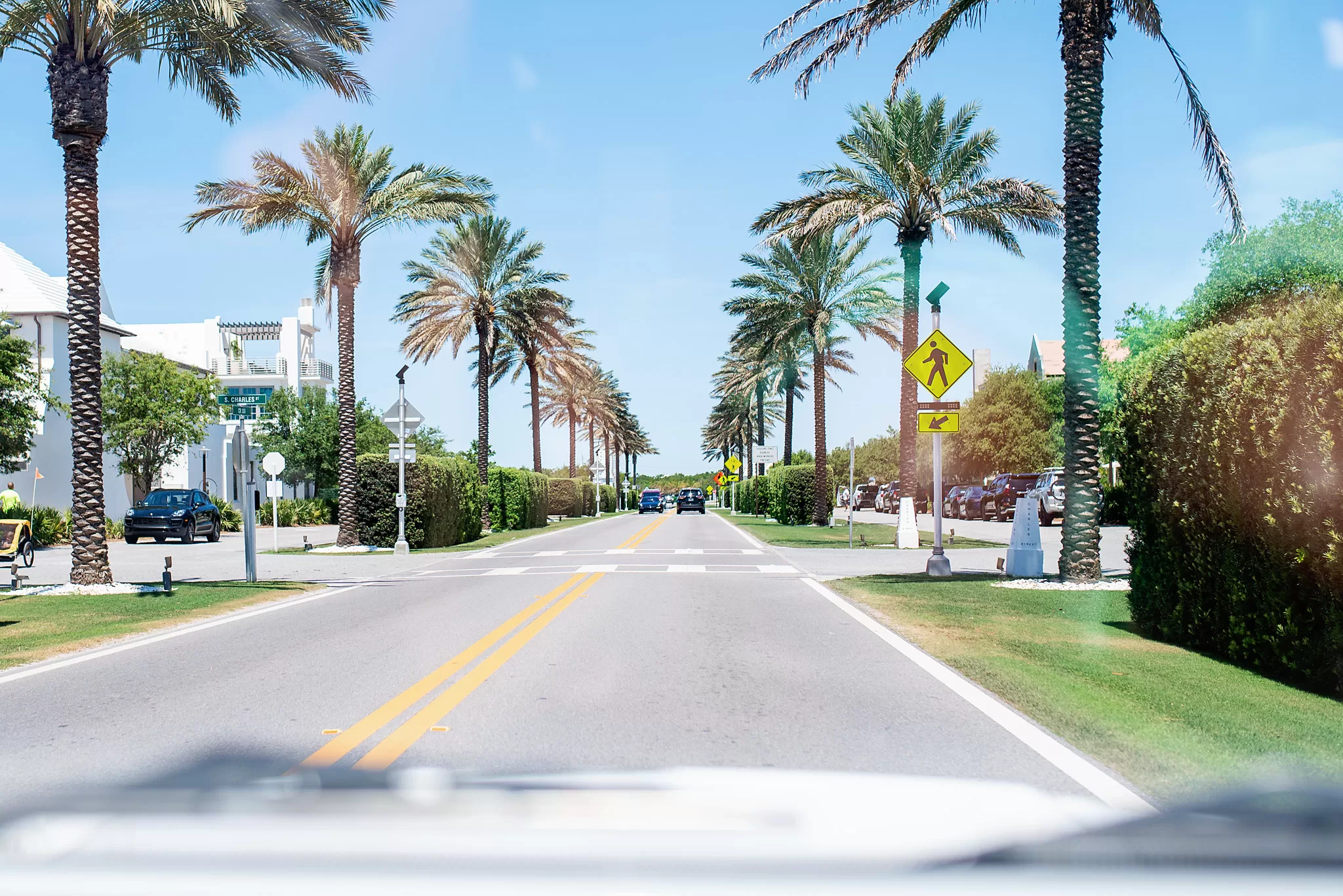
The east end of 30A is one of the easiest areas to enjoy without a car. Rosemary Beach, Seacrest Beach, and Alys Beach are all highly walkable and bike-friendly, with town centers featuring restaurants, coffee shops, and boutiques, each with its own community beach access.
Click here to browse VRBOS in Rosemary Beach, Florida!
If you stay within these communities, you can comfortably get around on foot or by bike during your trip, making this one of the best areas on 30A for travelers who want to park once and not think about driving again until they leave. This is one of the things our guests love when staying at our four Airbnbs in Seacrest Beach, Florida.

Central 30A (Seaside, Seagrove Beach, WaterColor)
The central section of 30A is another great option for a car-free trip. Seaside and WaterColor are walkable/bikeable, and WaterColor even has a shuttle service. Neighboring Seagrove Beach is walkable to these areas (especially if you are more west) and is very bikeable, with easy access to the Timpoochee Trail (bike path/sidewalk along 30A) and plenty of dining and shopping within a short ride.
Click here to browse VRBOS in Seaside, Florida!
Just make sure to really watch for cars pulling out of driveways and streets when biking on the path with kids. The bike path can get very busy during peak season and runs parallel to all of the traffic.
This is also one of the busiest areas of 30A, with very limited public parking, making staying central even more appealing if you do not want to deal with parking during peak season.
West End of 30A (Grayton Beach, Gulf Place, etc.)
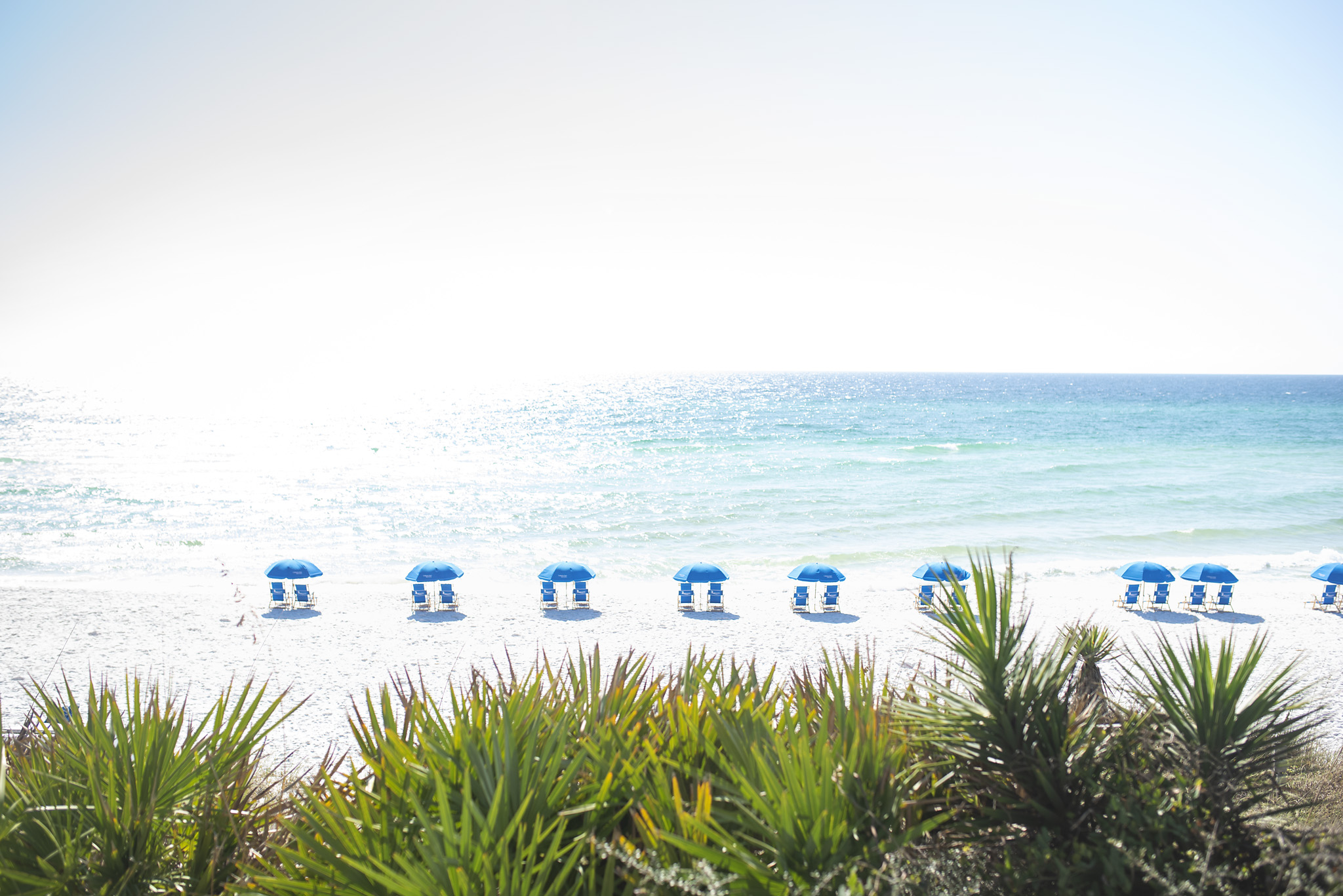
Grayton Beach, Gulf Place, and some other communities farther west can also be navigated without a car if you stay in the heart of each area. Grayton Beach has a small but lively town center with a couple of restaurants (you must visit The Red Bar) and large public beach access.
Click here to browse VRBOS in Grayton Beach, Florida!
The condos at Gulf Place sit directly on 30A and are built around a central hub with dining and easy access to the bike path. While these areas are smaller than the larger communities mentioned, they have at least a handful of dining and shopping options nearby.
There are other small pockets with at least some dining options nearby. Since 30A is so spread out, I can’t cover every neighborhood in this post.
However, my best tip when looking at a vacation rental on 30A is to also check the location on Google or Apple Maps. Search for restaurants and shops nearby. If you don’t see many, you probably aren’t in a very walkable area. If there are a dozen restaurants within a half mile, then it’s a walkable area!
Or, ask the Airbnb host if this area is car-dependent or walkable. Most good Airbnb hosts should be able to answer your question right away.

The Best Way to Get Around 30A Florida: Walking vs Biking vs Driving
When visiting 30A, you will see many people biking and walking, especially in the more popular town center areas such as Seaside, Rosemary Beach, Seacrest Beach, and Watercolor.
Walking on 30A
If you are staying near one of the city centers, you will likely find walking the easiest way to get around. This is especially true if you are staying in places like Rosemary Beach and Seaside, where you really don’t even need a bike. That said, these areas tend to be the most expensive when it comes to finding vacation rentals on 30A.
Biking on 30A
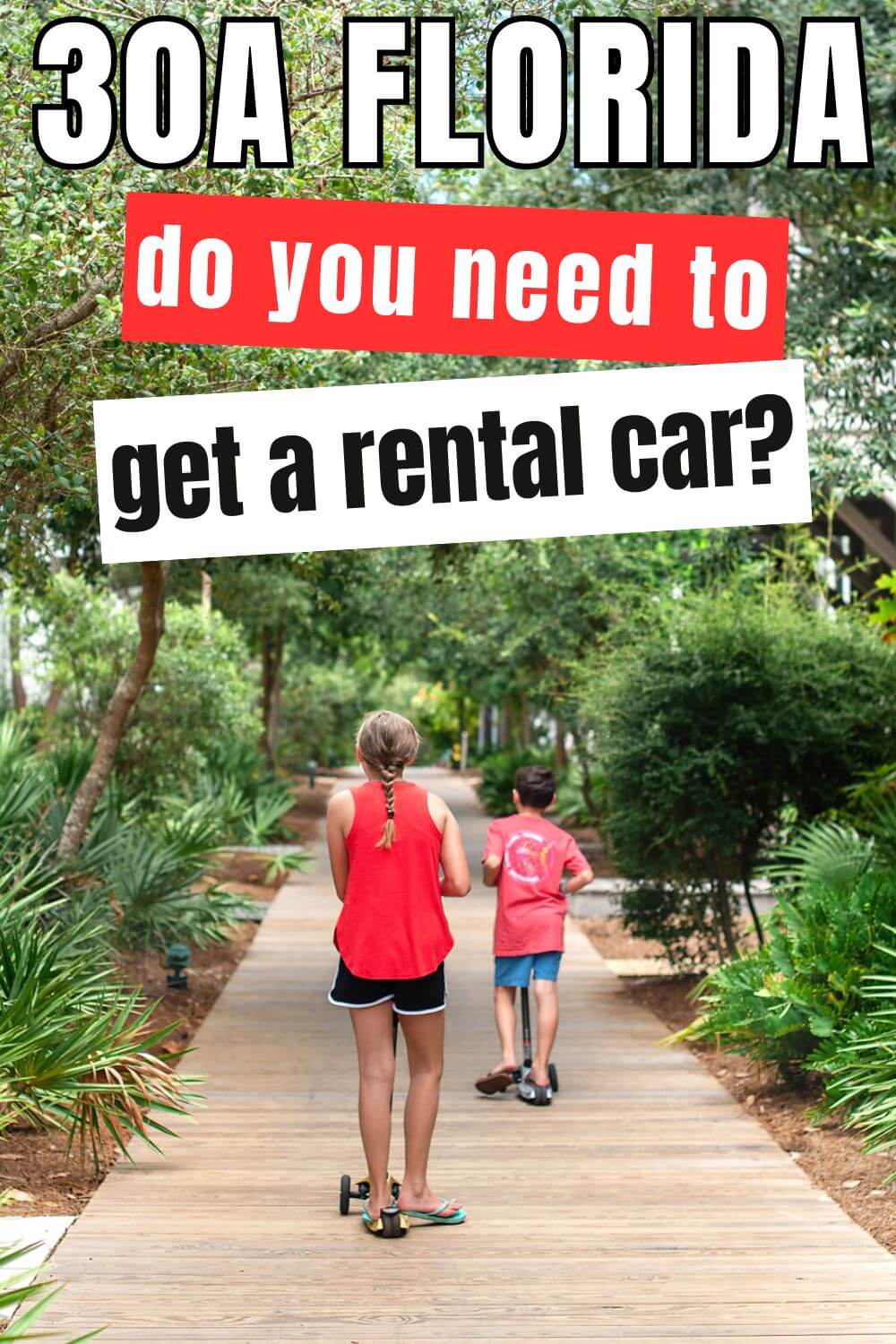
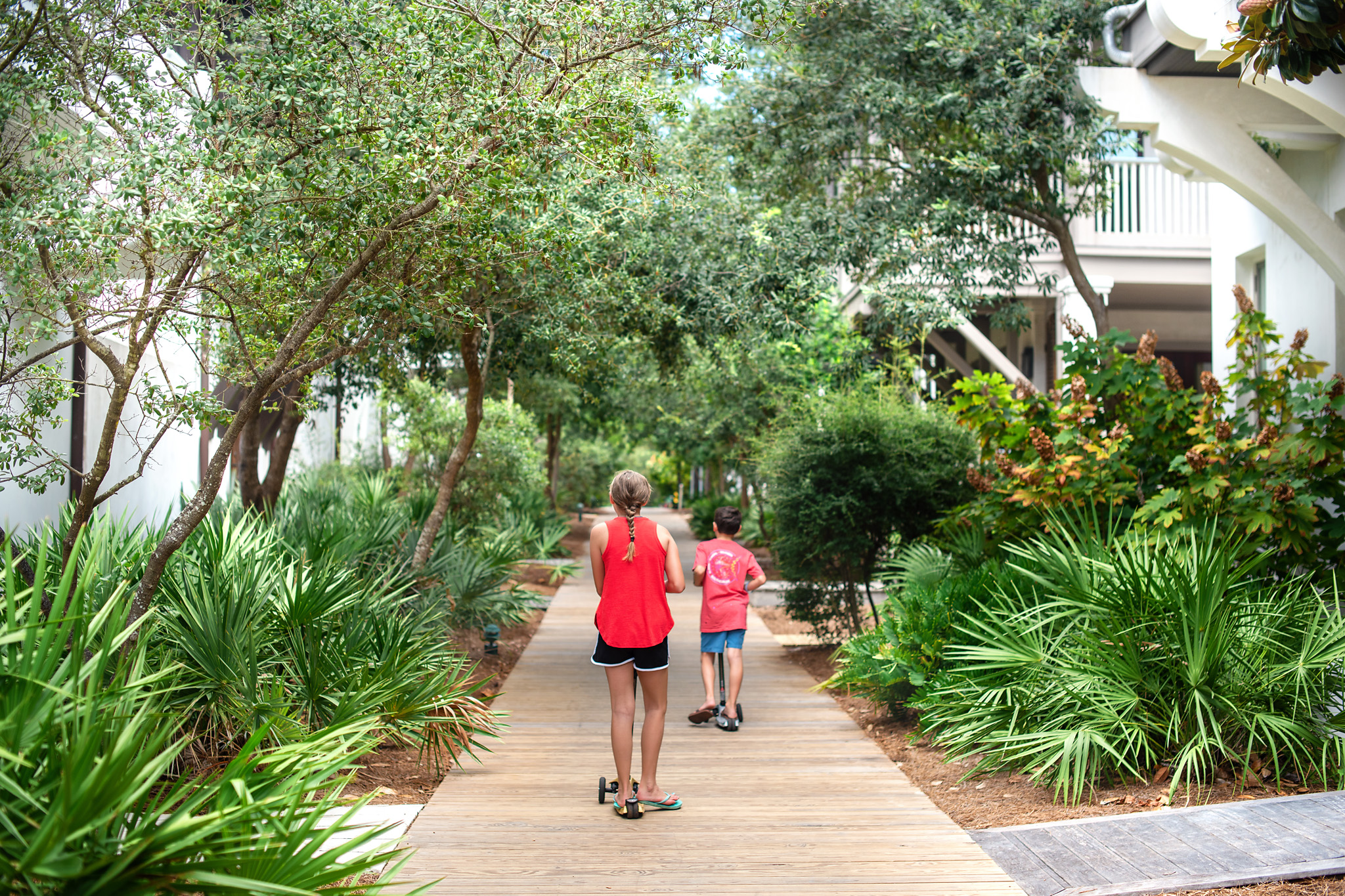
If you are staying just outside the main town centers, biking is one of the best ways to get around on 30A, Florida, because the Timpoochee Trail runs parallel to Highway 30A and connects most of the popular towns, making it easy to bike between communities.
Bikes let you move quickly without dealing with parking and are perfect for short trips to dinner, coffee, beach access points, and shops. That said, this shared pedestrian sidewalk crosses many driveways in some areas and can be busy. And, while you can ride as far as you’d like, I would be very mindful of when the sun sets, as it’s not very well-lit at night.
Driving on 30A
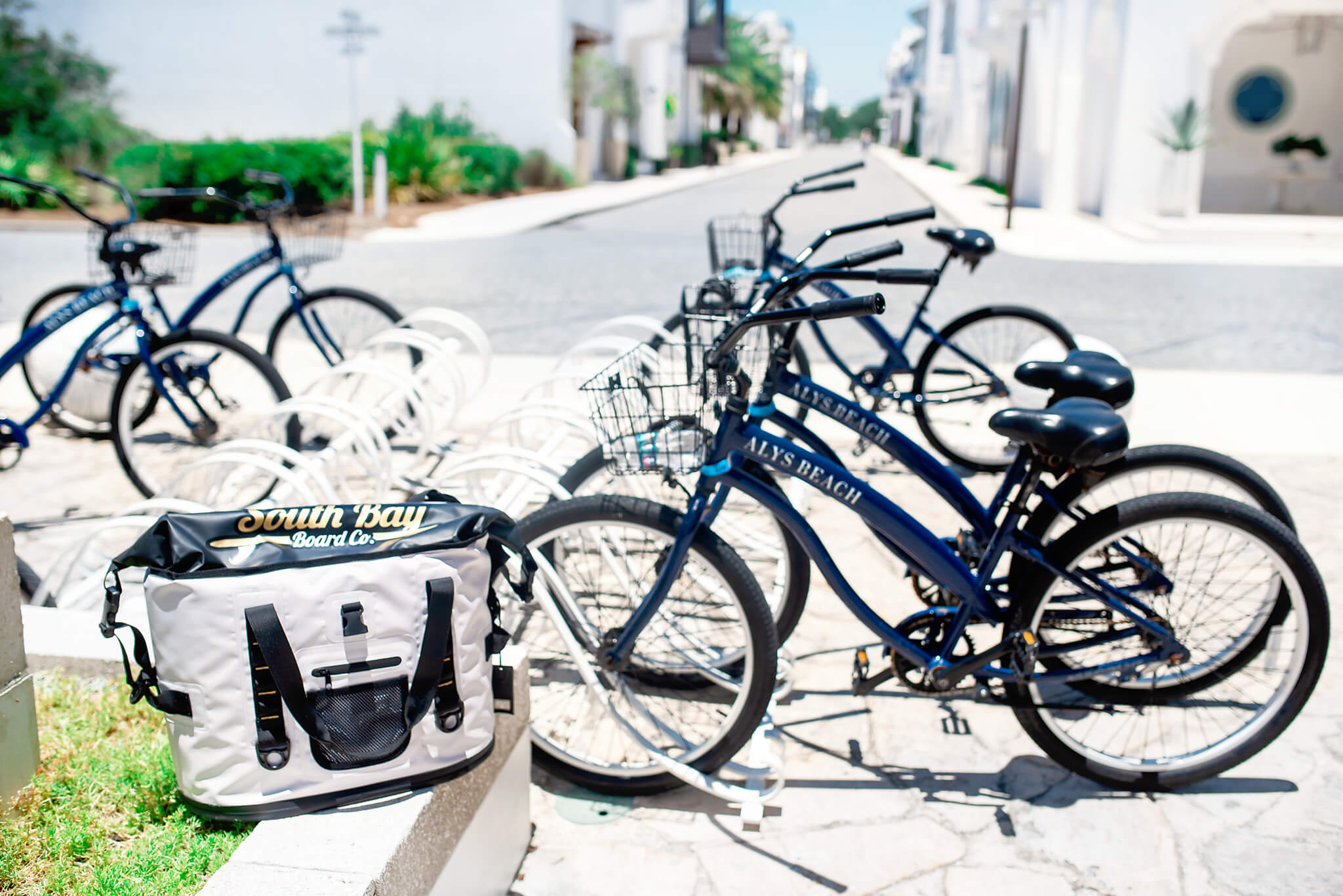
Driving is more practical if you plan to explore beyond one town center, need to run errands, or want to venture off 30A, and a car becomes more useful if you are staying in a less centralized neighborhood or traveling with a lot of beach gear. If you plan to visit Panama City Beach for water activities and boating, for example, you really will need a car.
On the other hand, it’s not always practical to rely on a car during the busy season, because you will likely run into a lot of frustrating issues finding parking in the various towns along 30A.
Finding Parking on 30A Florida: What to Expect
Parking is one of the biggest pain points on 30A, especially in popular towns like Seaside, Rosemary Beach, and Grayton Beach, where public parking is very limited and fills up quickly during peak season, making it frustrating to hunt for a spot during spring break, summer, and holiday weeks.
In fact, Grayton Beach and Seaside operate shuttle services from their off-site parking lots. Matt and I recently took the Grayton Beach Shuttle and posted an Instagram reel about the experience. It was actually very enjoyable. I have not taken the Seaside shuttle, but it runs from a parking lot off of Highway 331 near the bridge (details here)
Even with a car on 30A, you may prefer to park it and use bikes upon arrival, especially in the summertime and on school breaks.
Parking is significantly easier in the off-season from November through February when crowds are lighter, which is why it’s not a bad idea to have a rental car during that time. During the shoulder seasons, it’s also a bit easier to find parking as long as it’s not a holiday weekend, Fall break, or Spring break.
Another consideration is that many rental homes have limited parking and few places to store extra vehicles overnight. Please review the rental listing description and confirm with the host if you plan to bring multiple vehicles.

Golf Carts on 30A Florida: Pros, Cons, and Local Restrictions
So, why haven’t I mentioned golf carts? Well, they are actually low-speed vehicles (LSVs) and are treated the same as regular vehicles, requiring car seats and parking spots. So, they are really just lumped in with driving.
Golf carts (actually LSVs) sound fun in theory, but they are often less practical on 30A than people expect because not all towns allow them, and local rules and enforcement can vary by area. For example, LSVs are not permitted in many of the towns on the east end of 30A, including Rosemary Beach, Seacrest Beach, and Alys Beach.
Other communities also have rules limiting where they can be driven, parked, and how and from whom you can rent them. Always ask your Airbnb host or whoever you rent from if there are any restrictions on renting or using LSVS.
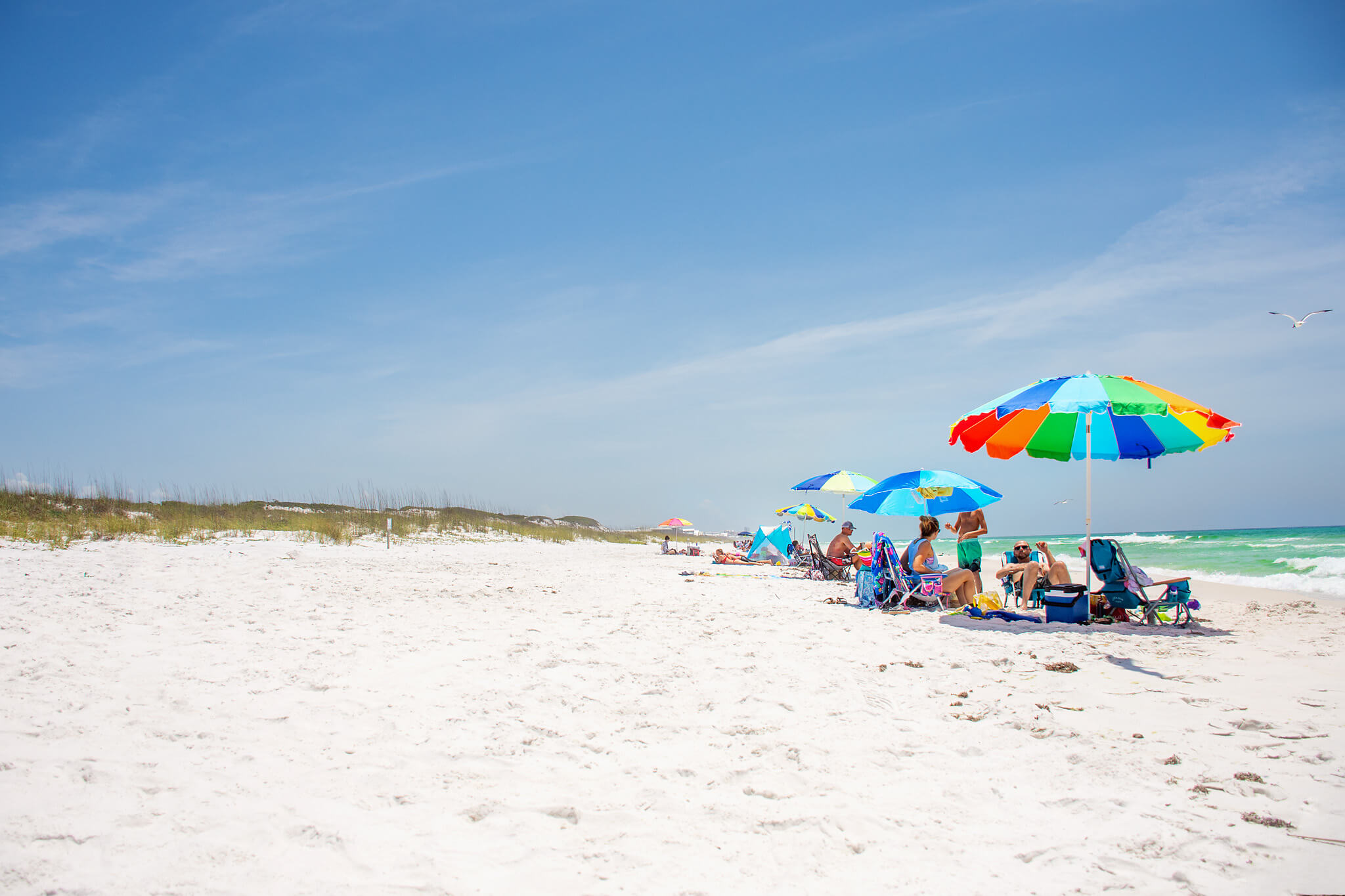

Another concern is that they are not weather-proof, still require proper parking just like a car (with the exception of a couple of small golf cart lots), and do not solve the parking problem in busy town centers.
For families, LSVs on 30A can be inconvenient because they require proper car seats for young children, which can get very hot in summer. They are slow on Highway 30A, making them inefficient for traveling between towns. It’s not uncommon to see dozens of cars backed up behind an LSV on a 35mph segment of 30A when the cart simply can’t go past 22mph.
While they can work for short local trips within a community or quick beach drop-offs, they are rarely the best all-around option for a full 30A trip. And, as they can’t be driving on Highway 98, of course won’t allow you to get to other areas that still require a car.
Rideshare, Groceries & When Renting a Car on 30A Florida Makes Sense
Renting a car on 30A Florida, makes sense if you are staying outside the main walkable town centers, plan to visit multiple towns in the off-season, or want to explore beyond 30A.
A car is also helpful for grocery runs, airport transfers, and day trips to nearby areas such as Destin or Panama City Beach, especially in the off-season when parking is easier and driving is less stressful.
That said, when visiting 30A, you can easily order grocery delivery from Walmart, Instacart, etc., which saves a lot of time and hassle.
Quick tip: Avoid using these services on Saturdays. It’s the most popular check-in and check-out day, as many places require weeklong rentals. It’s much harder to get shoppers and ensure timely deliveries on Saturday.
If you don’t have a vehicle, it’s easy to get a rideshare from the airport to 30A. However, if you are heading back to the airport early or during peak travel windows, I would either schedule a ride in advance, book a third-party transportation service, or allow plenty of buffer time.
So, Do You Need a Car When Visiting 30A Florida?
You likely do not need a car on 30A in Florida if you stay in a walkable area, plan to spend most of your time in one town center, rely on walking and biking, and do not plan to explore far beyond your home base.
You will probably be glad you have a car if you want flexibility, plan to explore multiple towns and nearby areas, are visiting in the off-season when parking is easier, or are visiting 30A and staying outside the main hubs.
Click here to browse vacation rentals on 30A!

More 30A Travel Tips & FAQs About Visiting 30A
I hope that you enjoy your trip to 30A! It’s such a magical place! We live nearby and own four top-rated vacation rentals in Seacrest Beach, Florida, which is 100% walkable to dozens of shops and restaurants. When you stay with us, you definitely don’t need to rent a car! They are smaller condos and great options when visiting 30A as a couple or when visiting 30A with one or two young kids.
And, make sure to read some of my other 30A travel tips! I share a lot of valuable first-hand information about visiting 30A, including:
- Best Time To Visit 30A
- Day Trips From 30A
- Girls Trip to 30A
- Private vs Public Beaches
- Beach Tent Rules & Tips
- Things To Do on 30A
- Visiting 30A in Winter
- Beach Flag Warnings
- 30A Packing List
- Best Airports for 30A
- List of 30A Hotels
Pin: Do You Need A Car When Visiting 30A Florida for Later