We may earn money or products from the companies mentioned in this post. As an Amazon Associate, I earn from qualifying purchases.
During a recent family trip to Greece, we had the opportunity to tour the legendary Acropolis and several lesser-known historical places in the heart of Athens. The city has many incredible archaeological sites, ancient ruins, statues, and other remnants of its long and impressive history. One of these is the Agora of Ancient Athens, otherwise known as the Greek Agora.
Matt and I were excited to take the kids to Athens, and today I wanted to share what we learned about the Greek Agora. It is such an awe-inspiring and educational place.
That said, I quickly want to point out that Athens has two agoras – the Ancient Agora and the Roman Agora. This blog post will focus on the Ancient Agora, also known as the Greek Agora, which is considerably larger, has more to see, and makes for a great side adventure during your trip to Athens. Honestly, you can’t visit Athens without seeing this iconic Greek landmark.
Our Visit To The Agora of Ancient Athens
Visiting the Agora of Ancient Athens was an unexpected highlight of our stay in Athens. Its proximity to the heart of the city and other well-known attractions, such as the Parthenon, made it the perfect add-on trip to round out a day of exploration.
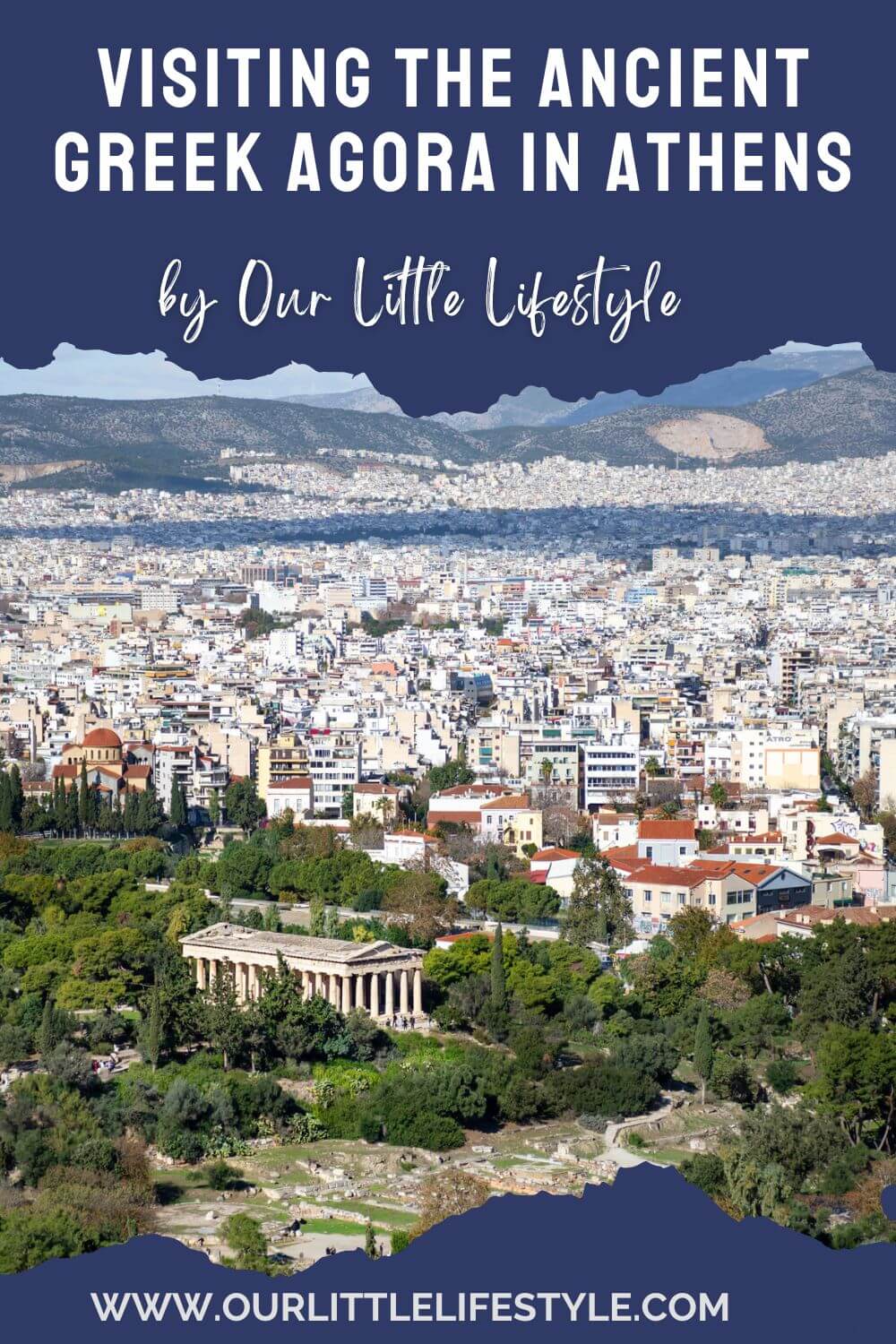
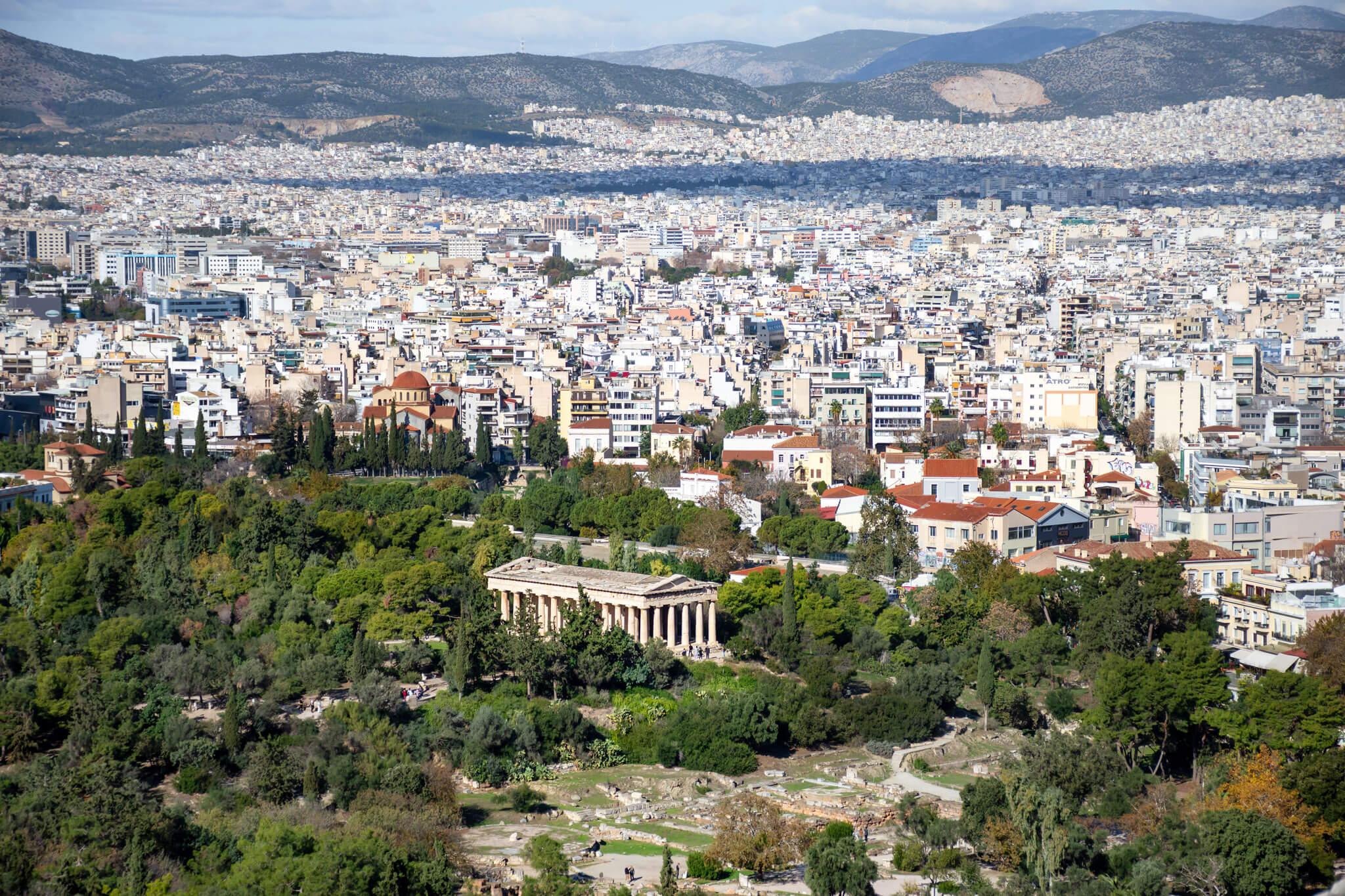
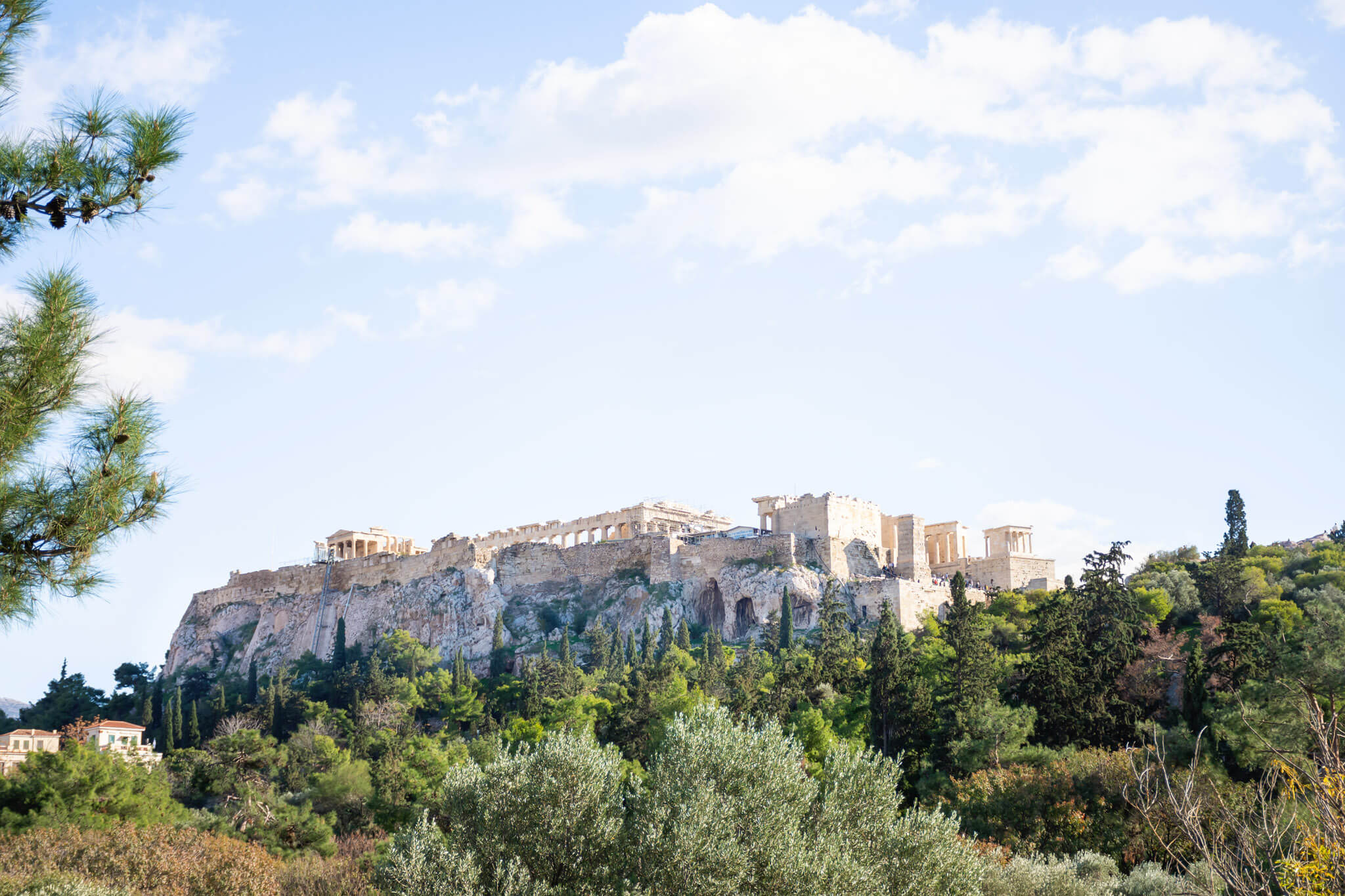
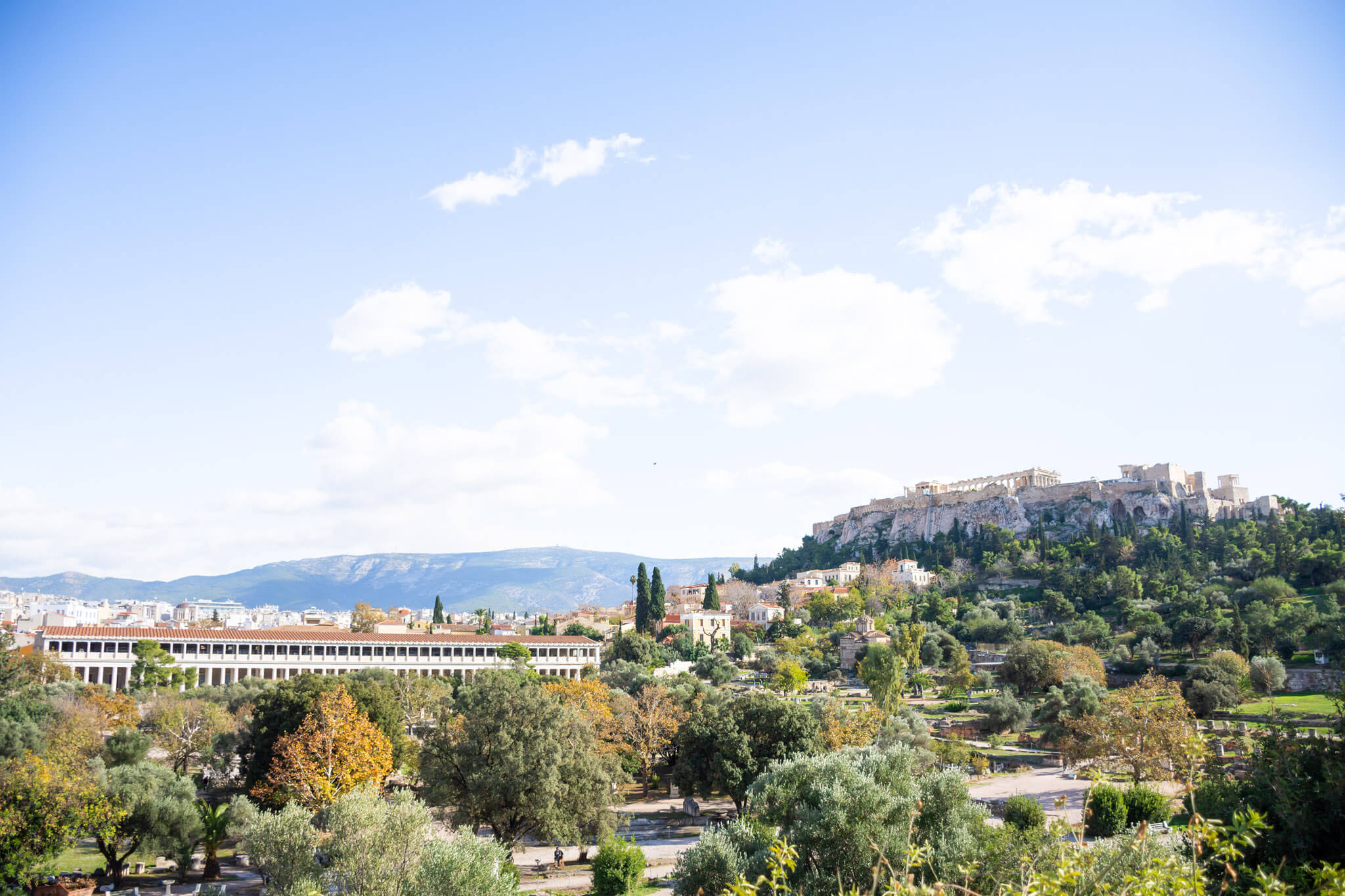
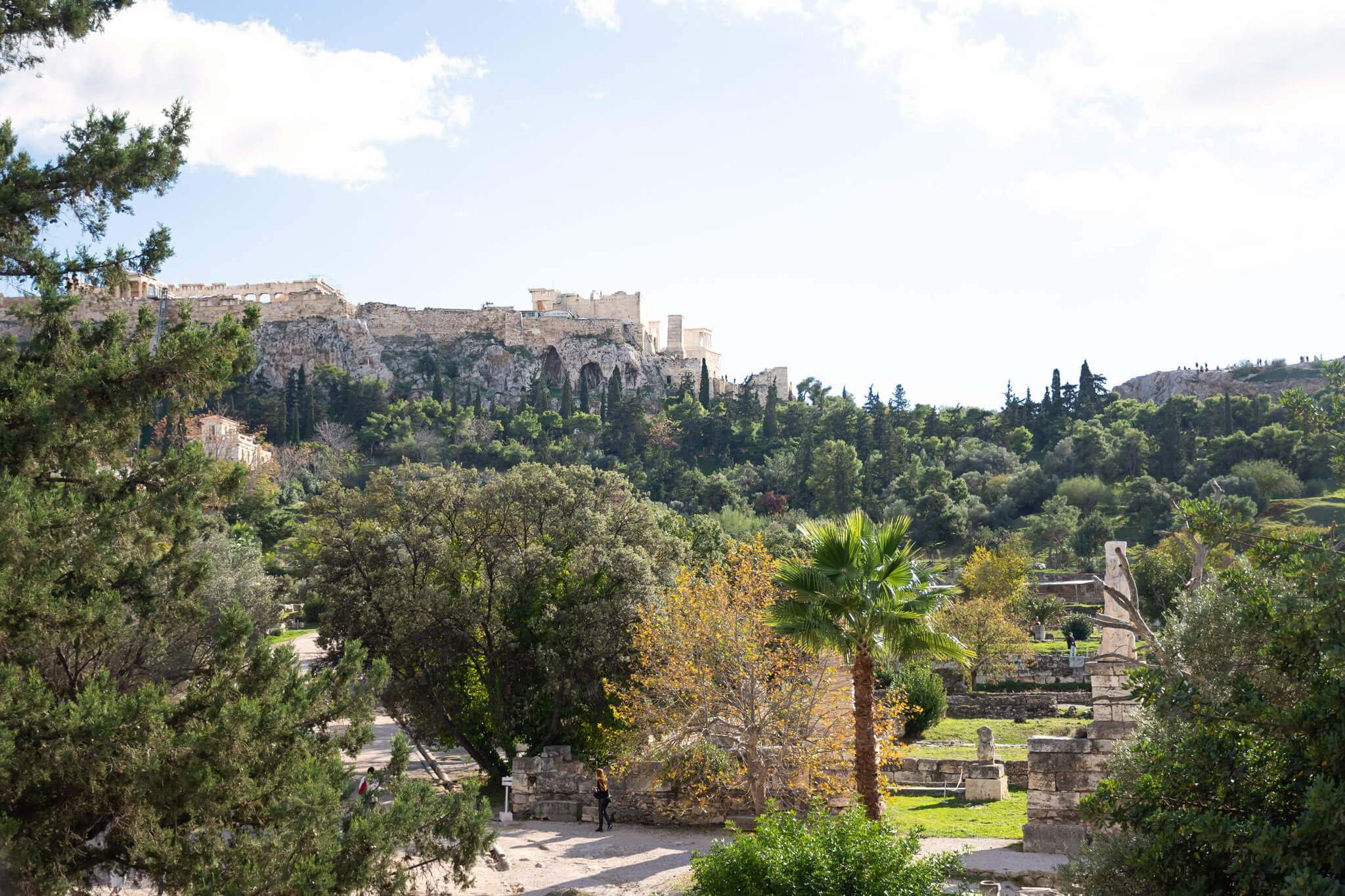
We easily fit it after our Monastiraki outdoor lunch on the same day we visited the Acropolis. In fact, the Parthenon sits beautifully on the hill just above the Ancient Agora in Athens.
What is the Agora of Ancient Athens Like?
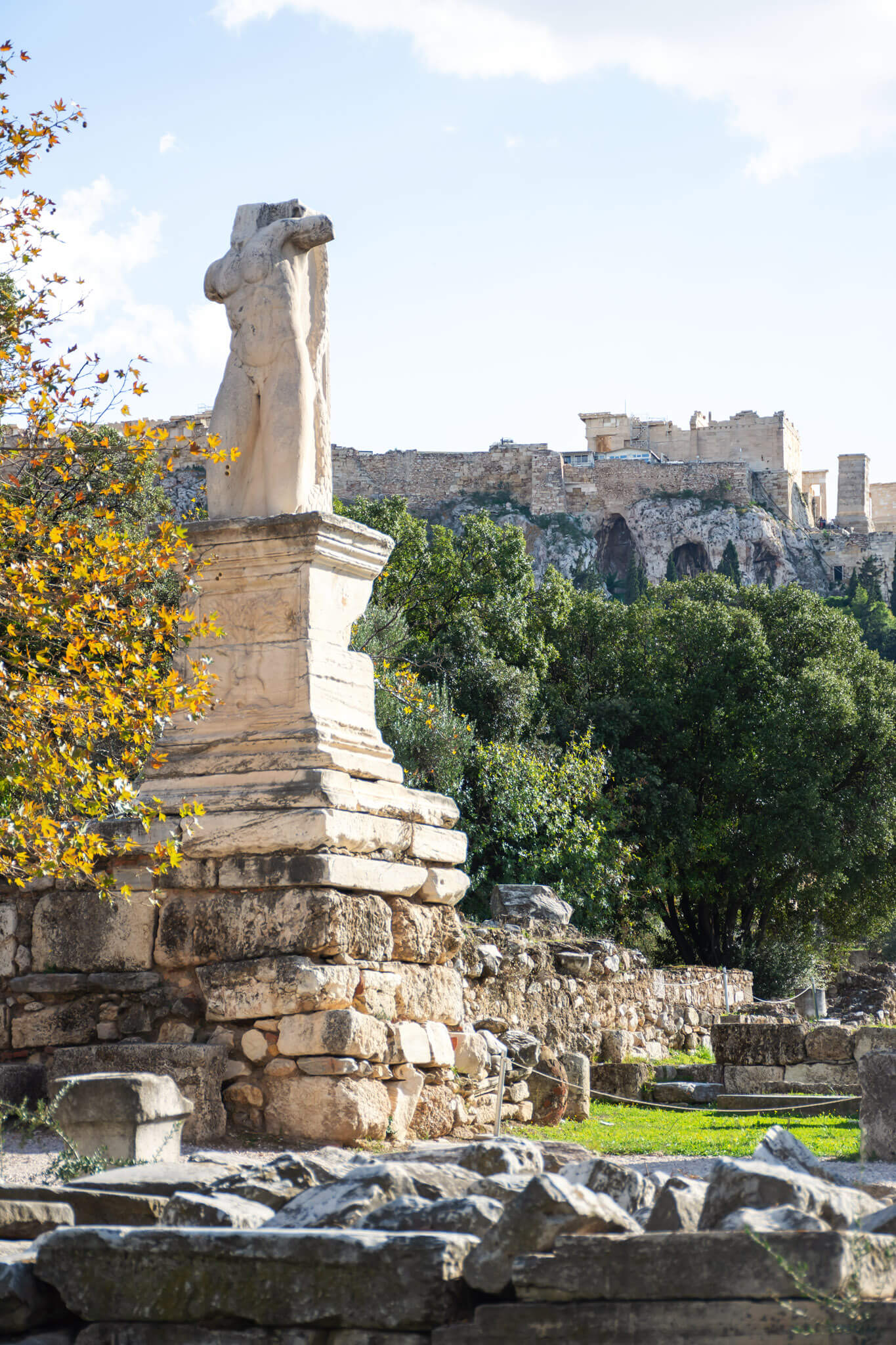
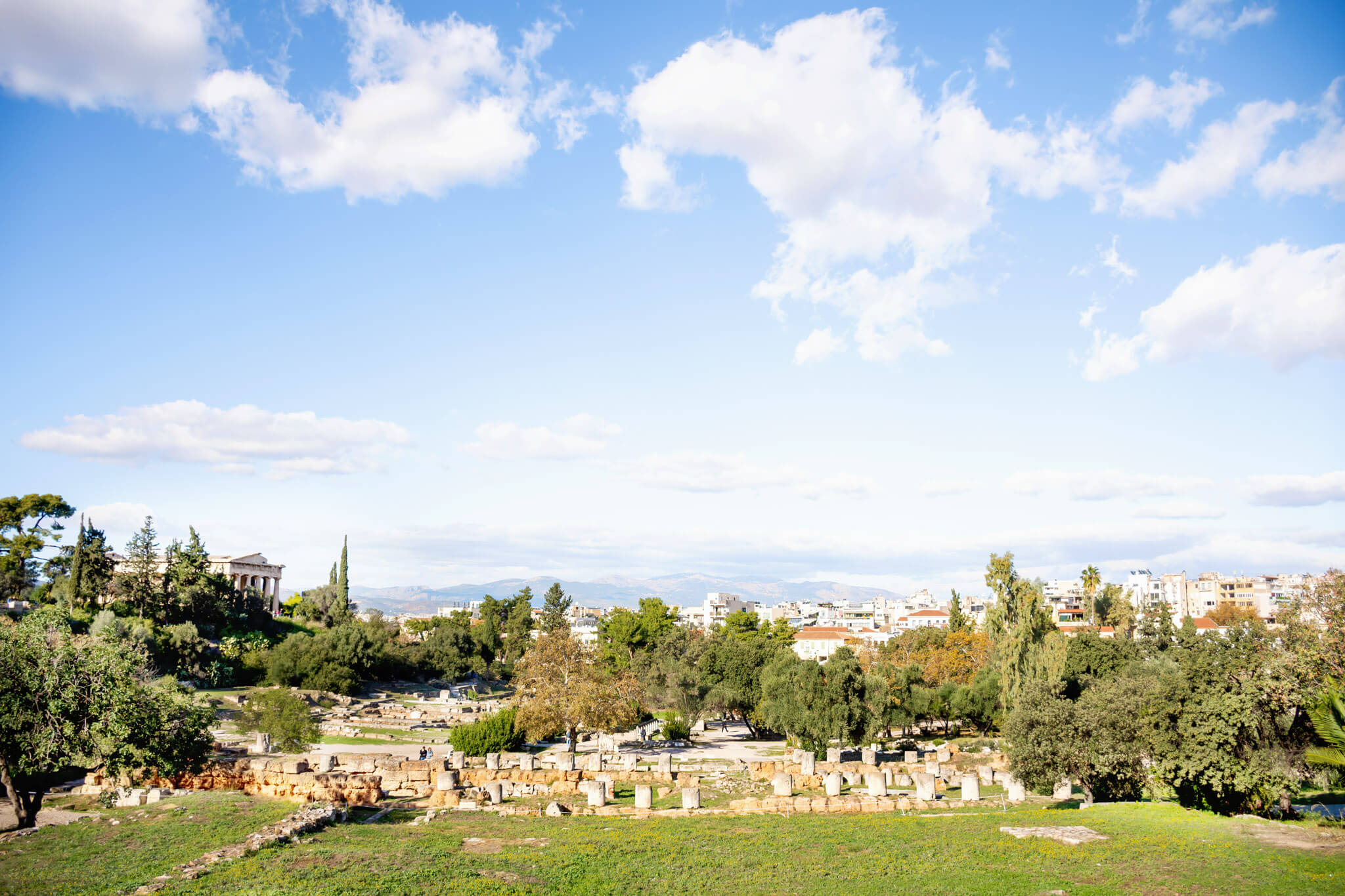
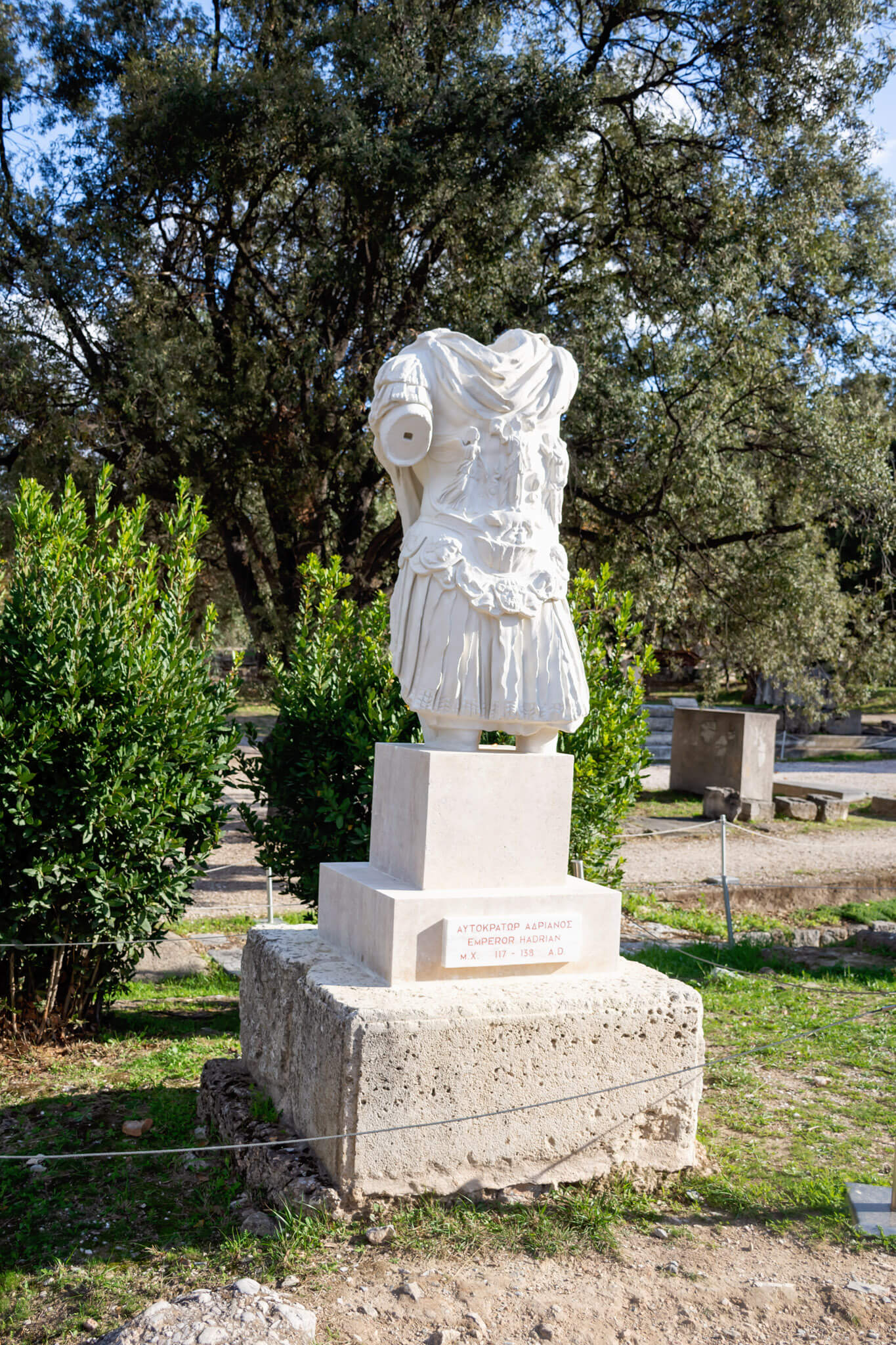
The Agora of Ancient Athens is a 30-acre outdoor archaeological site. Visitors can freely walk around the area, which resembles a city park strewn with ancient, semi-intact buildings, foundations, statues, and columns. In ancient times, it was the mercantile and political heart of Athens. It contained several markets, a courthouse, five temples, two theaters, a teaching porch, three stoa (roofed colonnades), and numerous sculptures of the gods.
The Agora of Ancient Athens is the perfect place to walk around on a nice day, where you can feel the warm Greek sunshine and explore the remnants of Athens’s golden age. These days, the Ancient Greek Agora is mostly covered in grass and lightly wooded in places. Nestled within the park are the various ruins.
After navigating the hustle and bustle of Athens, it was a welcome relief to have some space and freely explore wherever we wanted. Wandering around the park makes it feel much more organic and exciting, as if you are leading your own archaeological expedition.
The Greek Agora in Athens is an excellent place for families like ours for many reasons. First, you aren’t trapped in a building or locked into a scheduled tour, so it’s perfect for busy kids and parents who don’t want strict timelines.
There is also a museum in the Ancient Agora, which I will discuss later. Going inside is optional and doesn’t cost anything extra.
The Agora of Ancient Athens is large and open, providing plenty of space for kids to run and play. The size of the area and the fact that it isn’t a major attraction mean you usually won’t have to contend with large crowds. Honestly, I can’t believe so many visitors overlook it!
Make sure you don’t miss any other hidden gems on your trip to Athens, and read my blog post all about the Top Historical Sites to Visit in Athens, Greece.

Planning Your Visit to the Agora of Ancient Athens
There are many ways to plan your visit to see the Ancient Agora of Athens, but I wanted to share how our family did it. Our stay in Athens was wonderful, and I am so glad I did my research in advance and knew exactly where to stay and what we wanted to see!
I think the key to a successful first visit to Athens is to find lodging near the Acropolis, as it is central to many of the city’s major attractions. From there, many things are within about a 10-20 minute walk.
Staying in the Plaka District & Visiting Top Sites in Athens
The Ancient Agora is located near many attractions in the heart of Athens. It is about a 12-minute walk from the popular Plaka District, the popular tourist district at the foot of the Parthenon. We stayed in the Plaka District during our trip to Athens and could not have been happier with the apartment we rented in the Plaka District!
If you are interested in the apartment that we stayed in, here is the link. It was in the best location, close to Athens landmarks and restaurants. It was honestly perfect for our family of 4. Also, if it’s your first trip to Europe, make sure to grab these European Travel Essentials!
Why did we love this area so much?
The Plaka District has so many cute shops and excellent Greek restaurants. It’s filled with old-world charm and energy, is very walkable, which is very important to us when we travel, and is the perfect central location for a family to stay when visiting Athens for the first time.
We were impressed by how clean and inviting this part of the city was. Everyone we met was friendly and helpful. We are cat lovers and really enjoyed seeing the famous stray cats of Athens roaming around the area.

Visiting the Ancient Agora and the Acropolis/Parthenon
The Agora is near the north side of the Acropolis, the hill on which the Parthenon sits. It is only about a 10-minute walk from the Parthenon to the Agora. We decided to see the Acropolis and the Ancient Greek Agora on the same day because they are so close.
We walked from the Plaka District to the Acropolis first thing in the morning, grabbing coffee and pastries along the way. I highly recommend visiting the Acropolis first thing in the morning to try and beat the crowds. We got to see the Parthenon and the many other structures around it. Our visit took us about 3 hours. You can make it as short or long as you want, meandering slowly or briskly walking between the highlights.
Around midday, when we were finished at the Acropolis, we walked from the Parthenon down the hill to the north. We found a great little restaurant for lunch in the Monastiraki District, where the Ancient Agora of Athens is located. We visited Thanksgiving week, and things were surprisingly still pretty busy!
The Ancient Agora is in the Monastiraki District
What is the Monastiraki district like?
Located just north of the Acropolis, the Monastiraki District is another popular area to stay in. Like the Plaka District, this neighborhood is filled with quaint shops and restaurants and is the perfect place to stop for lunch. It’s a beautiful neighborhood that simultaneously buzzes with modern energy and ancient charm, standing in homage to a mighty legacy stretching back thousands of years.
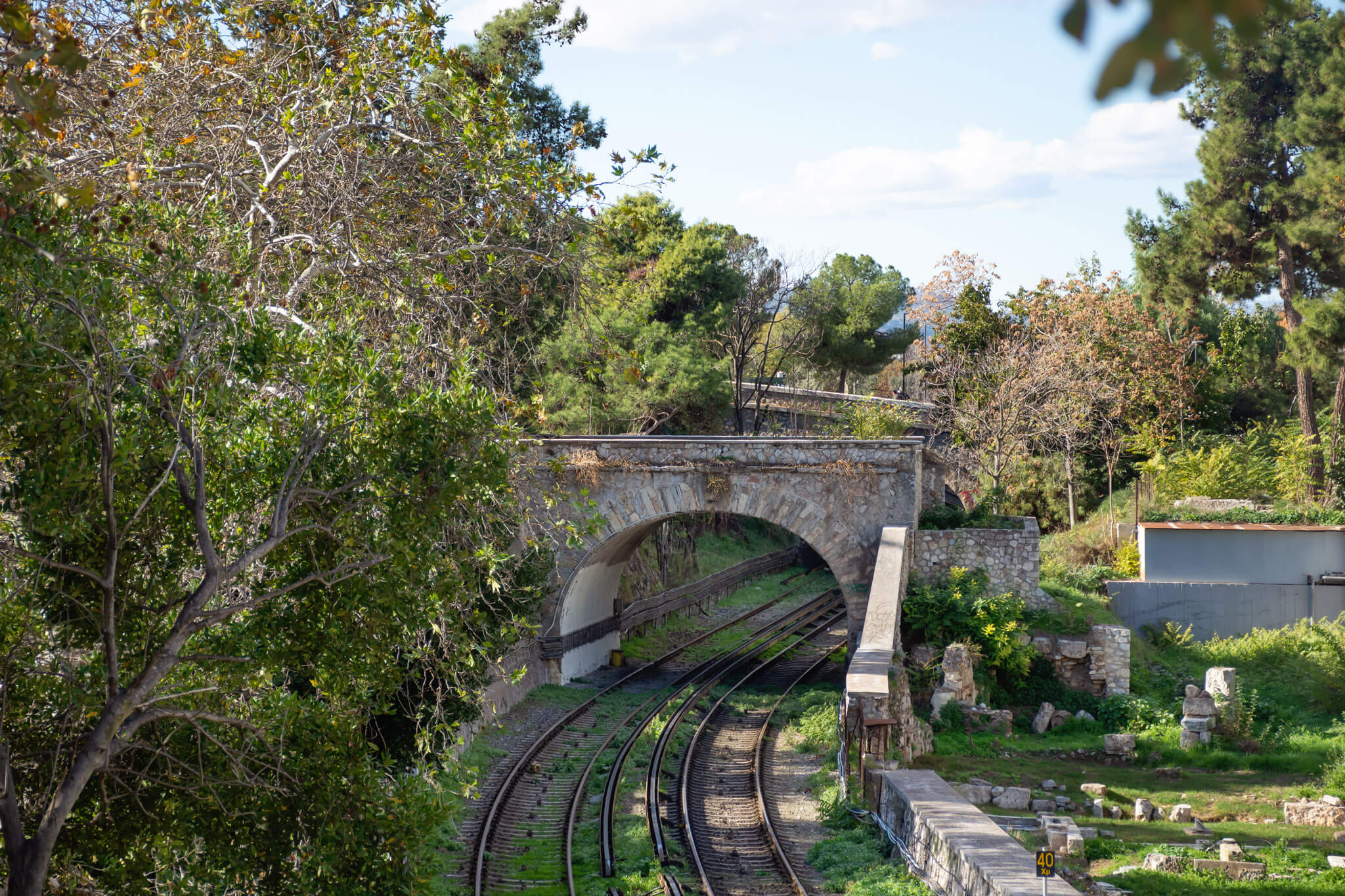
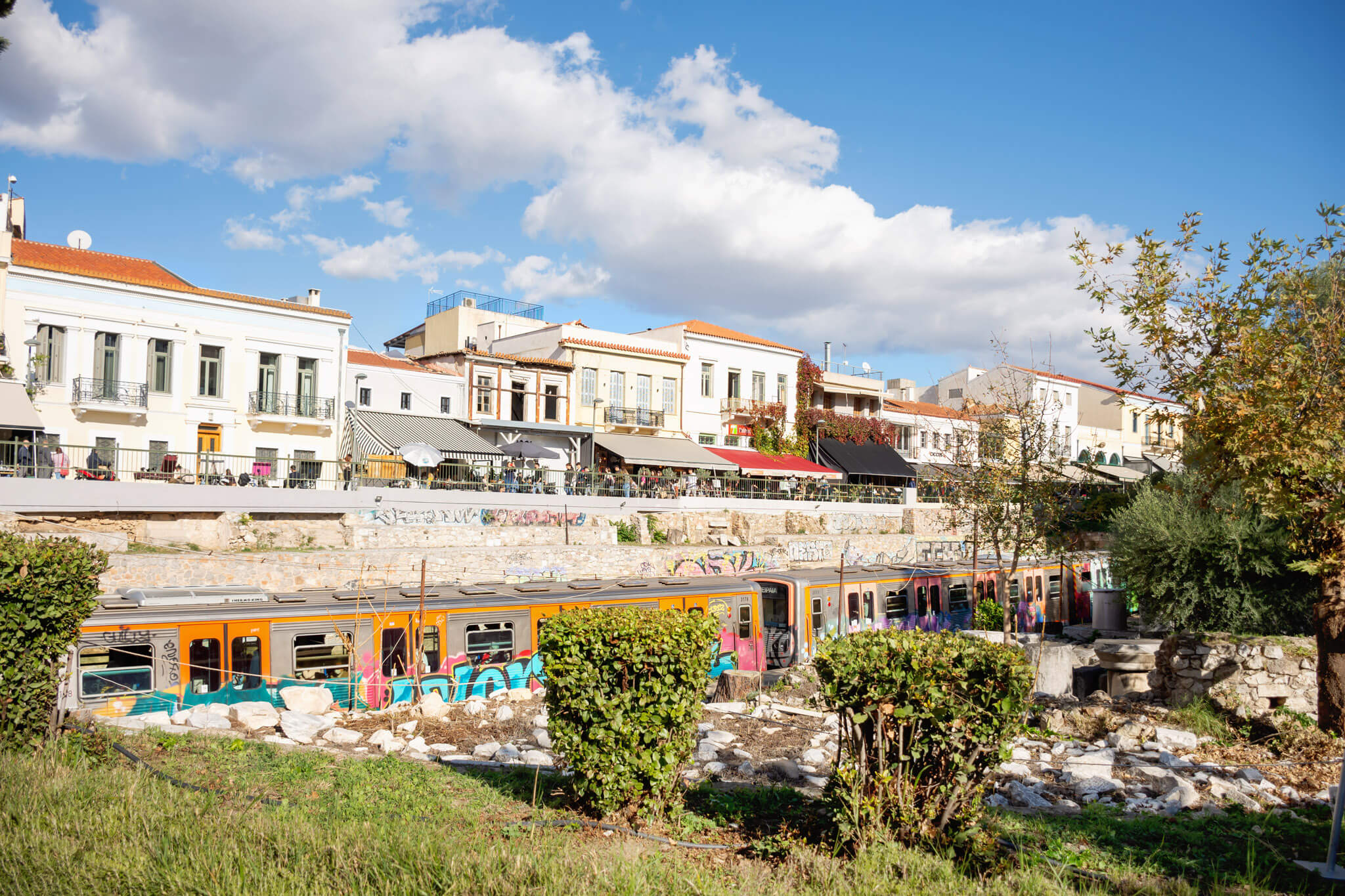
The Monastiraki District brims with authentic taverns and eateries, many with amazing views of the Acropolis and Agoras. The cafes along Adrianoy Street overlook the Ancient Agora and the train tracks that run through it. Yes, the Ancient Agora of Athens is one of the few archeological sites in the world with a train track running through it. This metro track crosses the very northern side of the Agora. You can easily bypass the metro tracks via a bridge. There’s a metro station only a few minutes from the Agora.
The Monastiraki District is a great place to stop and grab lunch or dinner. There are so many cute restaurants to choose from, many with incredible views of the Parthenon or the Agora. Be sure to try the Moussaka!
History of the Agora of Ancient Athens
The Athenian Agora was the epicenter of life in ancient Athens. Founded in the 6th century BCE, it saw many changes and developments throughout the centuries. It was buzzing with merchants, politicians, philosophers, and regular citizens. Famous philosophers like Socrates, Plato, and Aristotle walked its grounds. They engaged in profound discussions, possibly under the shade of a colonnade or by a merchant’s stall.
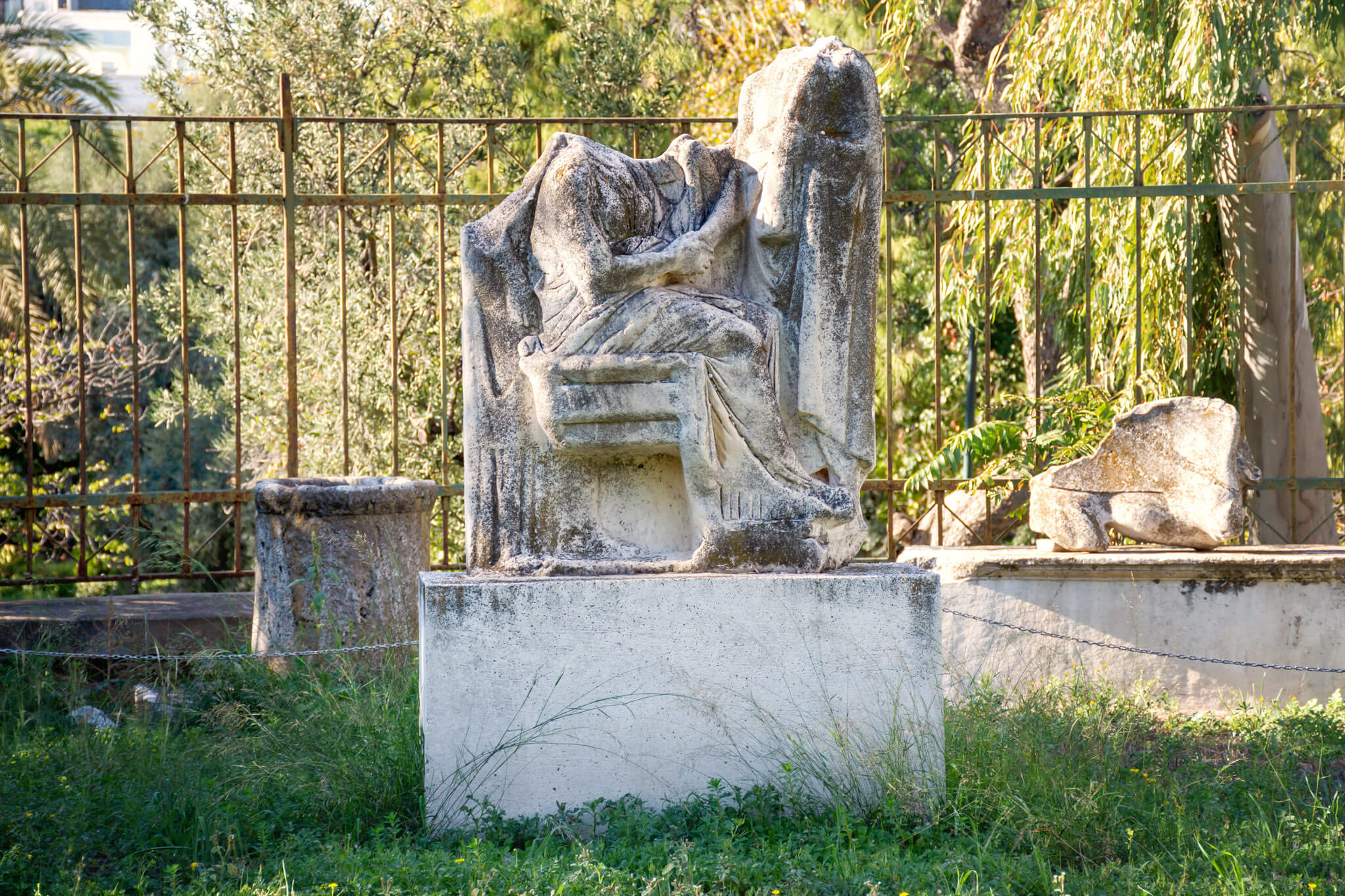
The Agora was at the center of Athenian commerce, government, philosophy, and religion. As a meeting place, the Agora was instrumental in the evolution of Athenian democracy, a precursor to today’s democratic governments. This Agora witnessed the rise and fall of empires, from its founding during Athens’ golden age to the Roman and Byzantine periods. Each era left its mark.
The initial archaeological digs in the Agora region occurred from 1859 to 1912. In the subsequent years, while laying down railway tracks, a deep trench revealed significant relics, including grand sculptures. Later, to unveil the entirety of the Agora, 360 contemporary buildings were demolished.
The American School of Classical Studies excavated the site again from 1931 until 1941. Once fully excavated, the Stoa of Attalos, a monumental edifice from the Hellenistic era, was reconstructed using its authentic blueprints. Today, it houses the Museum of Ancient Agora.
Top Things to See at the Greek Agora in Athens
There are many diverse archaeological wonders to see in the Agora of Ancient Athens. Almost anywhere you explore, you can find structures and art in different states of preservation dotted across the landscape. Here are some of the more popular things to see at the Ancient Agora.
The Stoa of Attalos
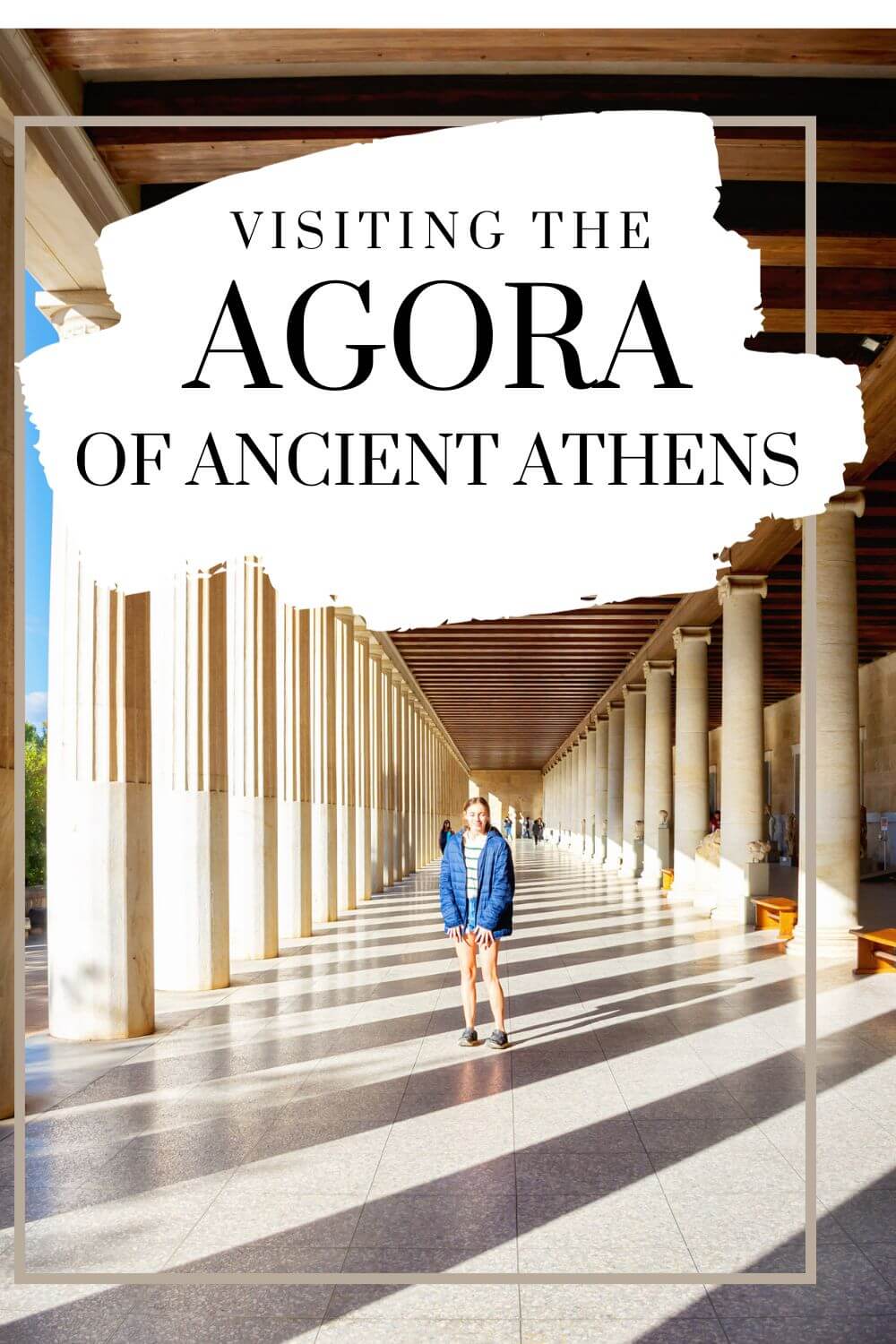
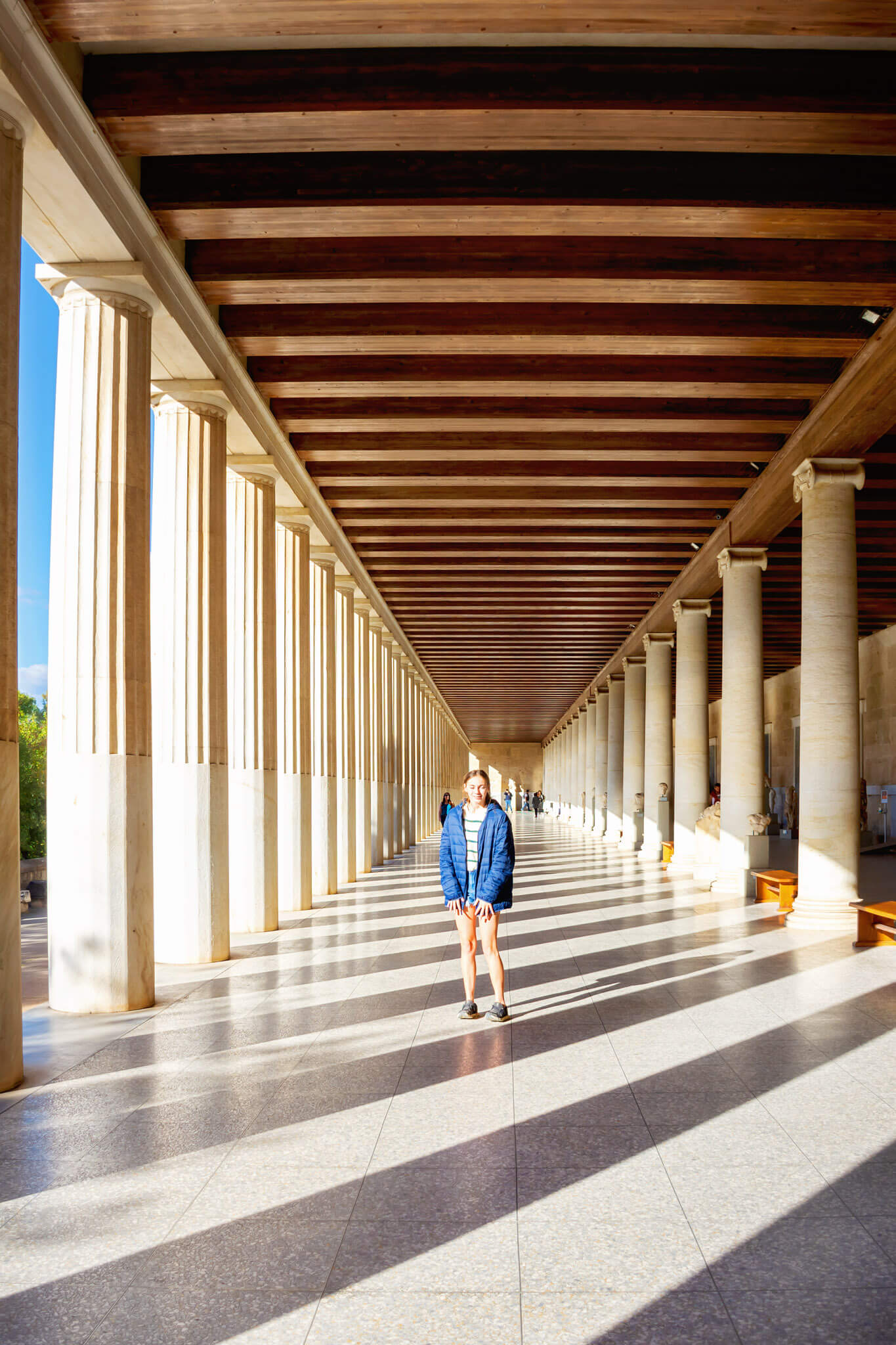
This impressive two-story building serves as the heart of the Agora. The Stoa was built initially in the 2nd century BCE by King Attalos II of Pergamon and was meticulously reconstructed in the 1950s. Today, it houses the Museum of the Ancient Agora, which displays artifacts that offer insight into daily Athenian life. The Stoa’s architecture, with its series of columns and intricate stonework, is also a marvel.
Temple of Hephaestus (Hephaestion)
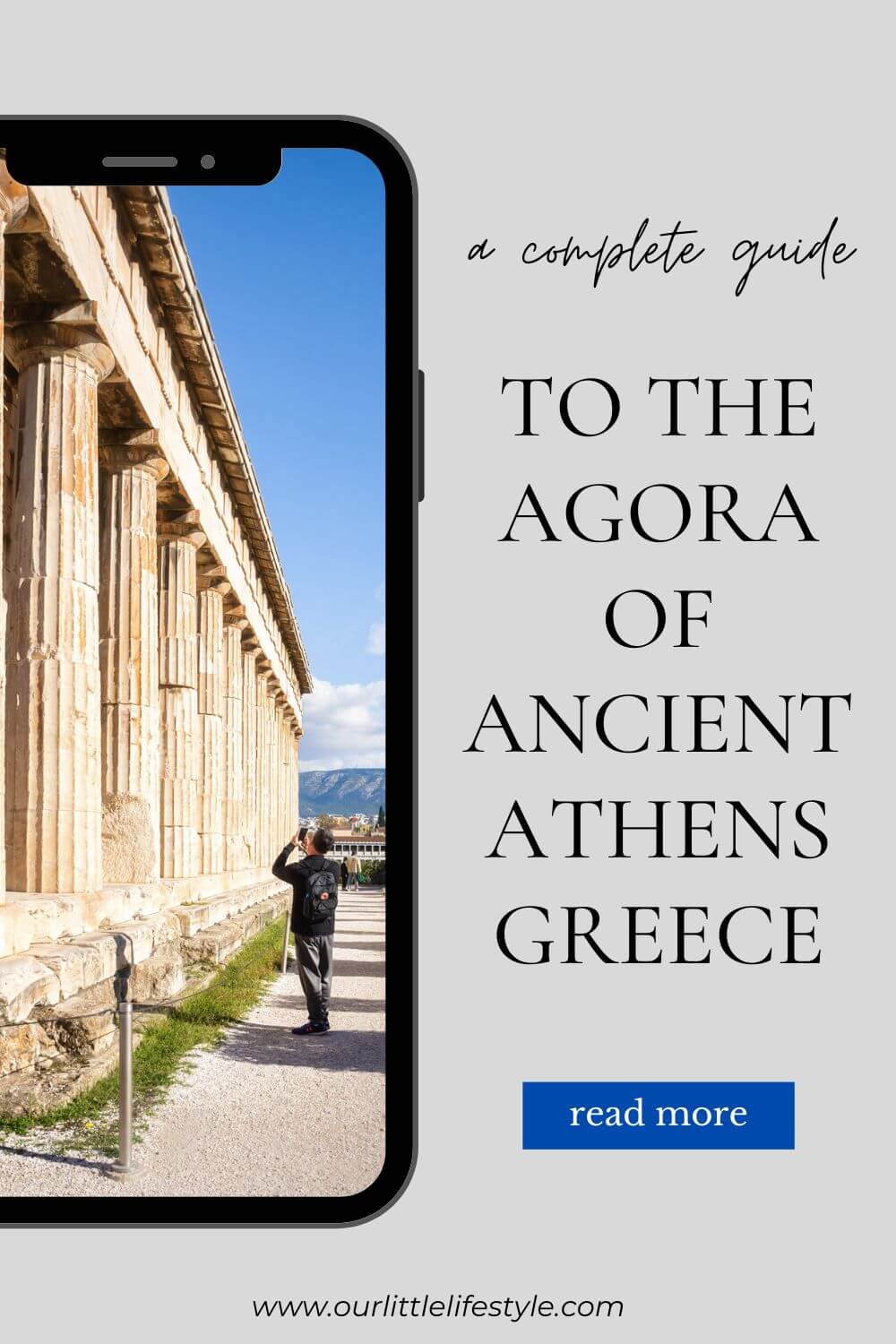
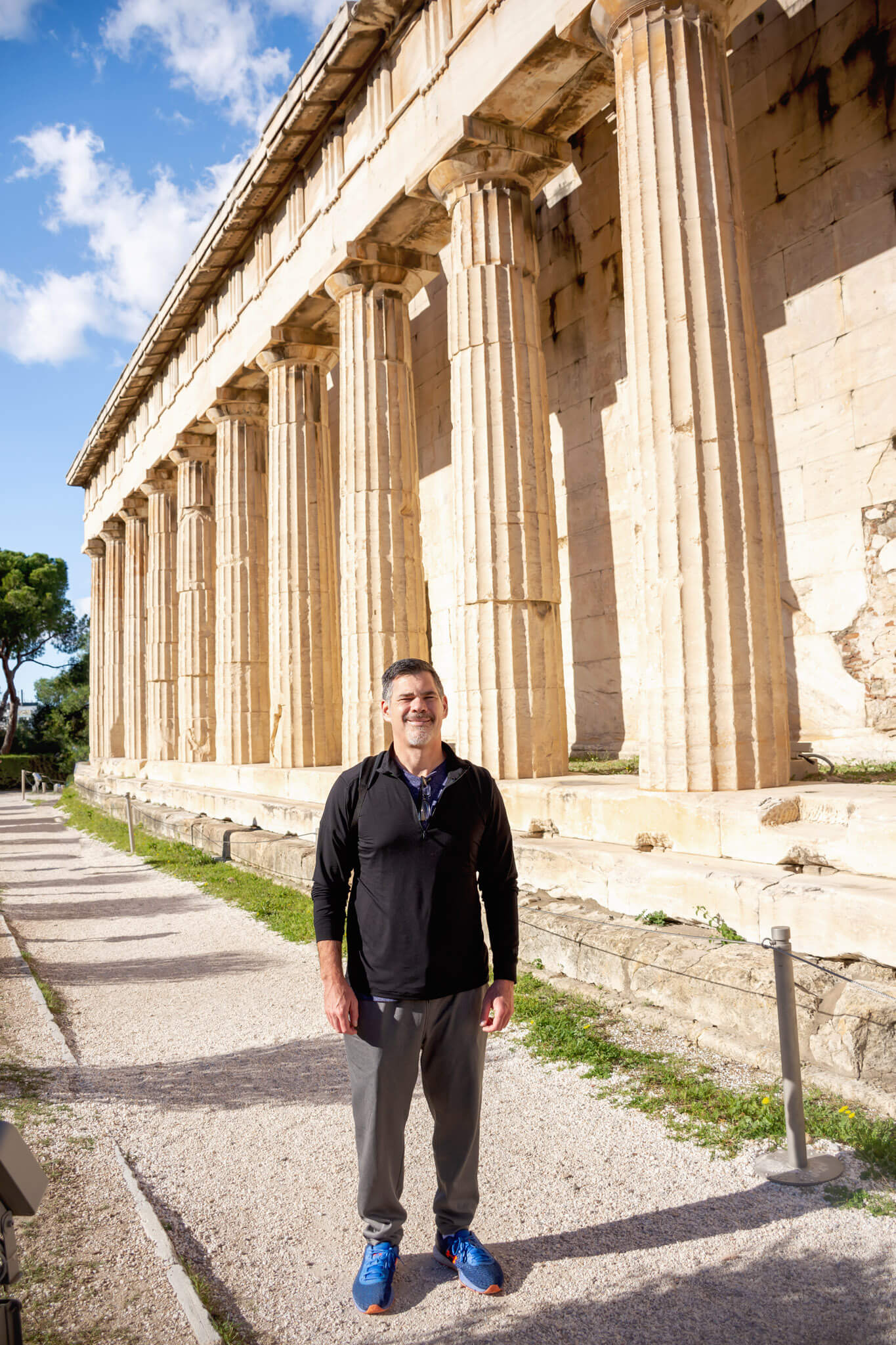
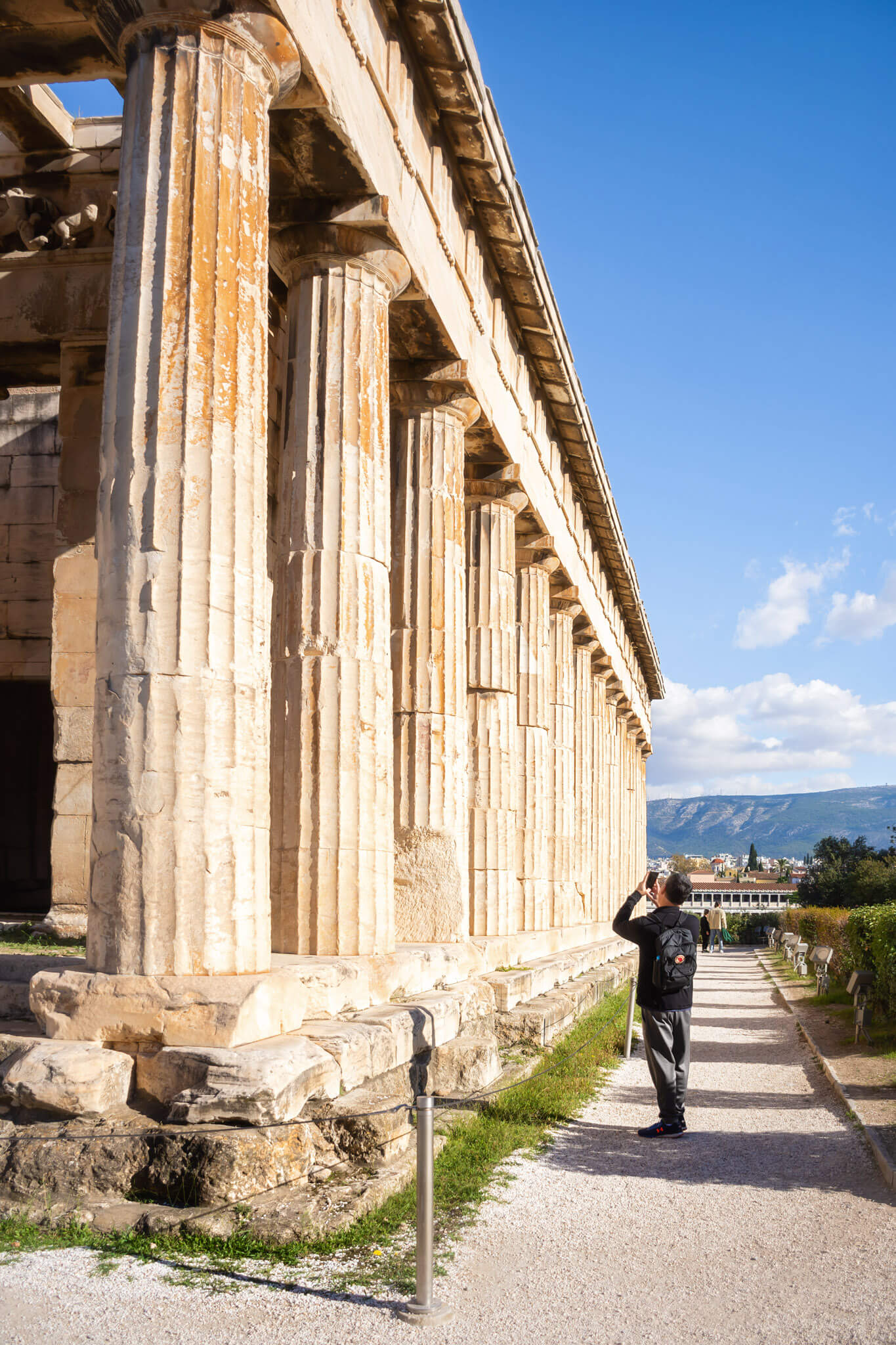
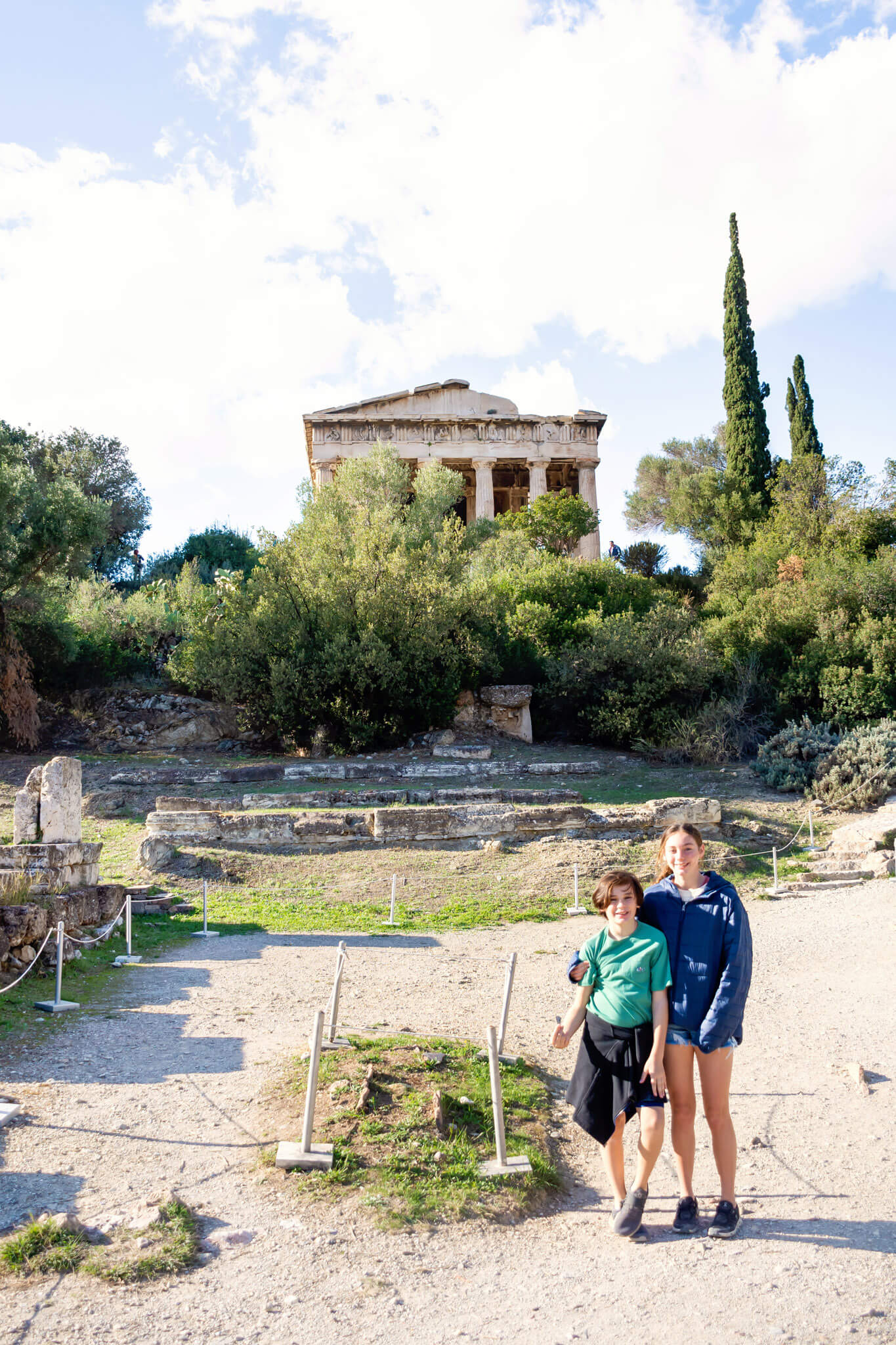
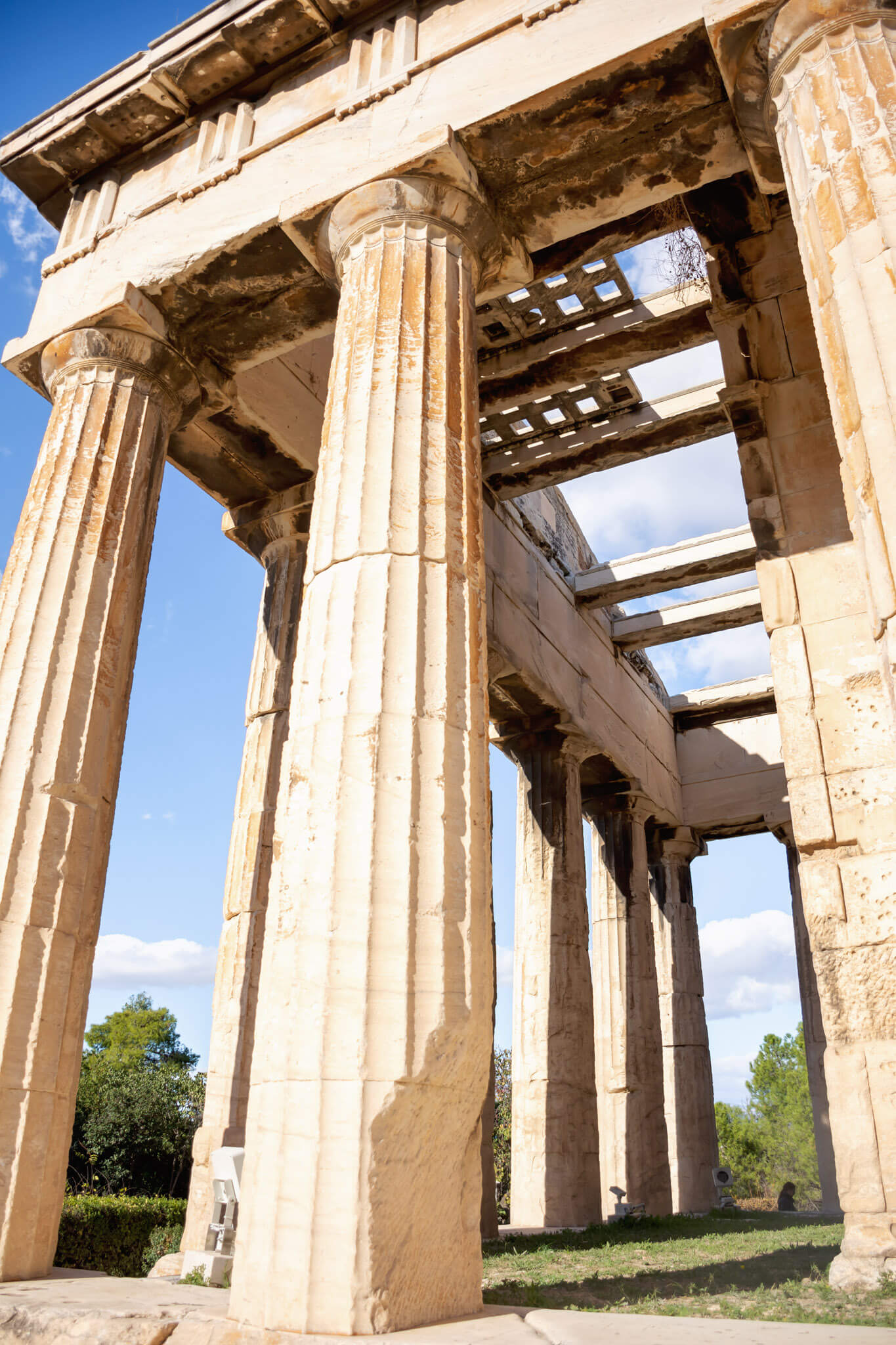
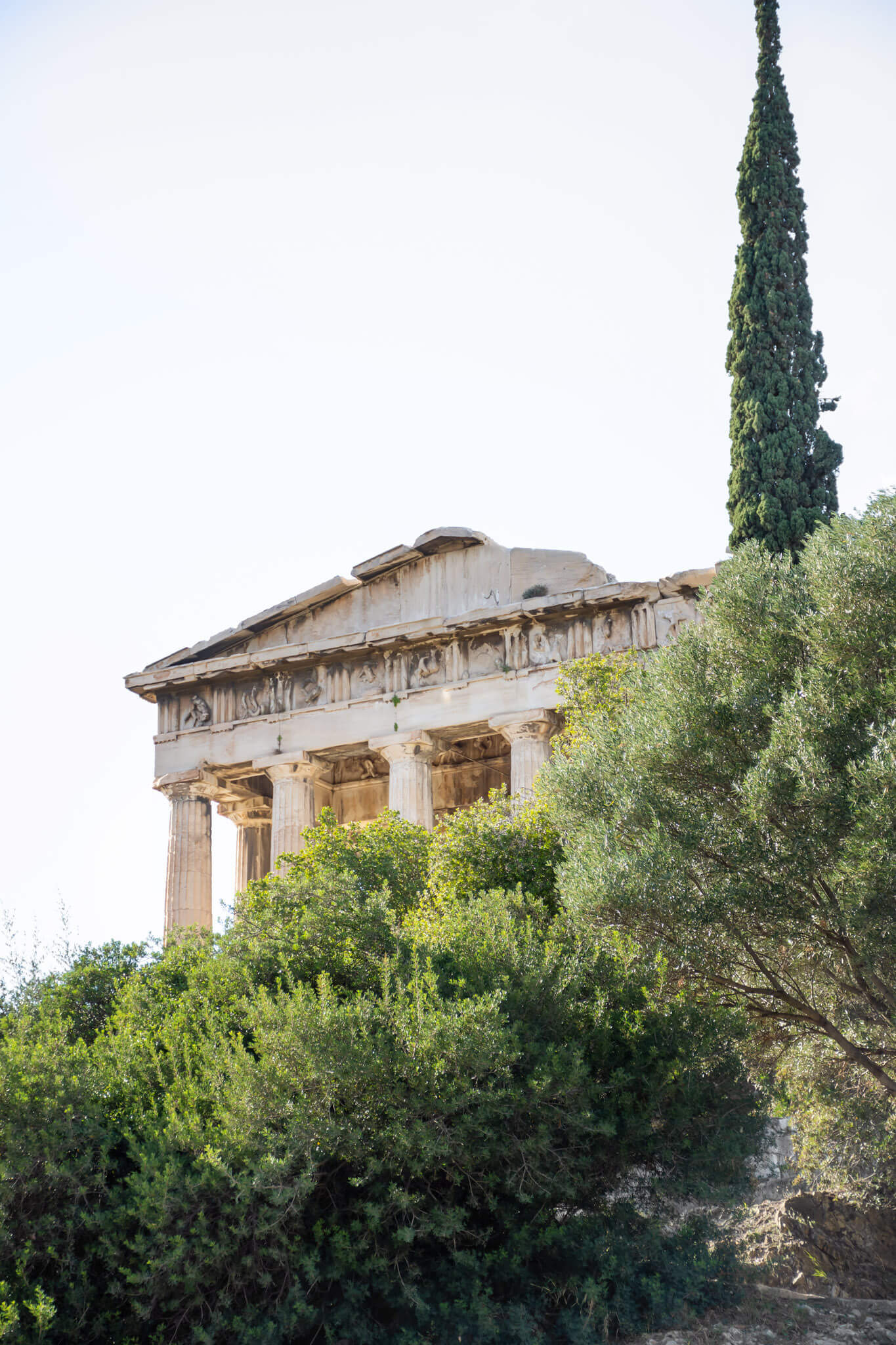
Overlooking the Agora from the Agoraios Kolonos hill, this Doric temple is among the best-preserved ancient Greek temples. Dedicated to Hephaestus, the god of metallurgy, and Athena Ergane, it offers a unique glimpse into ancient religious practices and Hellenistic architecture.
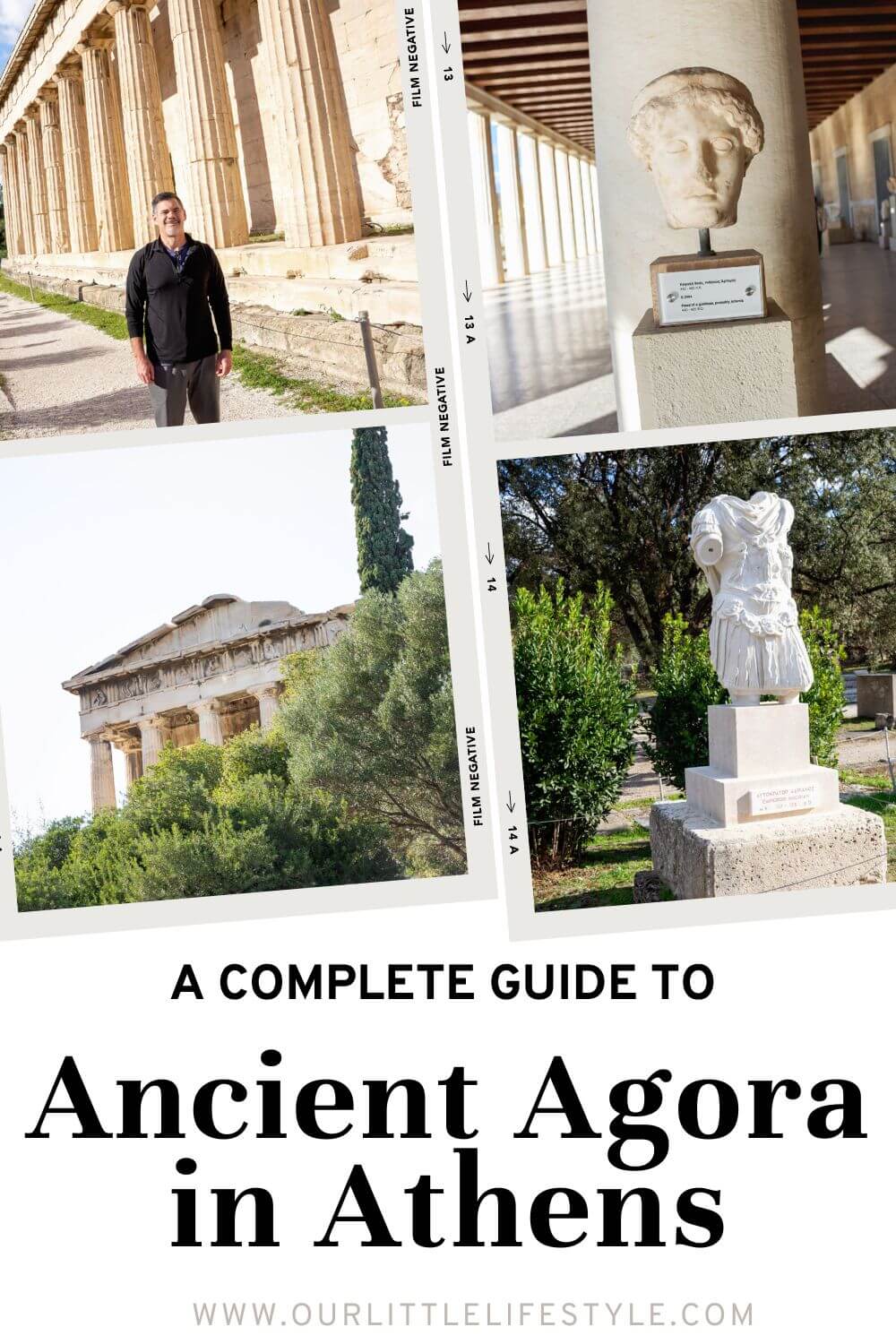
We really enjoyed seeing this. It’s so well preserved that it gives you a great feel for the beauty of the architecture, the immense scale of the building features, and the skill of the marble workers.
The Altar of The Twelve Gods
Citizens used the Altar of the Twelve Gods as a central point of reference for distances. This altar was the heartbeat of the Agora. It was dedicated to the Olympian gods and was a significant religious site.
Odeon of Agrippa
The Odeon of Agrippa was built in the 1st century BCE and later modified by the Romans. It was a large concert hall. The Odeon showcases the integral role of music and performance in ancient Athenian culture.
The Middle Stoa
Dividing the Agora in half, this Stoa was a long building that served various purposes. Its vast size and location make it a notable feature of the landscape.
The Bouleuterion and Metroon
These buildings served as centers for administrative and civic duties. The Bouleuterion was where the city council met. At the same time, the Metroon, dedicated to the mother goddess Cybele (or the goddess Rhea in other sources), housed the official city archives.
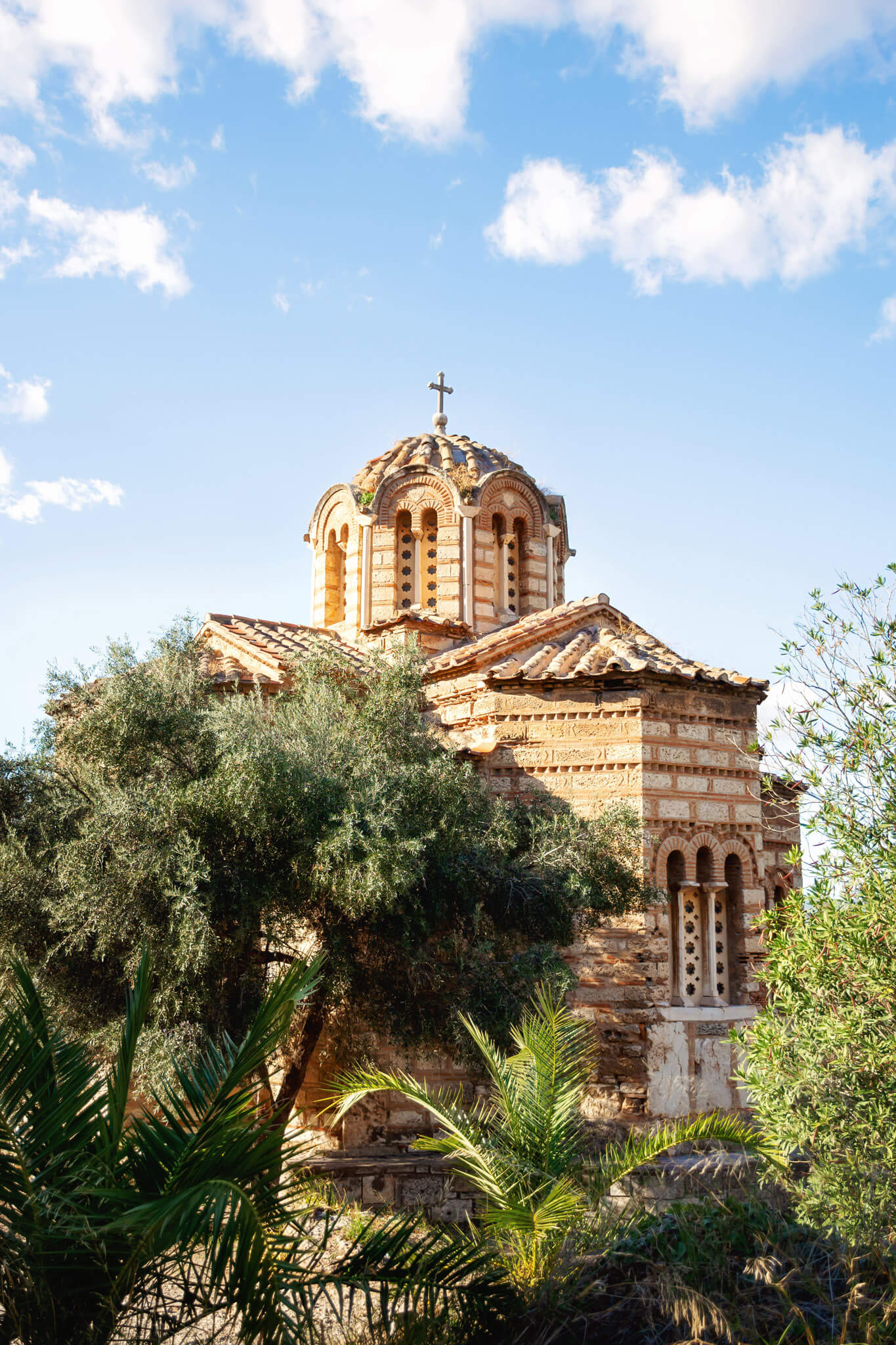
Byzantine Church of the Holy Apostles
A testament to the Byzantine era, this church, built in the 10th century AD, showcases the layers of history in the Agora. Its frescoes and architectural design contrast the more ancient structures surrounding it.
The Museum of the Ancient Agora in Athens
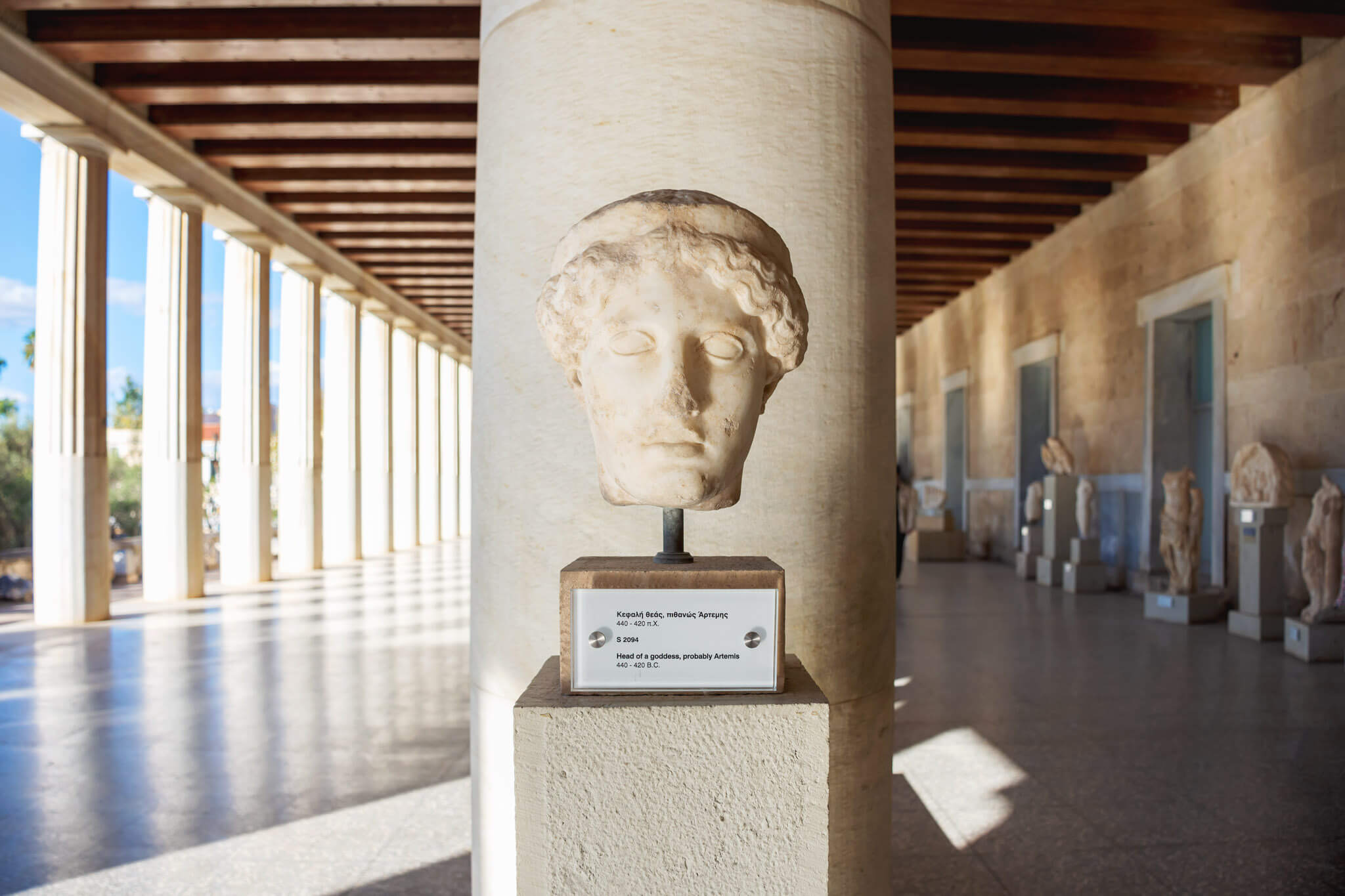
I wanted to spend a little time talking about this fantastic museum. It’s located inside the Stoa Of Attalos. The museum is a renovated two-story structure designed to look like it would have in the second century BCE.
The Museum of Ancient Agora is filled with notable works of art, and visiting it was a highlight of our time inside the Agora. Walking along the long stoa will transport you back in time and give you a feel for what the Agora would have looked like two and a half thousand years ago.
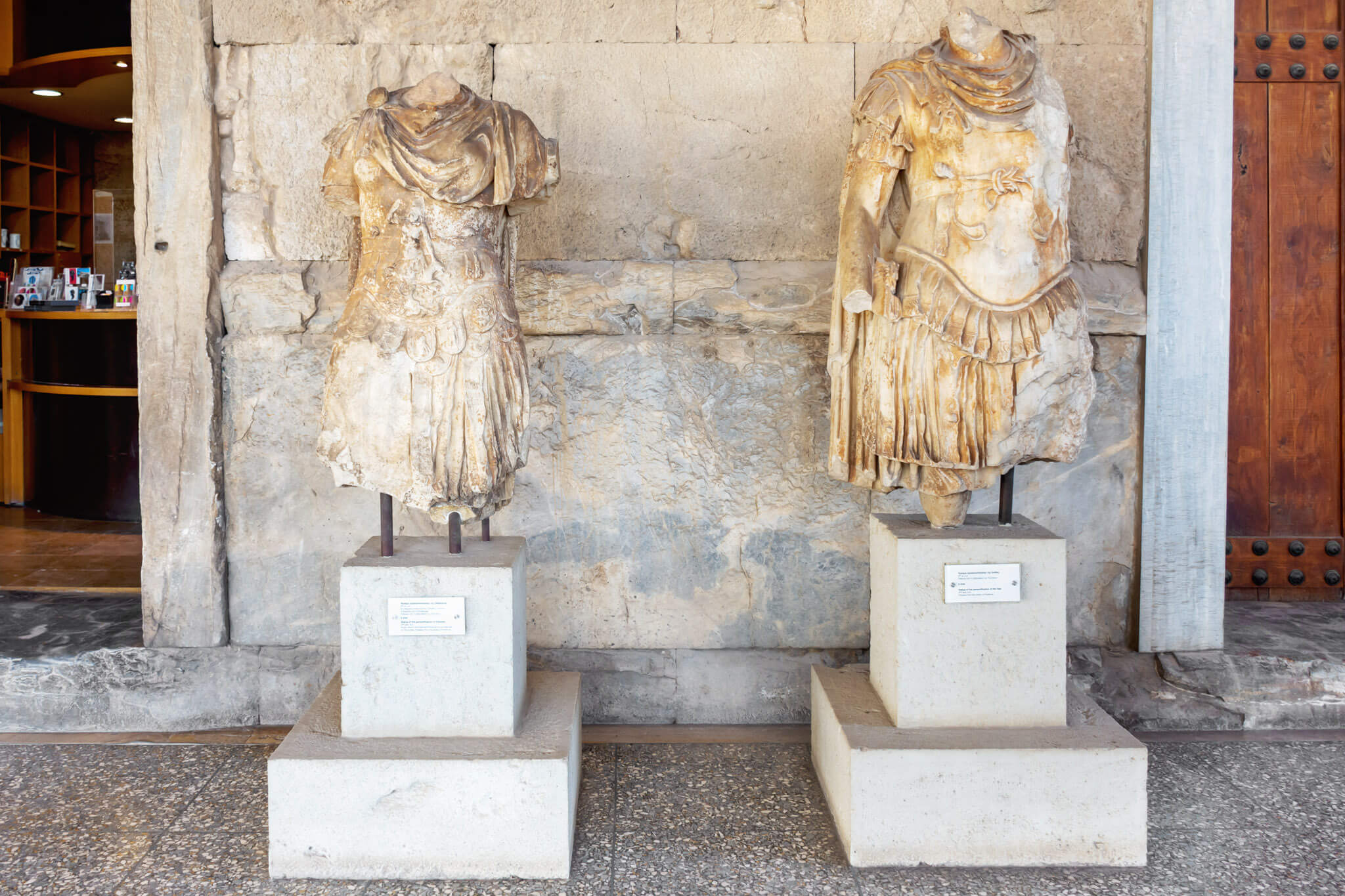
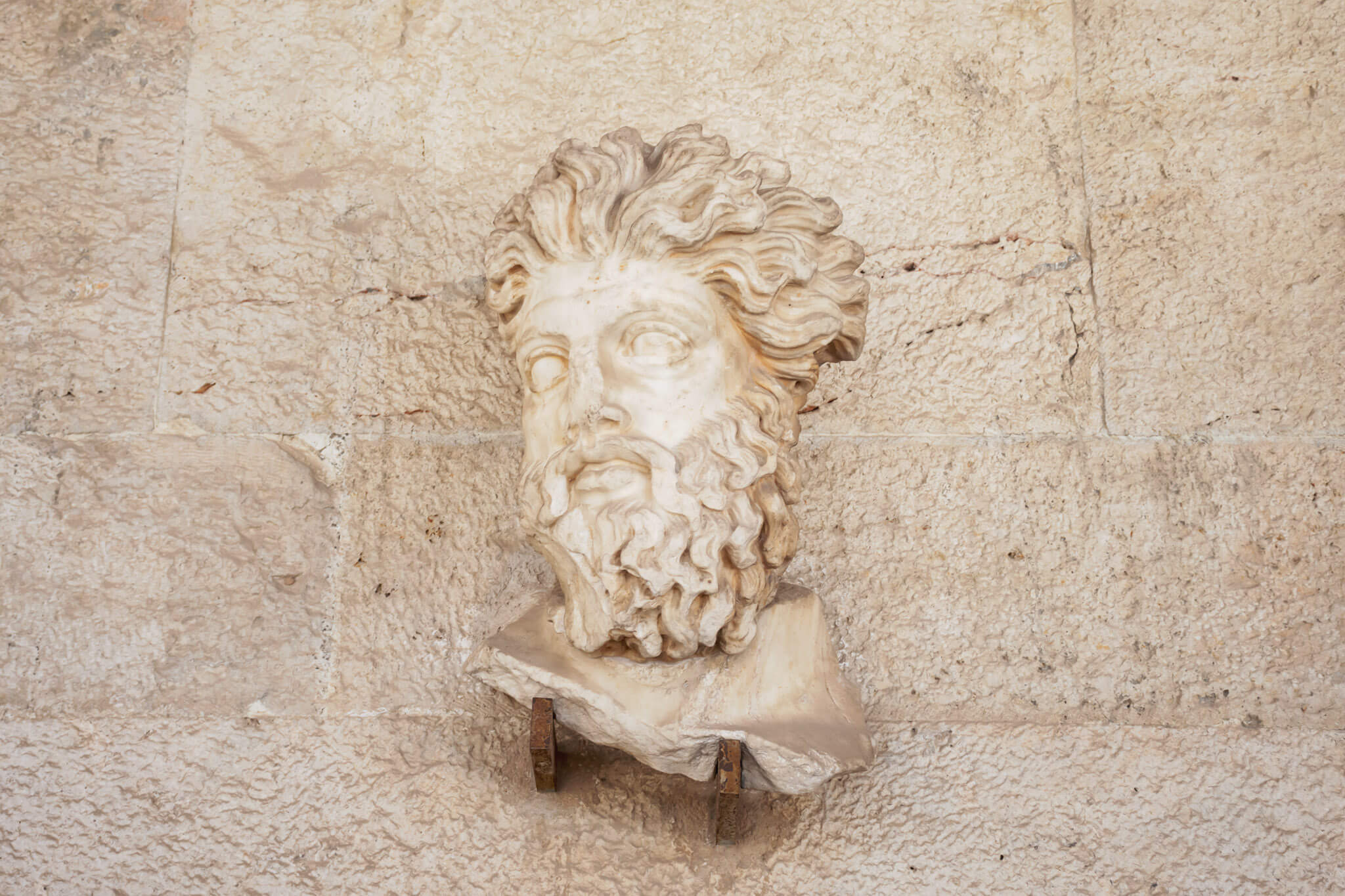
The museum displays an extensive array of antiquities. We saw potsherds, vases, terracotta figurines, and weapons dating from the Neolithic, Bronze Age, Iron Age, and Geometric periods.
They also have many different items from the Classical and Late Classical periods, such as official clay measures, official bronze weights, a fragment of a marble allotment machine, official jurors’ identification tags, a clay water clock, and official bronze ballots. Also displayed are miniature Roman copies of famous statues and many portrait busts and heads from the Roman period.

Ancient Agora Admission and Hours of Operation
Ticket prices include admission to the Museum of the Ancient Agora of Athens. You can also purchase a combo ticket. The combo ticket includes the Agora and 6 additional sites: Acropolis, the Roman Agora, Hadrian’s Library, Temple of Olympian Zeus, Kerameikos, and Aristotle’s Lyceum. The combo ticket is valid for 5 days and available year-round. Tickets can be purchased at the Agora entrance or in advance online.
Hours of Operation:
The Ancient Agora is open 356 days a year, with hours varying seasonally.
Summer (April to October): 8 am – 7:30 pm with the last entrance to the site at 7:00 pm
Winter (November to March): 8 am – 4:30 pm with the entrance to the site at 4:10 pm
Closed: January 1, March 25, May 1, Orthodox Easter Sunday, December 25-26
Click here to visit the official Ancient Agora of Athens website.
How Long Should You Spend at the Ancient Agora?
We spent about two hours in the Greek Agora. It will depend on how much you explore and how much time you dedicate to looking at each part of the Agora. Plan to spend at least 30 minutes in the Museum of the Ancient Agora, in the Stoa of Attalos.
If you’re into archeology and aren’t tied down by scheduled plans elsewhere, you could spend a lot more time. Of course, if the weather is bad, you may not be able to spend much time outside. Therefore, you want to ensure the weather cooperates. If not, you won’t be able to enjoy the vast majority of the Ancient Agora.
What To Bring When You Visit the Ancient Agora
Visiting the Ancient Agora of Greece is an outdoor adventure, so dress appropriately!
Summer will be hot. But during other times of the year, you should bring a light jacket in case the temperature drops. It’s a good idea to have a water bottle. You might want to have a backpack to hold snacks if you have a family.
Since you will be walking a lot, wear comfortable shoes, such as sneakers or hiking shoes. The sun in Greece can be intense, so I recommend everyone wear sunscreen before the trip. Additionally, it’s always wise to have a map to optimize your time seeing the sights and moving between areas of the Agora.
After much searching, I couldn’t find a detailed online map of the Agora as it looks today. But there are plenty of maps showing the layout of the Agora in ancient times.
Don’t Miss Seeing the Ancient Agora of Athens
The Agora of Ancient Athens is a beautiful place to visit while in Athens. It’s a once-in-a-lifetime opportunity to walk the same ground as some of history’s most influential figures and immerse yourself in the monumental achievements of ancient Greece. Being able to walk these grounds with Abby and Jake was powerful!
The Agora’s unique outside features make it an engaging adventure for the family, allowing you to escape the sometimes stuffy halls of giant museums and indoor spaces. Therefore, I recommend combining it with a visit to the Acropolis and lunch or dinner in the Monastiraki District for a perfect full-day experience.
Agora of Ancient Athens FAQ and Fun Facts
I could go on and on about ancient Greece and the Ancient Agora of Athens. However, I need to wrap it up shortly. Here are some additional answers to your questions and fun facts about the Ancient Agora that I found interesting!
What is the meaning of the word Agora?
The term “agora” originates from the ancient Greek word “ageirein”, which means “to assemble.”
Traced back to as early as the eighth century BCE, it’s often interpreted as “gathering,” “gathering spot,” or “marketplace.” The Agora played an integral role in Greek settlements throughout the Mediterranean.
What are some Agora of Ancient Athens fun facts?
The Agora housed many public buildings. It stood as Athens’ epicenter, serving as its chief commercial, political, administrative, social, religious, and cultural hub.
While its origins as a burial and habitation site date back to 3,000 BCE, it became a communal gathering spot only in the 6th century BCE.
Over its history, the Athens Agora endured four significant devastations.
The best-preserved temple in Greece is located at the Ancient Agora. It is the Temple of Hephaestus.
More than 365 modern houses were destroyed during the excavation of the Agora.
In classical Athens, the Agora was a popular meeting place. It was considered the center for democracy.
The ancient Agora once had houses. When the Agora was first built, it had private residences. Peisistratus destroyed them in the 6th century BC.
Athens’s best-known philosopher, Socrates, would frequently visit the Agora of Ancient Athens. His disciples would often accompany him.
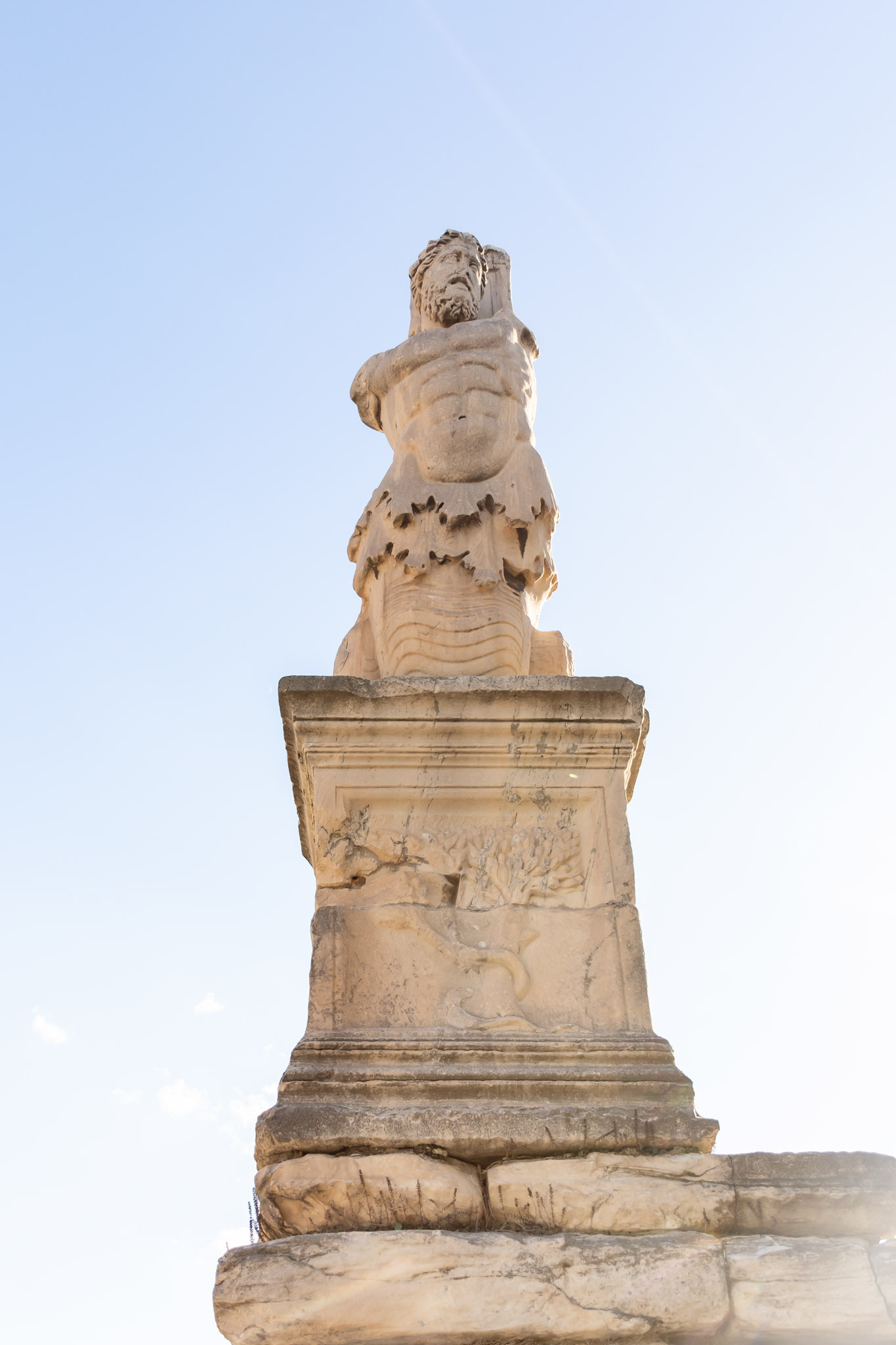
Some interesting artifacts found in the Museum of the Ancient Agora include a sculpture, a voting machine, and a child’s potty seat.
The Ancient Agora is the only, or one of only a few, archaeological sites in the world with a functional train track running through it.
When Was the Ancient Agora of Athens Built?
The Agora of Ancient Athens was founded in the 6th century BCE.
What Was the Ancient Agora Used For?
An Agora is a gathering place. It was where citizens could gather and discuss, exchange views, and decide on important issues. Later, this important town square was expanded and used for trade and commerce.
More European Travel
If you are interested in reading more about our family travels in Europe, visit the European Travel section of my blog. Over the past several years, we have made many family trips to Europe, including Malta this past year! We have spent 4 days in Paris, enjoyed Brussels and Bruges, explored Amsterdam, and visited many cities in Italy. But our hearts are in the French Riviera in towns like Cassis and Antibes.
We also travel extensively in the United States, especially in warm-weather destinations like Florida. We are experts in the Florida Panhandle, especially the 30A area, where we own several vacation rentals in Seacrest Beach. And if you love Greece, consider visiting Tarpon Springs, Florida. This charming Greek coastal community is one of a kind!
PIN Visiting the Agora of Ancient Athens